Xylanase and Bacillus subtilis PB6 modulate microbiota and short-chain fatty acid profiles in broilers under necrotic enteritis-challenge
Most Khairunnesa, Alip Kumar, Shu-Biao Wu, Mingan Choct, Yadav Sharma Bajagai, Kosar Gharib-Naseri

TL;DR
This study shows that xylanase and Bacillus subtilis can improve gut health in chickens challenged with necrotic enteritis by altering gut bacteria and short-chain fatty acids.
Contribution
The study demonstrates that Bacillus subtilis has greater efficacy than xylanase in modulating gut microbiota and SCFA profiles under necrotic enteritis challenge in broilers.
Findings
NE challenge increased serum FITC-d and ileal SCFA concentrations while reducing IgA and MUC2.
Bacillus subtilis supplementation altered gut microbiota diversity and shifted beneficial bacteria toward non-challenged levels.
Xylanase reduced Lachnospiraceae UCG 010 and showed tendencies to lower SCFA and IFN-γ gene expression.
Abstract
Necrotic enteritis (NE) is a major poultry disease affecting profitability. Managing NE has become harder due to restrictions on in-feed antibiotics, which traditionally support gut health and production in broilers. To address this, a study was conducted to evaluate the effect of xylanase (Xy) and Bacillus subtilis (Pb) supplementation in a corn-soybean-based diet on the intestinal health of broiler chickens under NE challenge. A total of 630-d-old mixed-sex Cobb 500 broiler chicks were assigned to a 2 × 2 + 1 factorial design, giving five treatments: NE challenge without additives (CC); NE challenge with Xy (0.03%) (Xy); NE challenge with Pb (0.05%) (Pb); NE challenge with Xy (0.03%) and Pb (0.05%) (Xy+Pb); and non-challenge birds without additives (NC). NE challenge significantly increased serum fluorescein isothiocyanate dextran (FITC-d; P < 0.05), as well as ileal lactate,…
Genes, proteins, chemicals, diseases, species, mutations and cell lines named across the full text — each resolved to its canonical identifier and authoritative record.
Click any figure to enlarge with its caption.
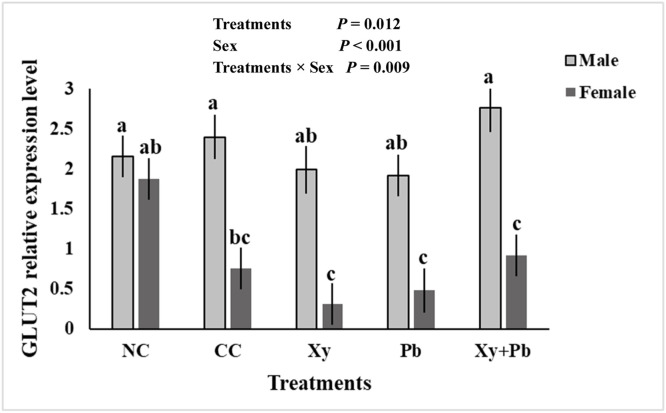 Figure 1
 Figure 2
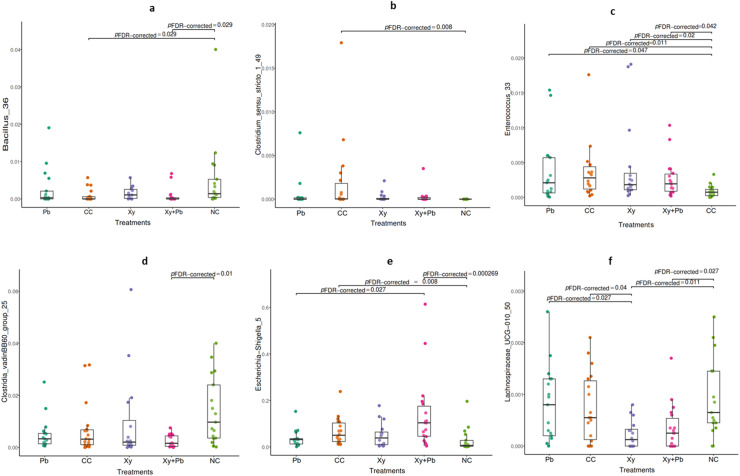 Figure 3
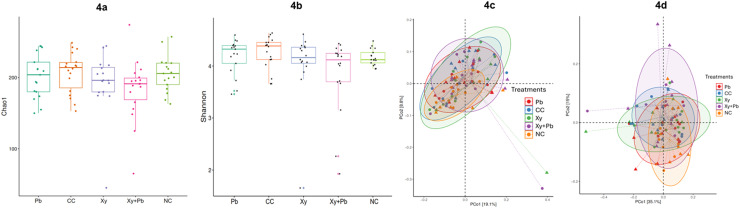 Figure 4
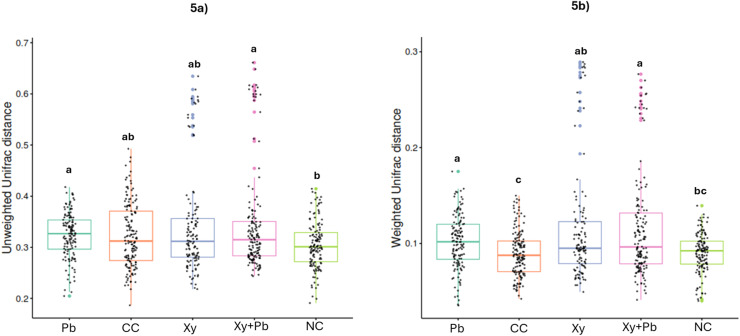 Figure 5
Peer Reviews
No public reviews on file for this paper yet. If you reviewed it on a platform where reviews are public (OpenReview, ICLR, NeurIPS, ICML), you can paste yours below so the community can read it here.
Videos
No videos yet. Explain this paper in a talk, walkthrough, or lecture? Add one.
Taxonomy
TopicsAnimal Nutrition and Physiology · Animal Virus Infections Studies · Animal health and immunology