Edoxaban Dose Adjustment and Age-Associated Outcomes in Patients With Atrial Fibrillation Post-Transcatheter Aortic Valve Replacement
Nicolas M. Van Mieghem, Cathy Chen, Christian Hengstenberg, Johanna Van Zyl, Tetsuya Kimura, Irene Lang, Roxana Mehran, Johny Nicolas, Martin Unverdorben, J.L. Zamorano, George D. Dangas

TL;DR
This study found that older patients without dose adjustments for edoxaban had higher bleeding risks compared to standard treatment after heart valve replacement.
Contribution
The study introduces age-specific insights on edoxaban dose adjustment effects in atrial fibrillation patients post-TAVR.
Findings
Patients aged ≥80 without eDAC had higher major bleeding and gastrointestinal bleeding risks with edoxaban.
Edoxaban-treated patients without eDAC had nearly double major gastrointestinal bleeding rates compared to those with eDAC.
Optimized edoxaban dosing for older patients may improve outcomes regardless of eDAC status.
Abstract
In ENVISAGE-TAVI AF (EdoxabaN Versus standard of care and theIr effectS on clinical outcomes in pAtients havinG undergonE Transcatheter Aortic Valve Implantation-in Atrial Fibrillation), there were more bleeding events with edoxaban 60 mg than vitamin K antagonists (VKAs) in patients with atrial fibrillation (AF) after transcatheter aortic valve replacement (TAVR). This analysis evaluated the impact of edoxaban dose adjustment criteria (eDAC) by age and treatment group (edoxaban vs VKA) on clinical events in patients with AF post-TAVR. In this ENVISAGE-TAVI AF on-treatment analysis, patients received edoxaban 60 mg once daily—adjusted to 30 mg if they met ≥1 eDAC (creatinine clearance 15 to ≤50 mL/min, body weight ≤60 kg, or concomitant use of potent P-glycoprotein inhibitors)—or VKA. Clinical outcomes were compared between patients with vs without eDAC by age (<80 vs ≥ 80 years) and…
Genes, proteins, chemicals, diseases, species, mutations and cell lines named across the full text — each resolved to its canonical identifier and authoritative record.
Click any figure to enlarge with its caption.
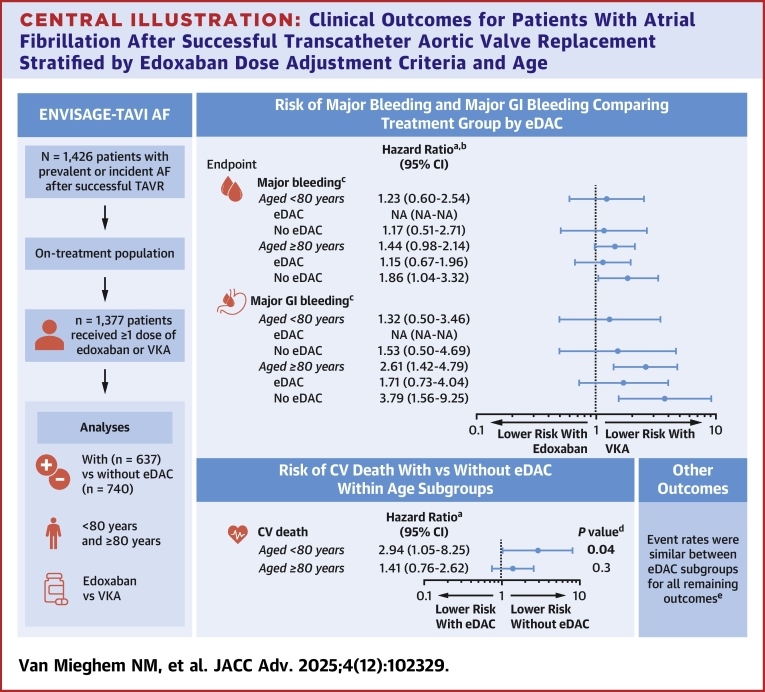 Figure 1
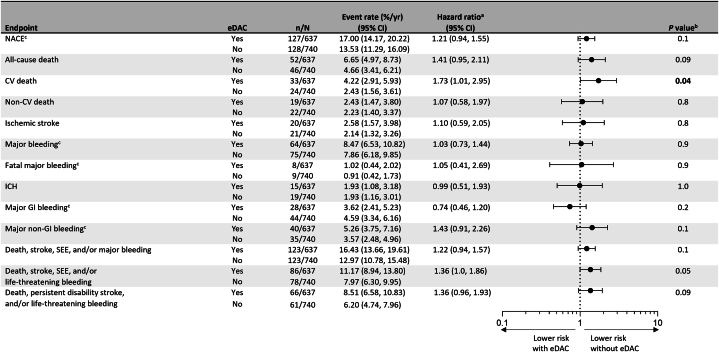 Figure 2
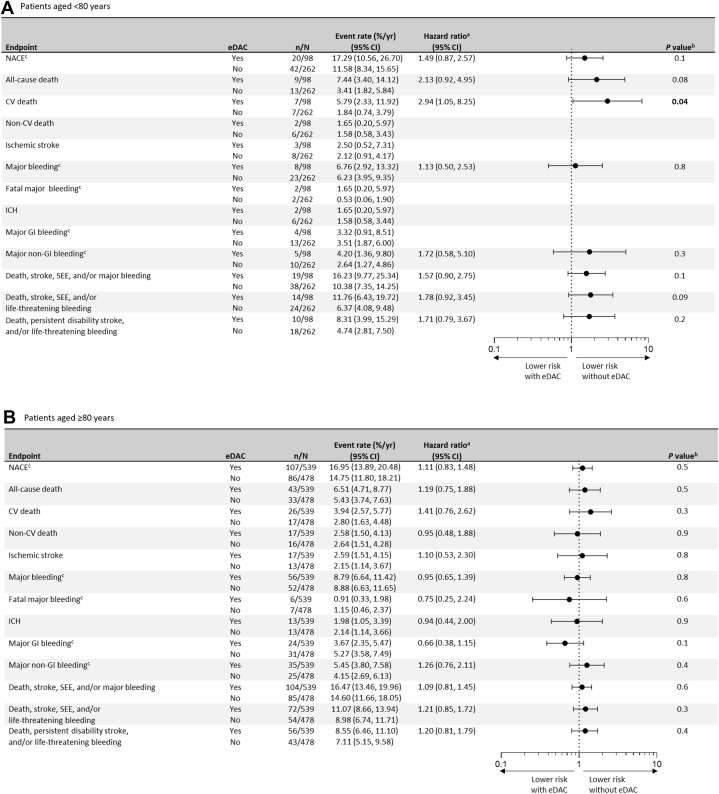 Figure 3
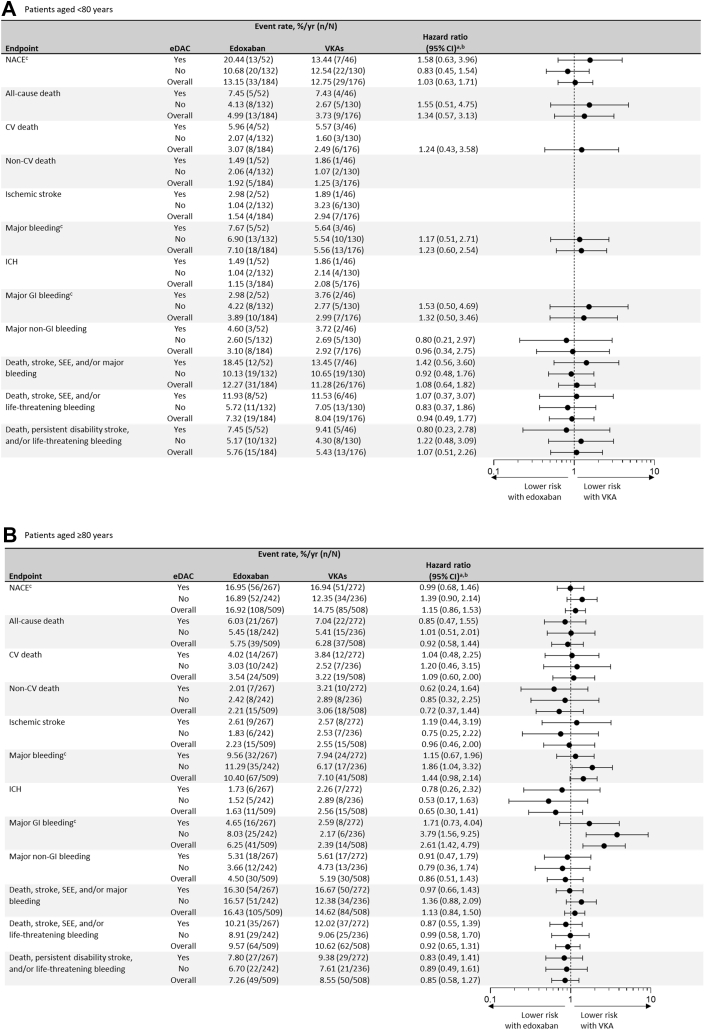 Figure 4
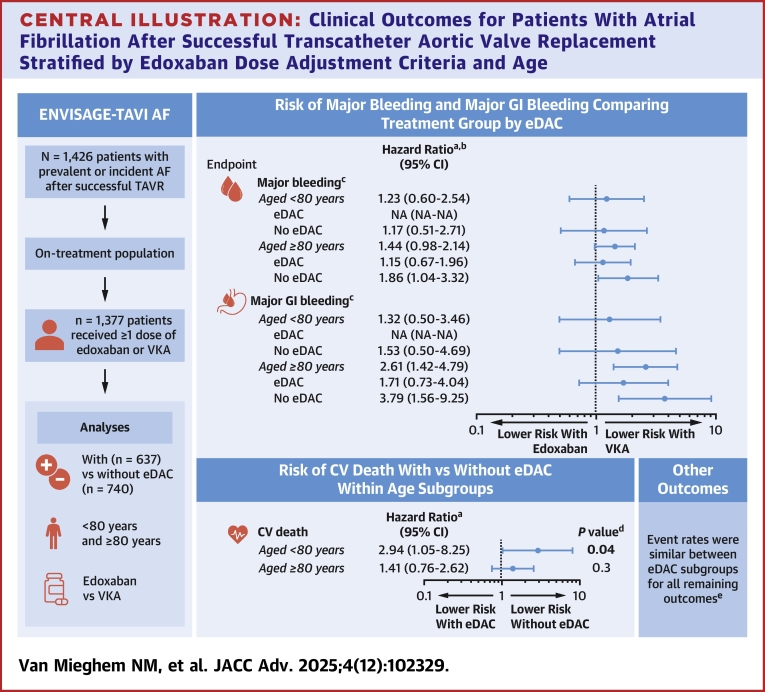 Figure 5
Peer Reviews
No public reviews on file for this paper yet. If you reviewed it on a platform where reviews are public (OpenReview, ICLR, NeurIPS, ICML), you can paste yours below so the community can read it here.
Videos
No videos yet. Explain this paper in a talk, walkthrough, or lecture? Add one.
Taxonomy
TopicsAtrial Fibrillation Management and Outcomes · Cardiac Valve Diseases and Treatments · Antiplatelet Therapy and Cardiovascular Diseases