Frailty and Age as Predictors of Mortality in Acute Myocardial Infarction Complicated by Cardiogenic Shock
M. Wasim Ahmadzai, Joakim Bo Kunkel, Peter Laursen Graversen, Anika Klein, Karoline Korsholm Jeppesen, Emma Illum, Jakob Josiassen, Ole Kristian Lerche Helgestad, Henrik Schmidt, Lene Holmvang, Lisette Okkels Jensen, Emil Fosbøl, Hanne Berg Ravn, Jacob Eifer Møller

TL;DR
Frailty and older age strongly predict higher death rates in patients with heart attacks complicated by cardiogenic shock.
Contribution
This study identifies frailty and age as independent predictors of mortality in acute myocardial infarction with cardiogenic shock.
Findings
Frail patients had a 65% 30-day mortality rate compared to 51% in nonfrail patients.
Patients aged ≥80 had an 82% 30-day mortality rate and a 9-fold higher risk of death compared to nonfrail patients under 50.
Frailty remained independently associated with increased mortality risk (aHR: 1.84).
Abstract
Cardiogenic shock is a serious complication of acute myocardial infarction (AMICS) with an in-hospital mortality rate of approximately 50%. Frailty is associated with poor outcomes in general but has been poorly investigated in AMICS. The purpose of this study was to evaluate the independent and combined effects of frailty and age on mortality in AMICS patients. We conducted a retrospective observational study using the RETROSHOCK cohort, including 1,716 AMICS patients admitted to 2 tertiary university hospitals in Denmark (2010-2017). Frailty was assessed using the Hospital Frailty Risk Score, with frailty defined as a score ≥5. Patients were further stratified by age ≥70 and <70 years old. In a separate analysis, age was categorized into 5 groups at 10-year intervals. Mortality was assessed at 30 days, 1 year (30-day landmark), and 10 years (30-day landmark). Frailty was present in…
Genes, proteins, chemicals, diseases, species, mutations and cell lines named across the full text — each resolved to its canonical identifier and authoritative record.
Click any figure to enlarge with its caption.
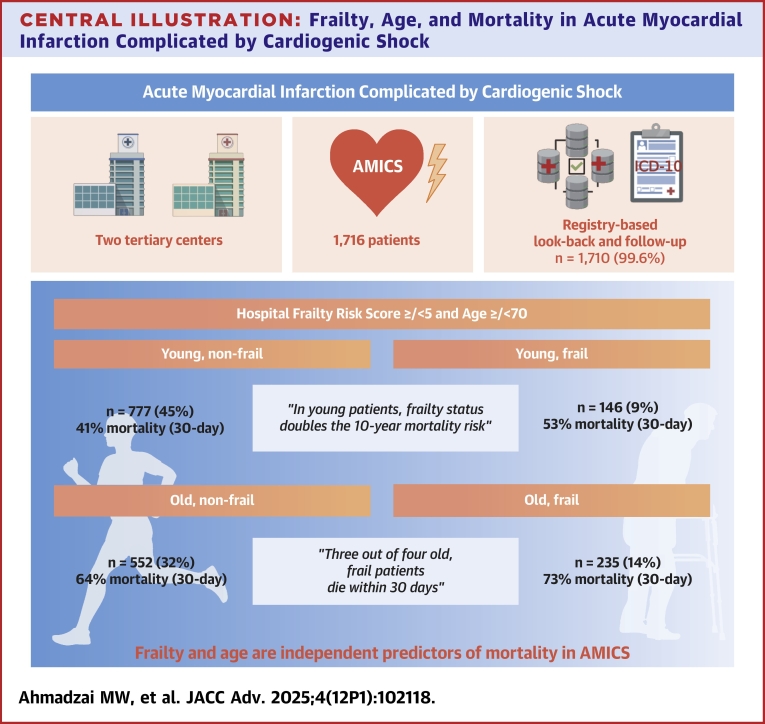 Figure 1
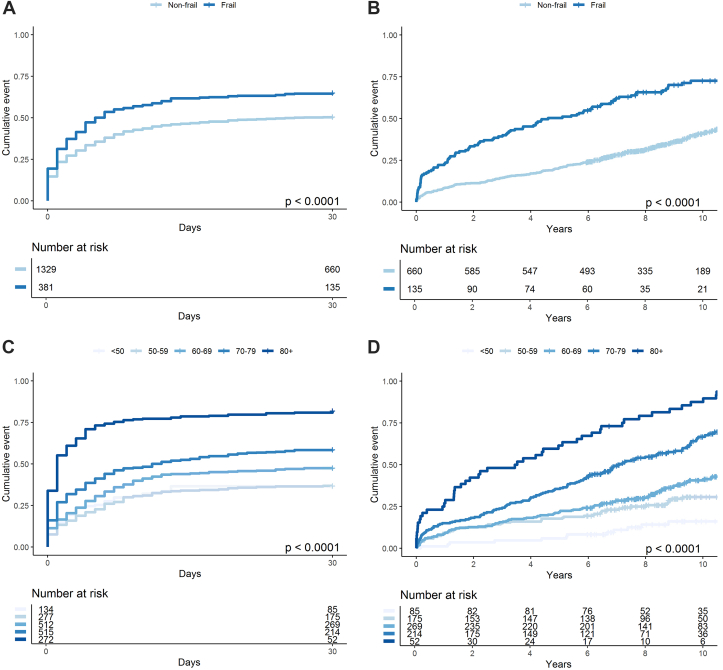 Figure 2
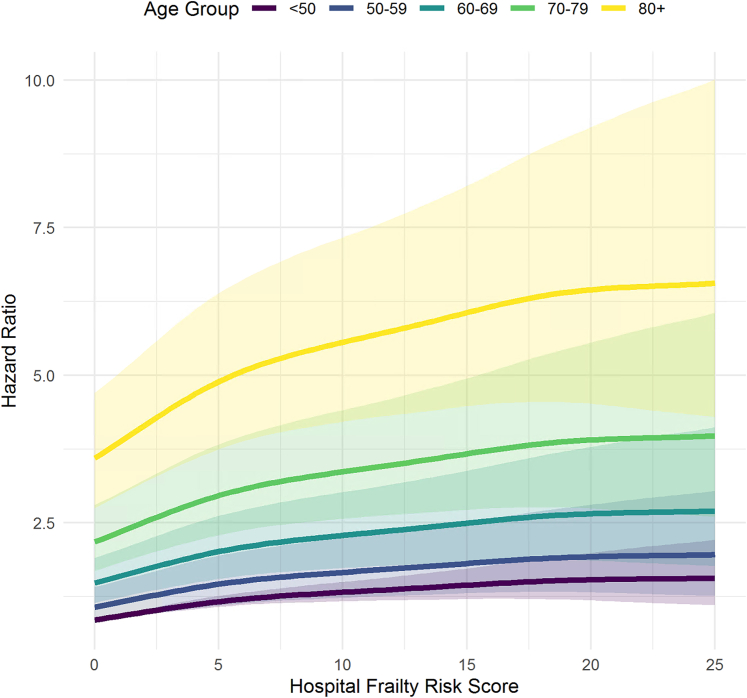 Figure 3
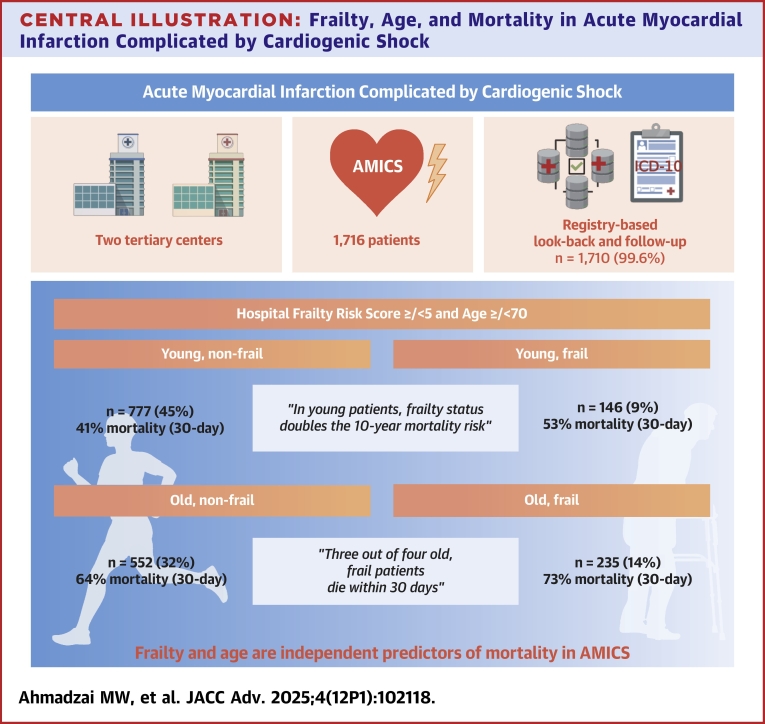 Figure 4
Peer Reviews
No public reviews on file for this paper yet. If you reviewed it on a platform where reviews are public (OpenReview, ICLR, NeurIPS, ICML), you can paste yours below so the community can read it here.
Videos
No videos yet. Explain this paper in a talk, walkthrough, or lecture? Add one.
Taxonomy
TopicsCardiac Arrest and Resuscitation · Frailty in Older Adults · Cardiovascular Function and Risk Factors