ePerturbDB: enhancer’s experimental perturbation database
Samiksha Maurya, Jaidev Sharma, Amit Mandoli, Vibhor Kumar

TL;DR
ePerturbDB is a database that compiles the effects of enhancer perturbations to help researchers identify effective therapeutic targets and understand gene regulation.
Contribution
The novel contribution is the creation of ePerturbDB, a comprehensive database of enhancer perturbation effects for hypothesis generation and experimental design.
Findings
ePerturbDB contains data from 83,743 experimental enhancer perturbations.
The database allows users to compare genomic loci with perturbed enhancers to assess potential effects.
It provides enriched genes and ontology terms for query enhancer locations overlapping with known perturbations.
Abstract
Enhancers act as cis-regulatory elements, controlling the expression of genes according to developmental stages, external signalling, and cell states. Recent studies have shown the impact of perturbation of enhancer activity on expression of genes and cell properties. However, at the same time, perturbation of many enhancers does not always show substantial effect on the expression of genes or properties of cells. Hence, there is a need to identify enhancers that can be effectively targeted for therapeutics and understanding regulation. Therefore, a comprehensive resource containing information on the effect of knockdown of enhancers is needed. Here, we introduce a database ePerturbDB, which provides resources to search the effects of 83 743 experimental perturbations of enhancers. The ePerturbDB database allows users to compare their genomic loci to the list of perturbed enhancers to…
Genes, proteins, chemicals, diseases, species, mutations and cell lines named across the full text — each resolved to its canonical identifier and authoritative record.
Click any figure to enlarge with its caption.
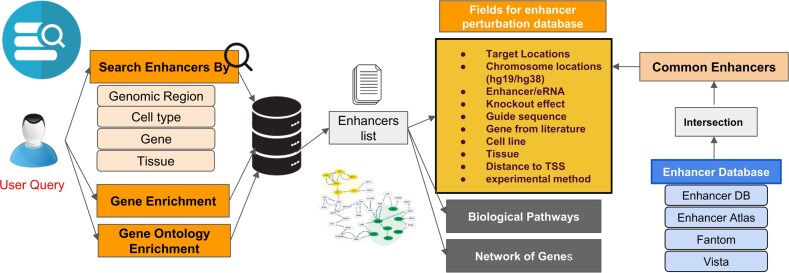 Figure 1
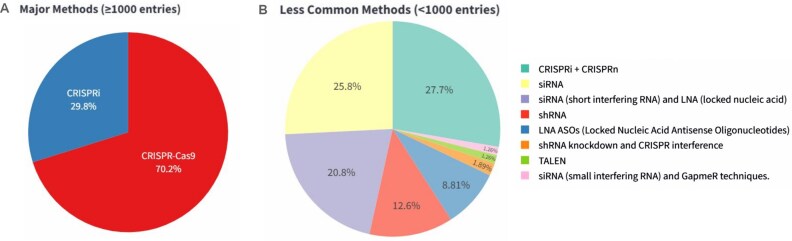 Figure 2
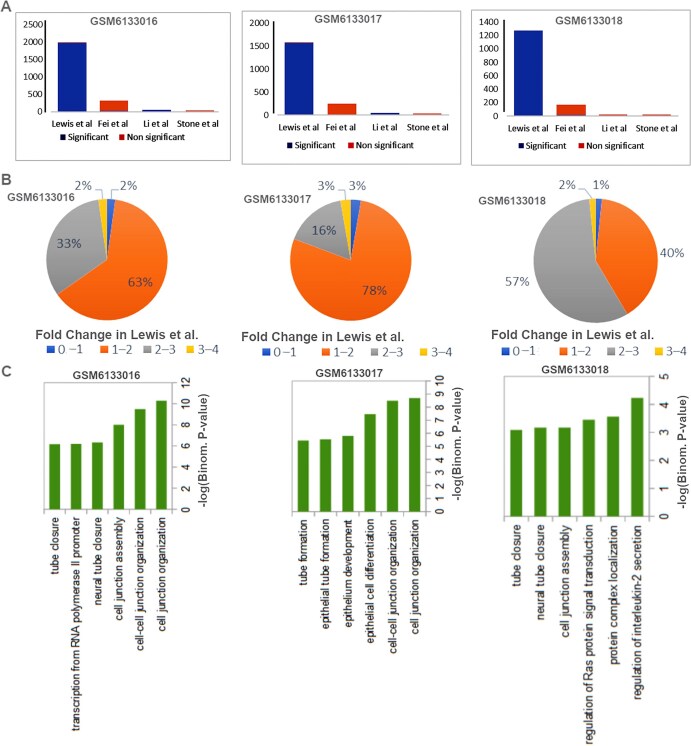 Figure 3
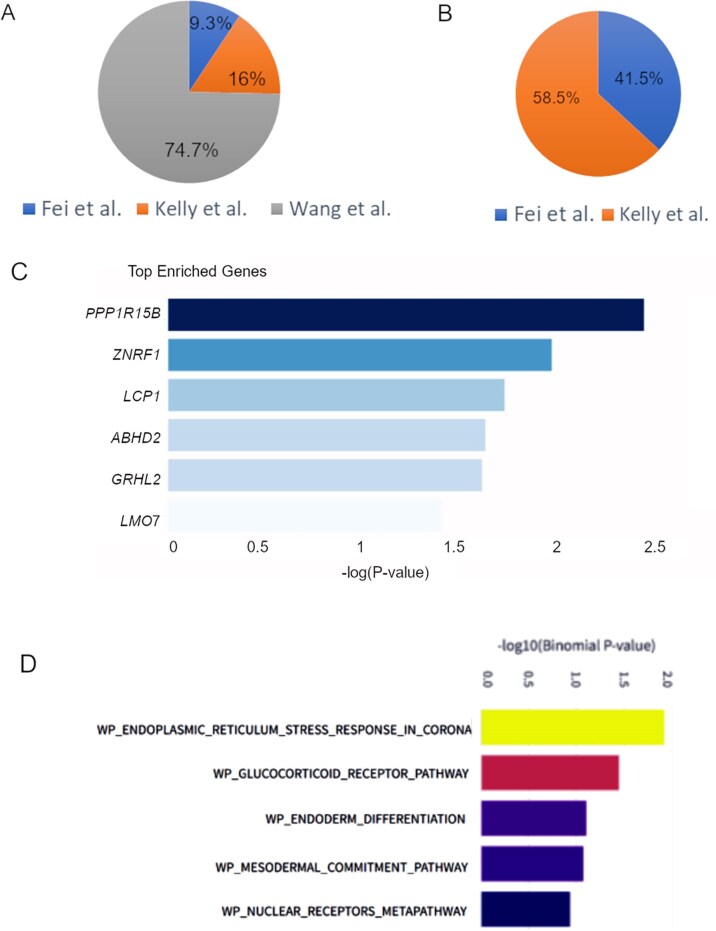 Figure 4
Peer Reviews
No public reviews on file for this paper yet. If you reviewed it on a platform where reviews are public (OpenReview, ICLR, NeurIPS, ICML), you can paste yours below so the community can read it here.
Videos
No videos yet. Explain this paper in a talk, walkthrough, or lecture? Add one.
Taxonomy
TopicsMachine Learning in Bioinformatics · Genomics and Chromatin Dynamics · Bioinformatics and Genomic Networks