Towards Safer Water: A Low‐Cost Disposable Electrochemical Sensor for Bisphenol A Using La2Sn2O7 Nanostructures
Ragu Sasikumar, Balasubramanian Akila, Shen‐Ming Chen, Jongwon Kim, Byungki Kim

TL;DR
A low-cost sensor using lanthanum stannate detects bisphenol A in water with high sensitivity and accuracy, helping protect public health and the environment.
Contribution
A novel electrochemical sensor using La2Sn2O7 nanostructures is developed for ultra-sensitive BPA detection in real water samples.
Findings
The sensor achieved an ultra-low detection limit of 1.4 nM for BPA.
It showed excellent performance in diverse real-water samples like lake and bottled water.
The material's unique properties enabled fast electron transfer and reliable BPA quantification.
Abstract
Bisphenol A (BPA), a widely used industrial chemical, persists in aquatic environments and poses serious endocrine‐disrupting risks to ecosystems and human health. This study presents a highly sensitive, selective electrochemical sensor using lanthanum stannate (La2Sn2O7), a rare‐earth stannate, engineered for efficient BPA detection in real water matrices. The La2Sn2O7 nanostructure was synthesized and employed as an electrocatalytic modifier, offering unique physicochemical properties that facilitate accelerated electron transfer kinetics and abundant electroactive surface sites. Systematic electrochemical characterizations confirmed the material's superior catalytic performance, attributable to its synergistic structural and electronic attributes. Under optimized pH and operating conditions, the La2Sn2O7‐modified electrode demonstrated exceptional analytical capability, exhibiting an…
Genes, proteins, chemicals, diseases, species, mutations and cell lines named across the full text — each resolved to its canonical identifier and authoritative record.
Click any figure to enlarge with its caption.
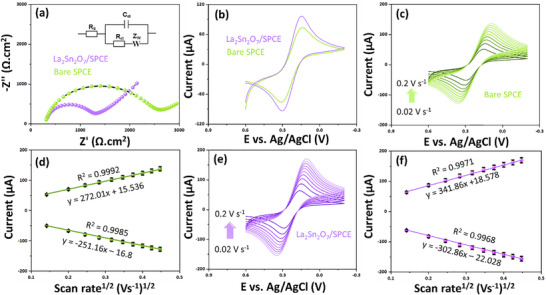 Figure 1
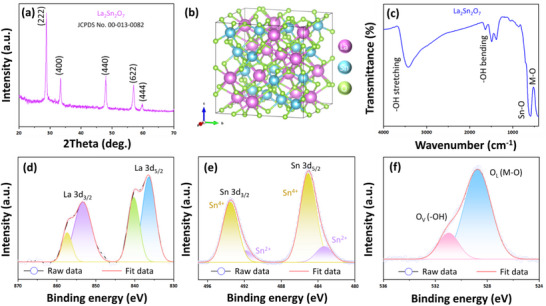 Figure 2
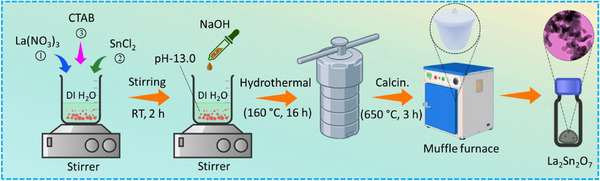 Figure 3
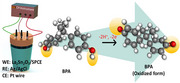 Figure 4
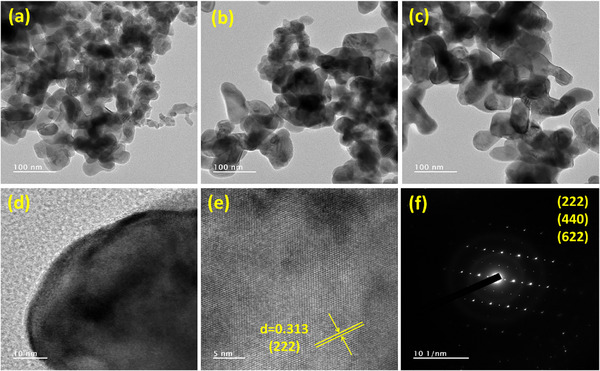 Figure 5
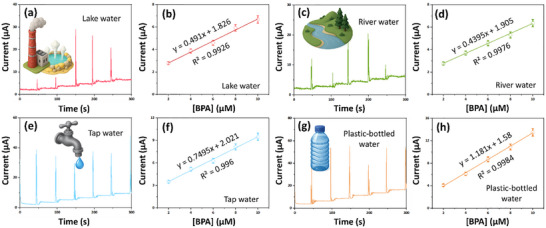 Figure 6
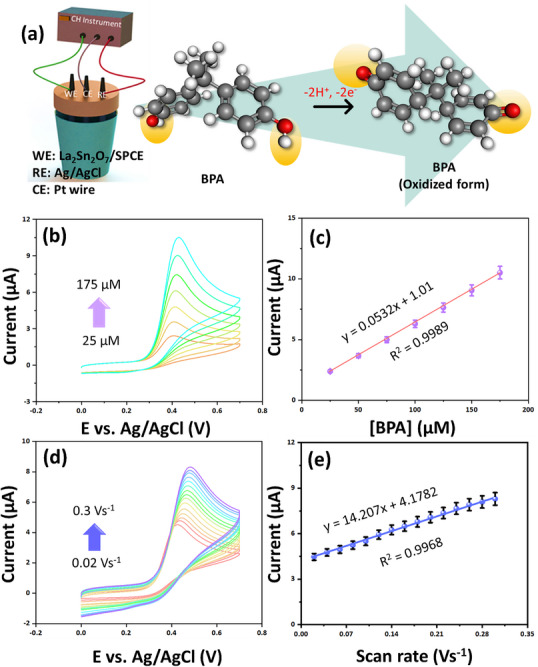 Figure 7
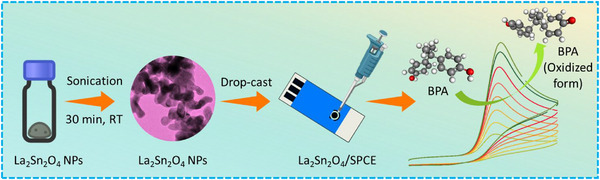 Figure 8
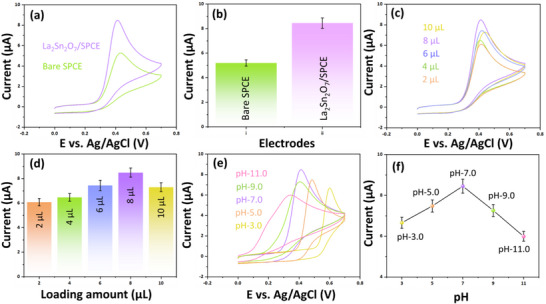 Figure 9
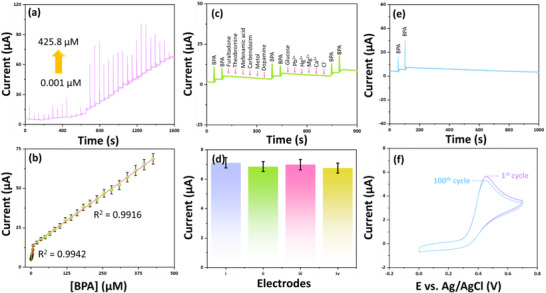 Figure 10
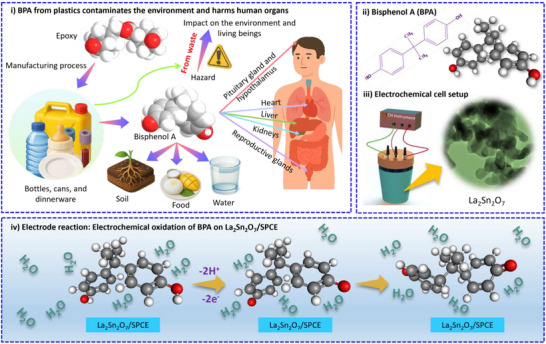 Figure 11
Peer Reviews
No public reviews on file for this paper yet. If you reviewed it on a platform where reviews are public (OpenReview, ICLR, NeurIPS, ICML), you can paste yours below so the community can read it here.
Videos
No videos yet. Explain this paper in a talk, walkthrough, or lecture? Add one.
Taxonomy
TopicsEffects and risks of endocrine disrupting chemicals · Electrochemical sensors and biosensors · Advanced oxidation water treatment