Longitudinal analysis of retinal cell state transitions in RB1-deficient retinal organoids reveals the nascent cone precursors are the earliest cell-origin of human retinoblastoma
Ke Ye, Yuan Wang, Ping Xu, Bingbing Xie, Shijing Wu, Wenxin Zhang, Guanjie Gao, Dandan Zheng, Xiaojing Song, Suai Zhang, Fuying Guo, Yongping Li, Yizhi Liu, Jie Wang, Ruifang Sui, Xiufeng Zhong

TL;DR
This study identifies the earliest cell origin of retinoblastoma in human retinal organoids and shows how RB1 deficiency leads to abnormal cell proliferation and tumor formation.
Contribution
The study demonstrates for the first time that nascent cone precursors are the earliest cell origin of human retinoblastoma.
Findings
RB1 loss induces overproliferation of ATOH7+ neurogenic retinal progenitor cells, disrupting retinal development.
ATOH7+/RXRγ+ nascent cone precursors survive and drive retinoblastoma tumorigenesis.
A potential therapeutic target for retinoblastoma was identified and validated using multi-omics data and experiments.
Abstract
All cancers arise from the malignant transformation of normal cells, yet their cells-of-origin remain challenging to identify due to the inability to directly observe dynamic changes in human tumors. Retinoblastoma (Rb), a malignant intraocular cancer, serves as a well-established model for investigating the molecular and cellular mechanisms underlying tumorigenesis. While the maturing cone precursors (CPs) have been proposed as the cellular origin of human Rb, it is unclear whether other retinal cell types are similarly sensitive to RB1 inactivation. In this study, we developed RB1-deficient human retinal organoids (ROs) models using RB1−/− or RB1+/- human induced pluripotent stem cells (hiPSCs). RB1−/− hiPSCs generated tumor cells that recapitulated key features of human Rb and formed serial orthotopic xenografts. Importantly, RB1 loss induced overproliferation of ATOH7+ neurogenic…
Genes, proteins, chemicals, diseases, species, mutations and cell lines named across the full text — each resolved to its canonical identifier and authoritative record.
Click any figure to enlarge with its caption.
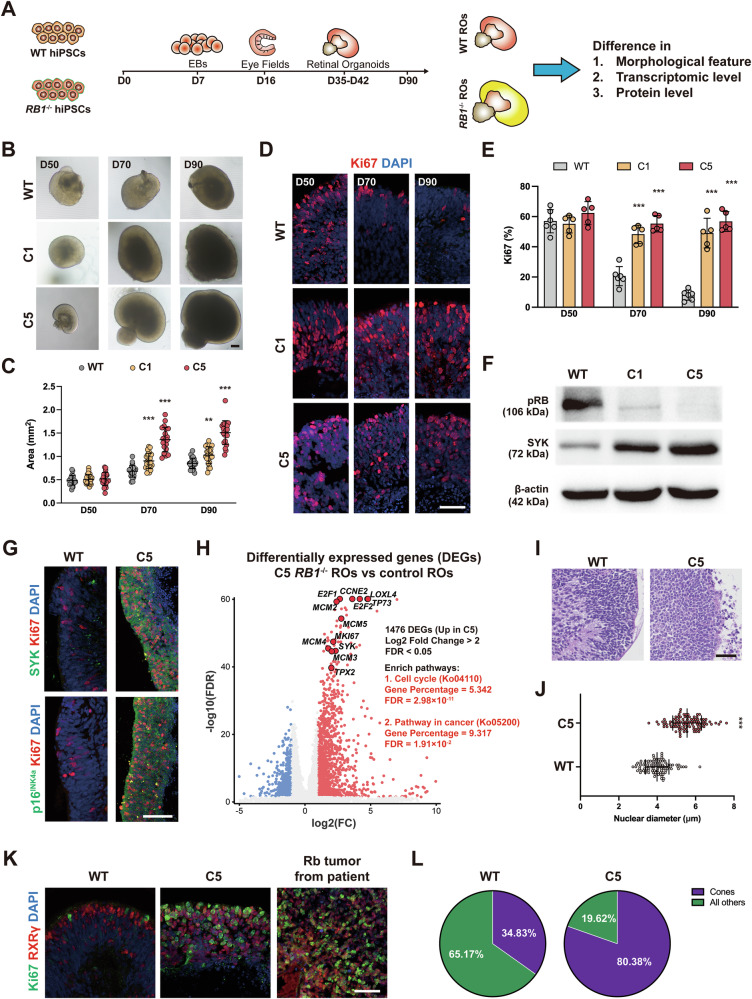 Figure 1
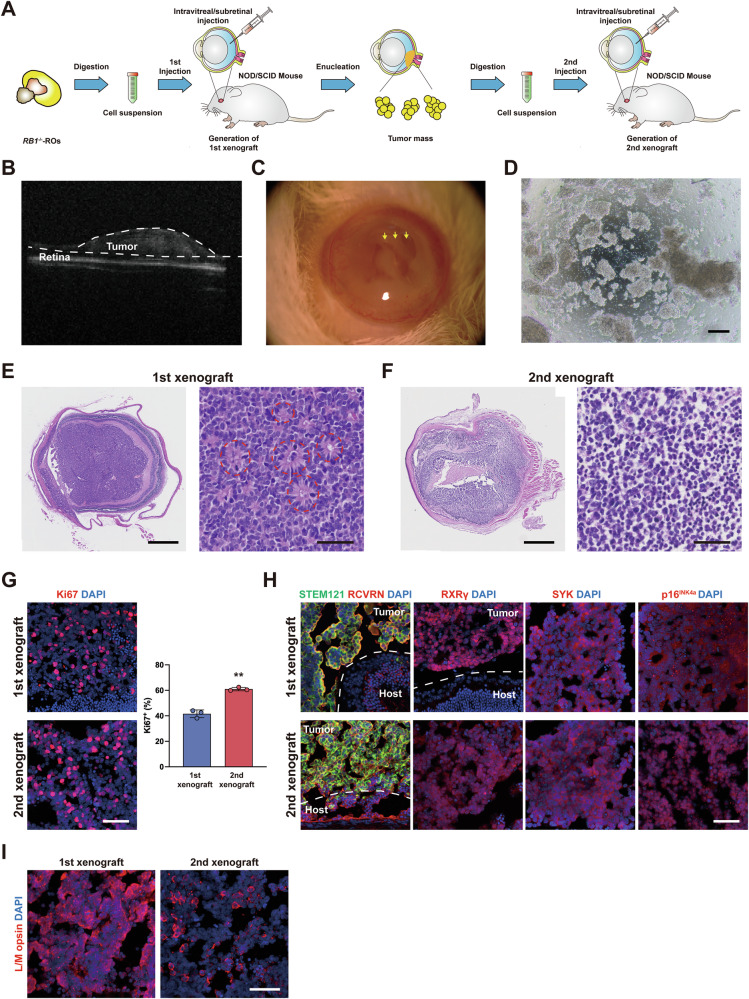 Figure 2
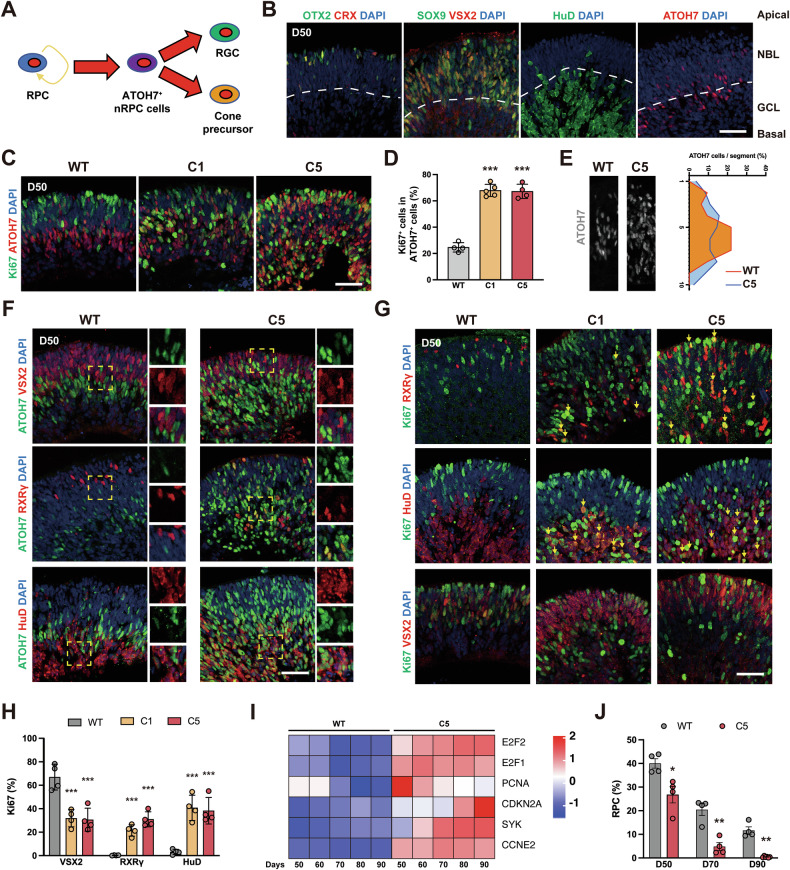 Figure 3
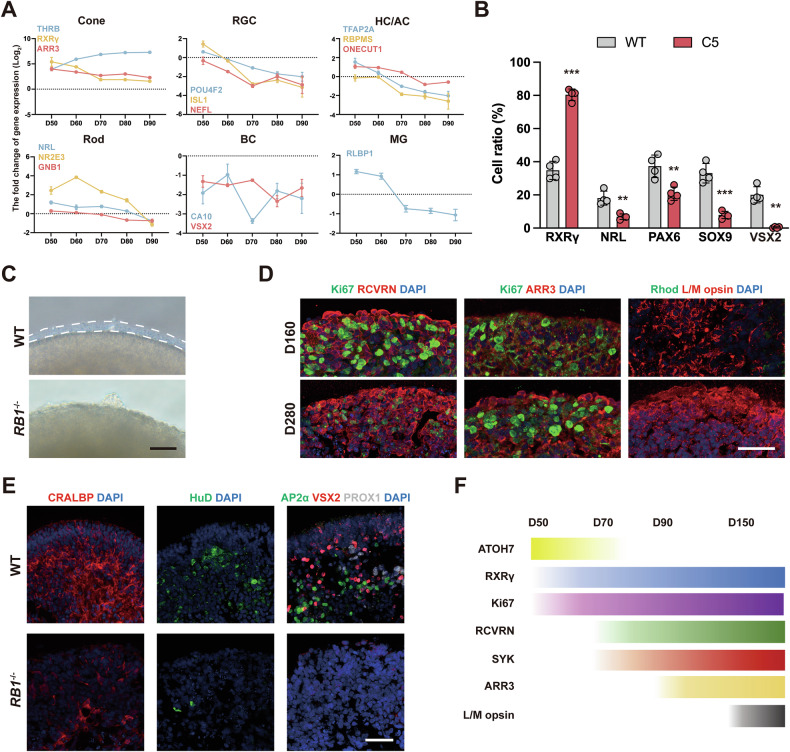 Figure 4
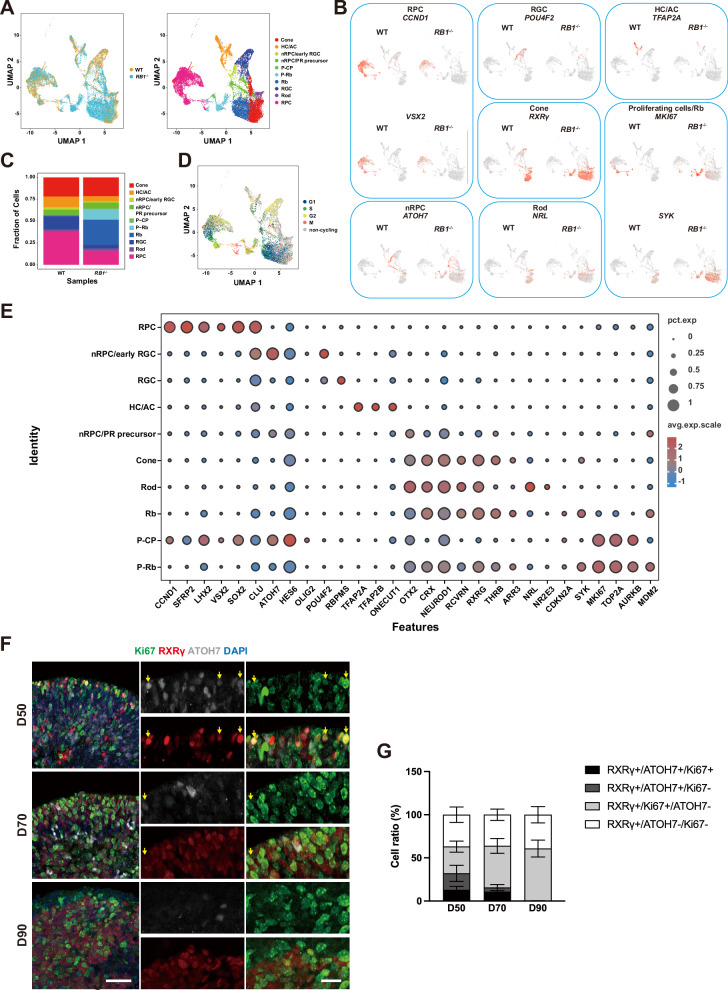 Figure 5
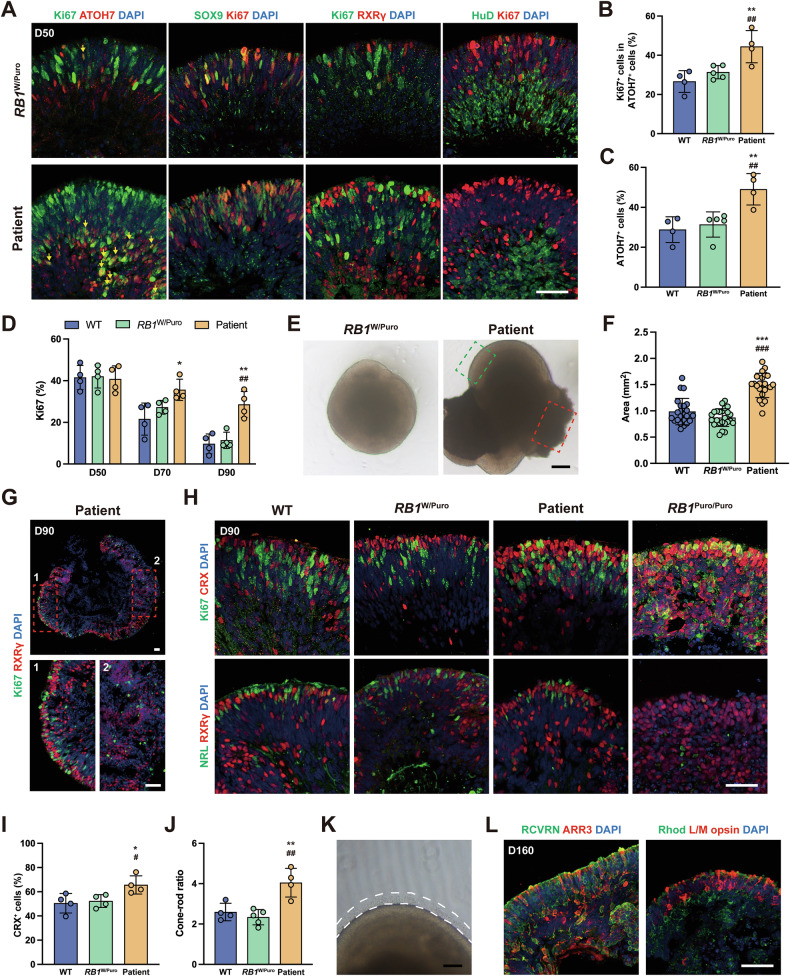 Figure 6
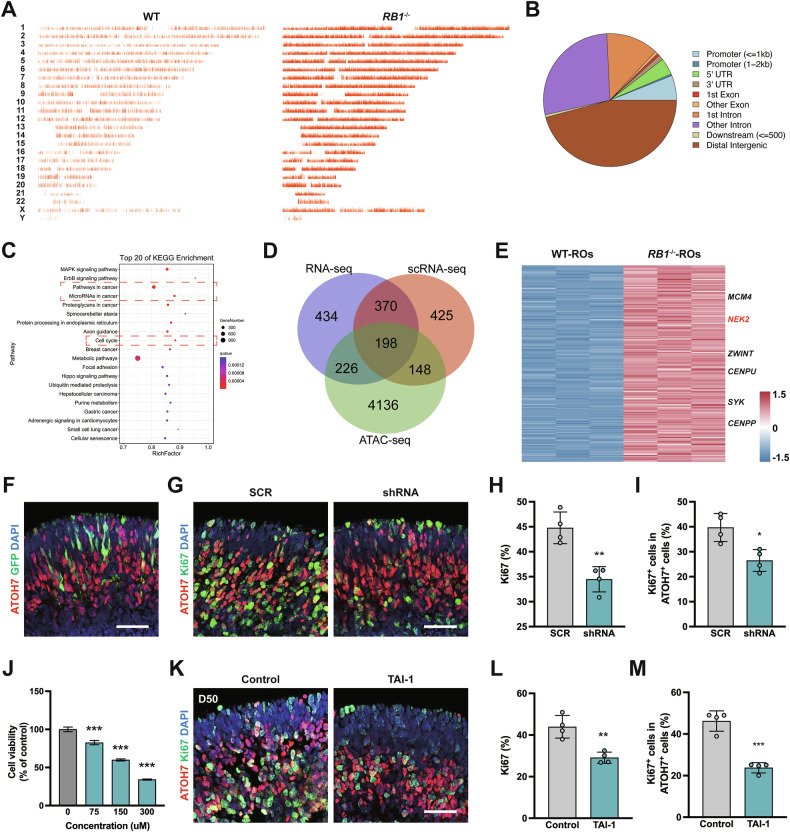 Figure 7
Peer Reviews
No public reviews on file for this paper yet. If you reviewed it on a platform where reviews are public (OpenReview, ICLR, NeurIPS, ICML), you can paste yours below so the community can read it here.
Videos
No videos yet. Explain this paper in a talk, walkthrough, or lecture? Add one.
Taxonomy
TopicsOcular Oncology and Treatments · Retinal Development and Disorders · Glioma Diagnosis and Treatment