Molecular basis of XPF-ERCC1 targeting to SLX4-dependent DNA repair pathways
Junjie Feng, Peter R. Martin, Szymon Kowalski, Maxime Lecot, Nora B. Cronin, Teige Matthews-Palmer, Wojciech Niedzwiedz, Basil J. Greber

TL;DR
This paper reveals how the XPF-ERCC1 enzyme interacts with other proteins to repair DNA, using structural and functional studies.
Contribution
The study identifies key residues in XPF-ERCC1 that are crucial for its interaction with SLX4 and SLX4IP.
Findings
Point mutations in XPF-ERCC1 interfaces impair interactions with SLX4 or SLX4IP in human cells.
Disruption of the XPF-SLX4IP interface causes sensitivity to cis-platin.
The structure of the XPF-ERCC1-SLX4IP-SLX4330-555 complex with DNA is revealed.
Abstract
The preservation and faithful propagation of genetic information is essential for all life forms and depends on cellular pathways that enable replication, recombination, and repair of DNA. The multifunctional XPF-ERCC1 DNA endonuclease complex acts in several DNA repair pathways and interacts with numerous partner proteins and large DNA repair assemblies, including the nucleotide excision repair machinery and the SMX tri-endonuclease complex. Here, we report structures of XPF-ERCC1 in complex with the DNA repair factors SLX4 and SLX4IP, thereby identifying key residues responsible for direct interactions with XPF-ERCC1. When introduced into human cells, point mutations in these interfaces impair the interactions between XPF-ERCC1 and SLX4 or SLX4IP, and disruption of the XPF-SLX4IP interface leads to cis-platin sensitivity. Furthermore, our data reveal the structure of the human…
Genes, proteins, chemicals, diseases, species, mutations and cell lines named across the full text — each resolved to its canonical identifier and authoritative record.
Click any figure to enlarge with its caption.
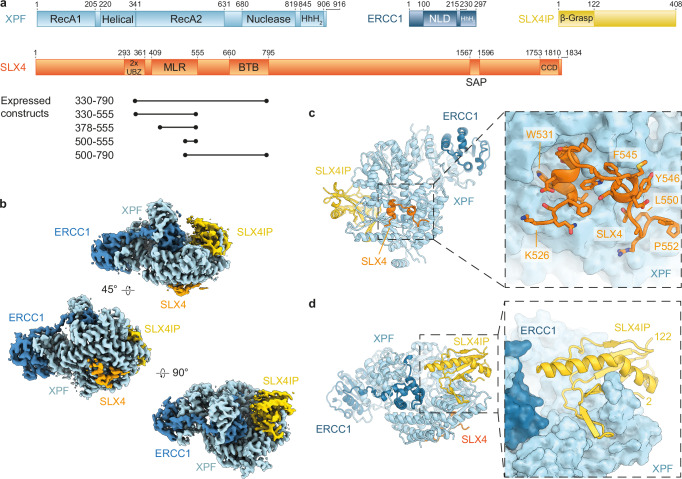 Figure 1
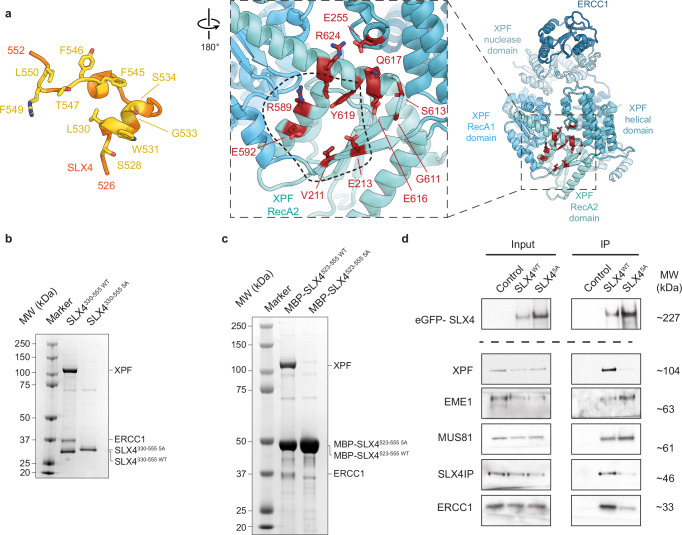 Figure 2
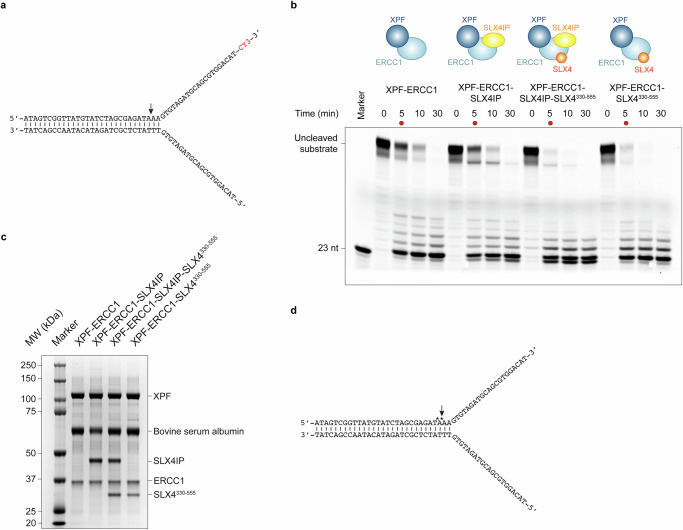 Figure 3
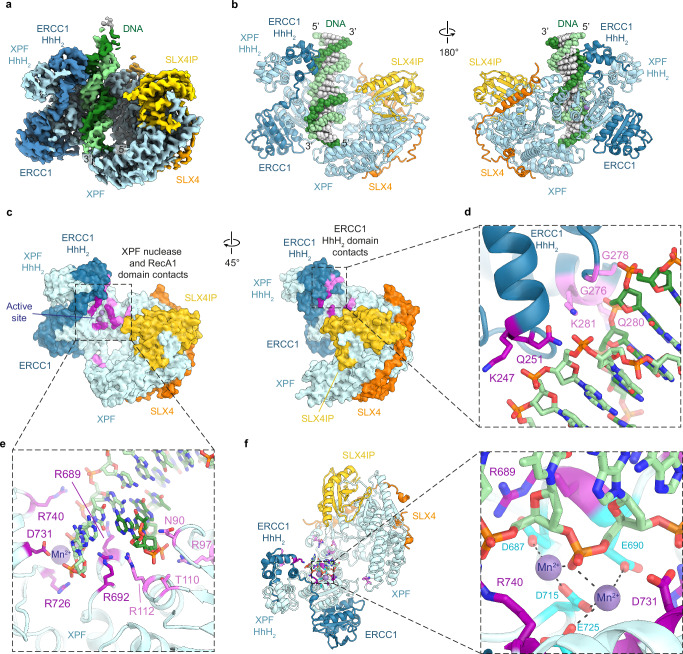 Figure 4
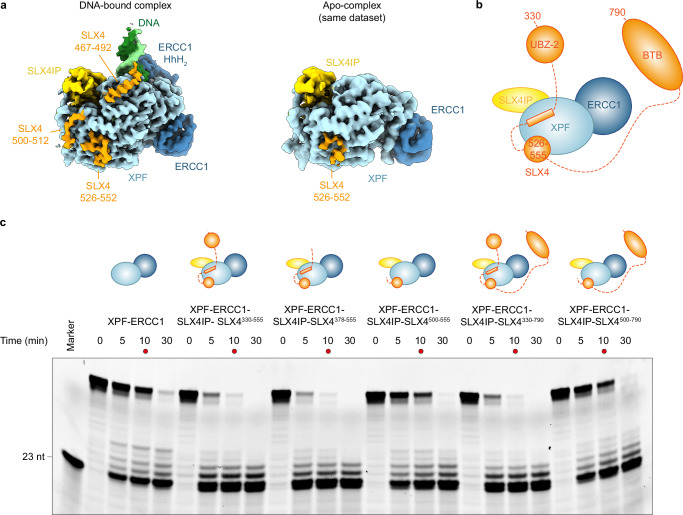 Figure 5
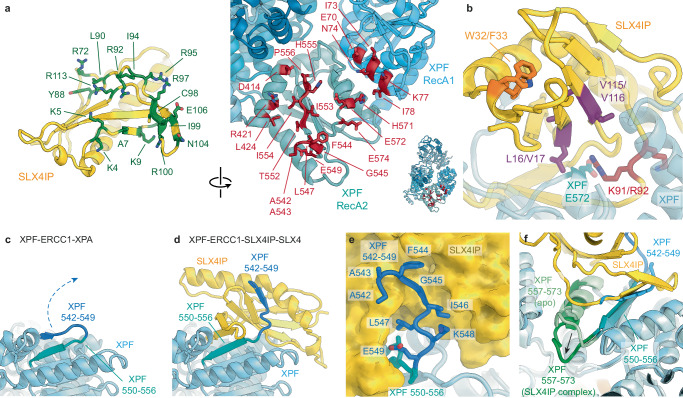 Figure 6
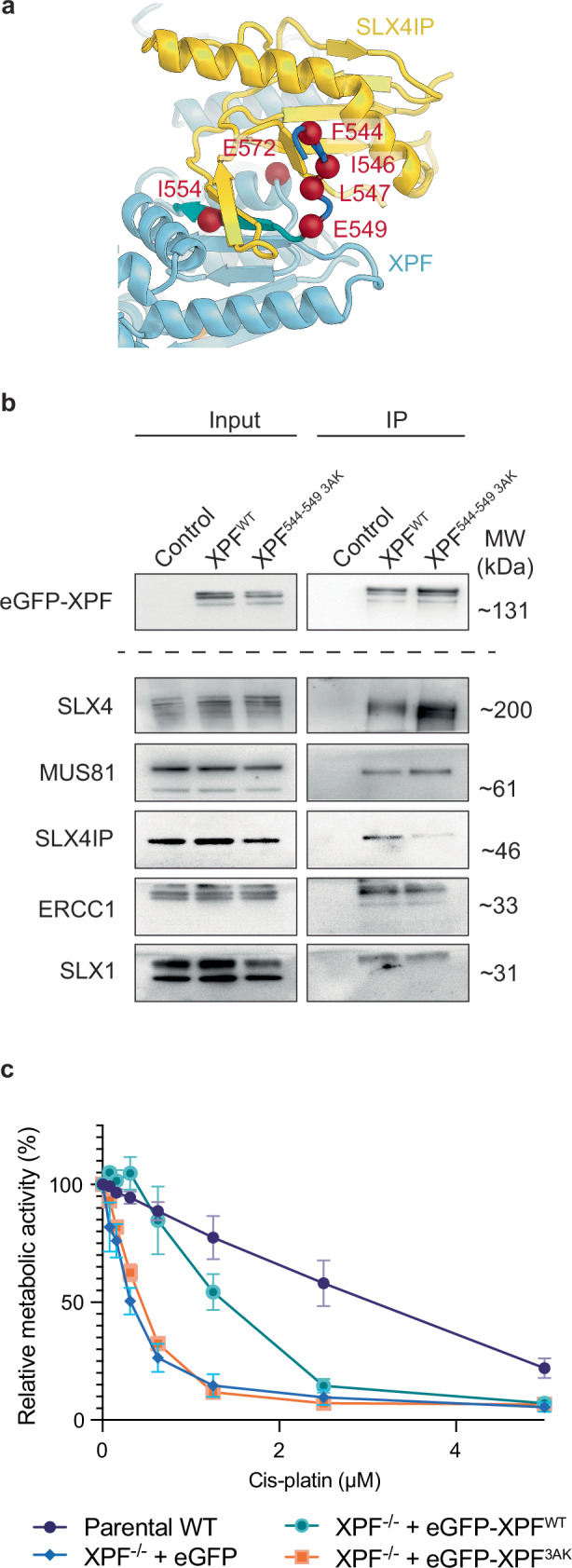 Figure 7
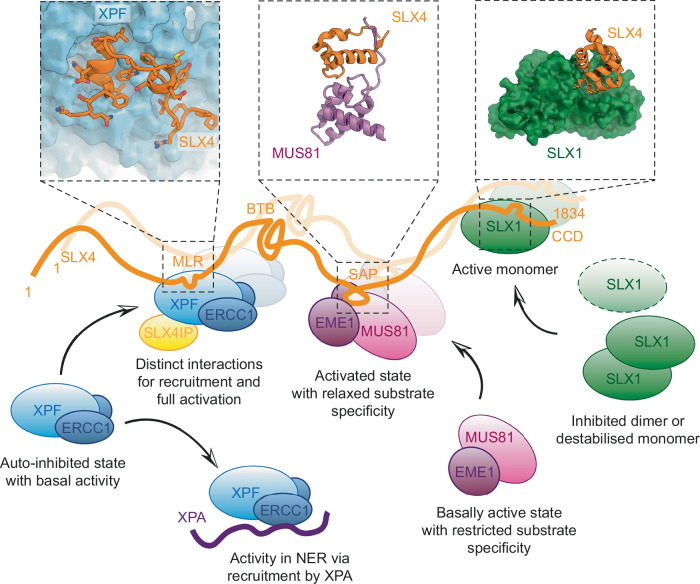 Figure 8
Peer Reviews
No public reviews on file for this paper yet. If you reviewed it on a platform where reviews are public (OpenReview, ICLR, NeurIPS, ICML), you can paste yours below so the community can read it here.
Videos
No videos yet. Explain this paper in a talk, walkthrough, or lecture? Add one.
Taxonomy
TopicsDNA Repair Mechanisms · Genetic factors in colorectal cancer · PARP inhibition in cancer therapy