Resolving coral temperature vulnerability through heat and cold bleaching thresholds
Yusuf C. El-Khaled, Francisca C. García, Neus Garcias-Bonet, Matteo Monti, Erika P. Santoro, Matilde Marques, Natalie Dunn, Tina Keller-Costa, Christian R. Voolstra, Raquel S. Peixoto

TL;DR
This study introduces a new metric to measure coral tolerance to cold stress, revealing species-specific thermal limits and microbial patterns that help assess coral resilience under climate change.
Contribution
The novel cold ED50 metric enables a dual assessment of coral thermal tolerance to both heat and cold stress.
Findings
Acropora sp. showed the highest heat tolerance (38.68 ± 0.39 °C) and S. pistillata the lowest cold tolerance (15.63 ± 0.26 °C).
Endozoicomonadaceae bacteria were abundant across seasons and negatively correlated with bleaching thresholds in Acropora sp. during summer.
Coral recovery after extreme temperatures varied between species, highlighting species-specific resilience patterns.
Abstract
Coral bleaching is most commonly associated with heat stress, while cold-water bleaching remains an underrecognized threat. Building upon the widely used ED50 metric for standardized heat tolerance, we introduce a new metric, cold ED50, to quantify cold bleaching thresholds. By comparing cold and heat ED50s, we define the temperature variability range of coral species. To achieve this, we used Coral Bleaching Automated Stress System (CBASS) assays to assess heat and cold temperature tolerance across three Red Sea scleractinian corals (Acropora sp., Pocillopora favosa, Stylophora pistillata) during peak summer and winter along with microbial profiling. Acropora sp. exhibited the highest heat ED50 (38.68 ± 0.39 °C) in summer, while S. pistillata had the lowest cold ED50 (15.63 ± 0.26 °C) in winter. Our results revealed species-specific bacterial communities, with Endozoicomonadaceae…
Genes, proteins, chemicals, diseases, species, mutations and cell lines named across the full text — each resolved to its canonical identifier and authoritative record.
Click any figure to enlarge with its caption.
 Figure 1
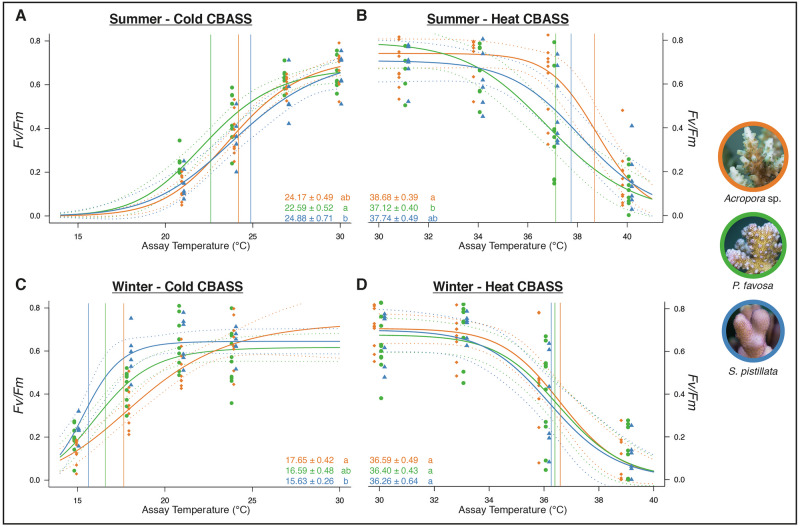 Figure 2
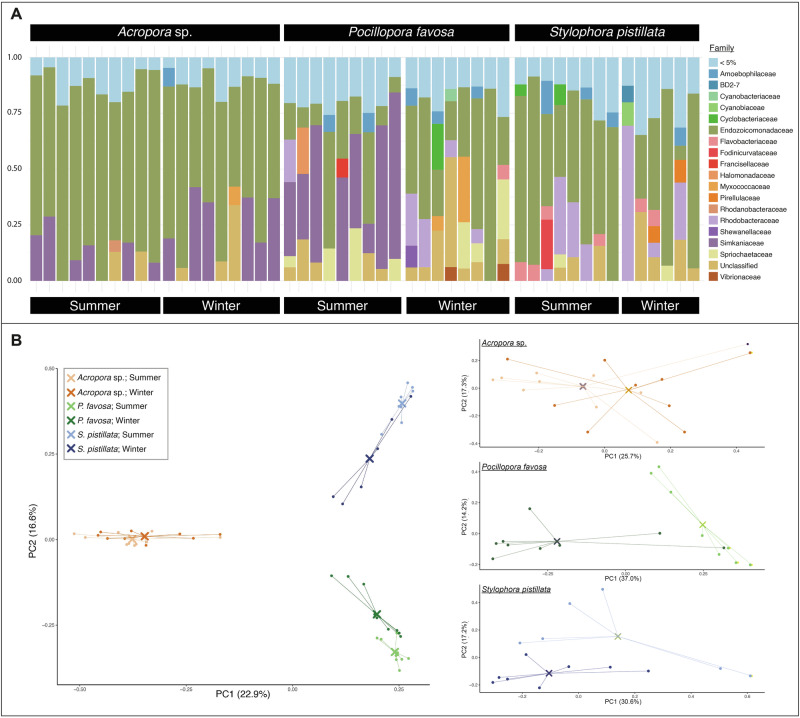 Figure 3
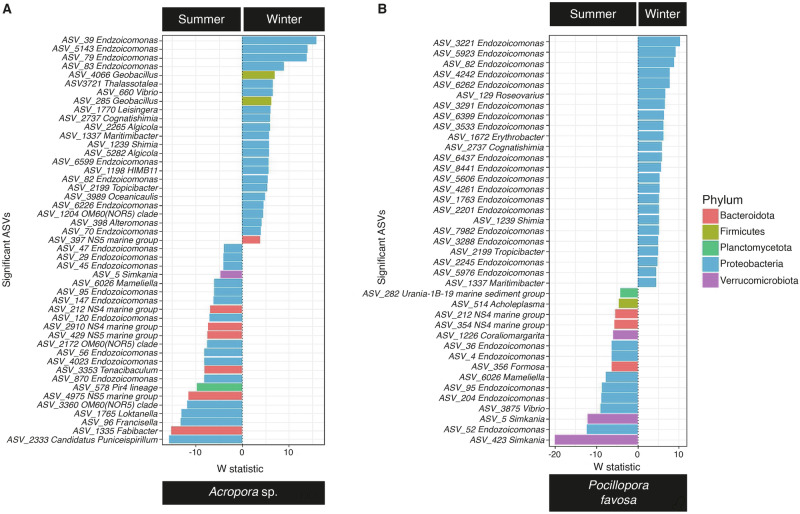 Figure 4
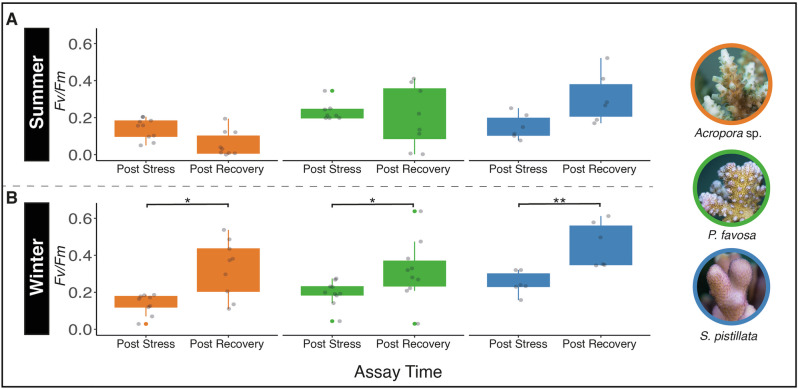 Figure 5
Peer Reviews
No public reviews on file for this paper yet. If you reviewed it on a platform where reviews are public (OpenReview, ICLR, NeurIPS, ICML), you can paste yours below so the community can read it here.
Videos
No videos yet. Explain this paper in a talk, walkthrough, or lecture? Add one.
Taxonomy
TopicsCoral and Marine Ecosystems Studies · Ocean Acidification Effects and Responses · Marine and coastal plant biology