Hic-5 drives epithelial mechanotransduction promoting a feed-forward cycle of bronchoconstriction
Chimwemwe Mwase, Wenjiang Deng, Hyo Jin Kim, Jennifer A. Mitchel, Thien-Khoi Phung, Michael J. O’Sullivan, Joel A. Mathews, Jeffrey Crosby, Christopher E. Turner, Adam L. Haber, Jin-Ah Park

TL;DR
This study shows that Hic-5, a protein in airway cells, plays a key role in converting mechanical forces into biological signals, worsening asthma by promoting a cycle of bronchoconstriction.
Contribution
The study identifies Hic-5 as a novel regulator of epithelial mechanotransduction in asthma.
Findings
Hic-5 expression increases in airway basal cells under mechanical compression.
Hic-5 knockdown reduces mechanoresponses like stress fiber formation and ET-1 secretion.
Hic-5 promotes a feed-forward cycle of bronchoconstriction via endothelin-1.
Abstract
Mechanical forces are essential for organ function, but excessive or dysregulated forces can promote pathologic conditions. In asthma, bronchoconstriction narrows the airway, compressing the airway epithelium and activating mechanotransduction, yet key regulators of mechanotransduction remain unclear. Here we show that Hic-5, a focal adhesion adaptor, is a key regulator of epithelial mechanotransduction. In human airway epithelial cells at air–liquid interface exposed to mechanical compression that mimics bronchoconstriction, we find that compression induces Hic-5 expression in airway basal cells. We further validated these in vitro findings by reanalyzing single-cell RNA-seq data from patients with asthma undergoing bronchoconstriction after allergen challenge, which revealed increased Hic-5 expression in airway basal cells. Hic-5 knockdown in human airway epithelial cells markedly…
Genes, proteins, chemicals, diseases, species, mutations and cell lines named across the full text — each resolved to its canonical identifier and authoritative record.
Click any figure to enlarge with its caption.
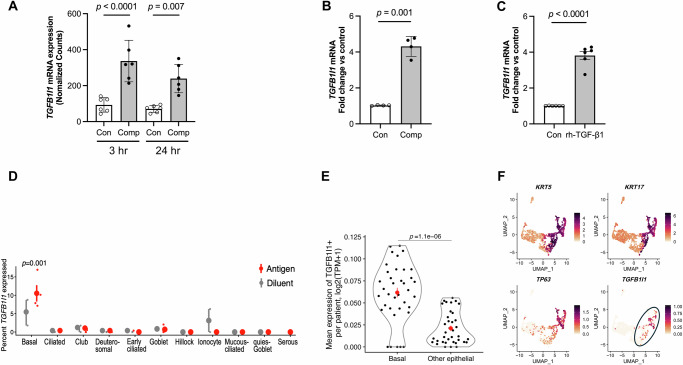 Figure 1
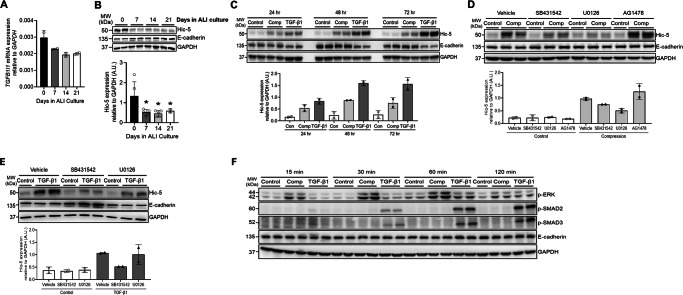 Figure 2
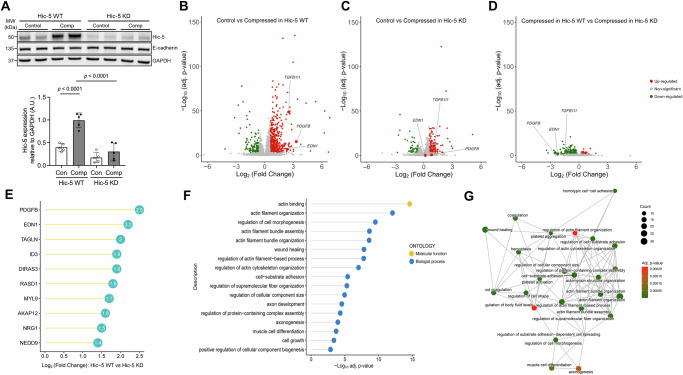 Figure 3
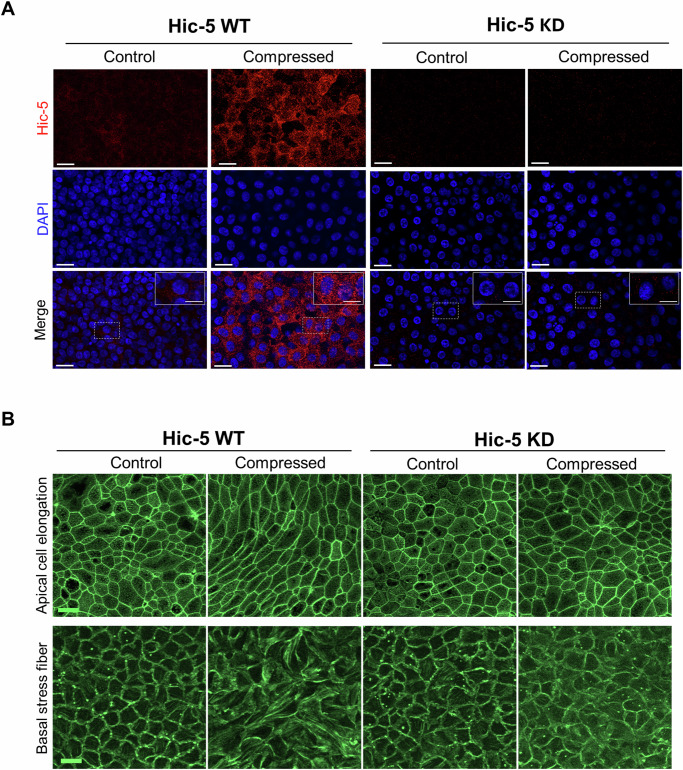 Figure 4
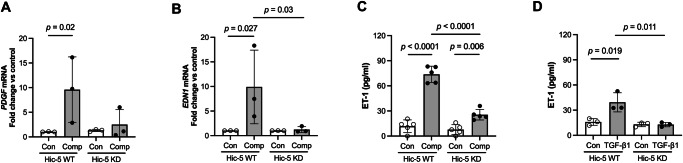 Figure 5
Peer Reviews
No public reviews on file for this paper yet. If you reviewed it on a platform where reviews are public (OpenReview, ICLR, NeurIPS, ICML), you can paste yours below so the community can read it here.
Videos
No videos yet. Explain this paper in a talk, walkthrough, or lecture? Add one.
Taxonomy
TopicsAsthma and respiratory diseases · Neonatal Respiratory Health Research · Cellular Mechanics and Interactions