Balance and imbalance in dark and bright (OFF and ON) visual channels
Ernest Greene, Jack Morrison

TL;DR
This study explores how the visual system processes dark and bright visual signals and how they affect letter recognition.
Contribution
The paper introduces new insights into the interaction of dark and bright visual channels under varying stimulus conditions.
Findings
Some energy ranges of dark and bright pulses produced similar changes in letter recognition.
Results clarify conditions that lead to an 'anomalous contrast' effect.
Frequency and polarity within flicker cycles influence visual recognition differently.
Abstract
The visual system uses separate neuron channels to distinguish figures that are darker or brighter than their background. We displayed letters as dark and/or bright pulses, with pulse energy scaled as a function of background energy, and assessed the probability of letter recognition as a function of pulse energy and polarity. Similarity of effect for dark and bright pulses was tested with single pulses and with flicker displays. The role of frequency and polarity within flicker cycles was evaluated with reference to provisions of the Talbot-Plateau law. Some energy ranges of dark and bright energy produced comparable changes in the probability of letter recognition, while others did not. The results also provide insight into what stimulus conditions will produce a previously reported “anomalous contrast” effect. The online version contains supplementary material available at…
Genes, proteins, chemicals, diseases, species, mutations and cell lines named across the full text — each resolved to its canonical identifier and authoritative record.
Click any figure to enlarge with its caption.
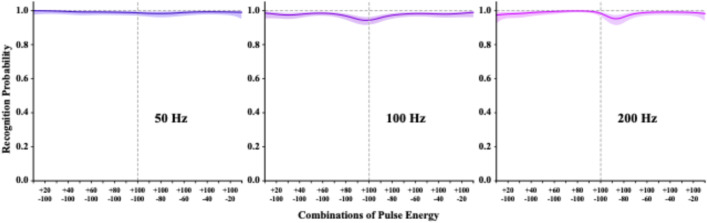 Figure 10
 Figure 1
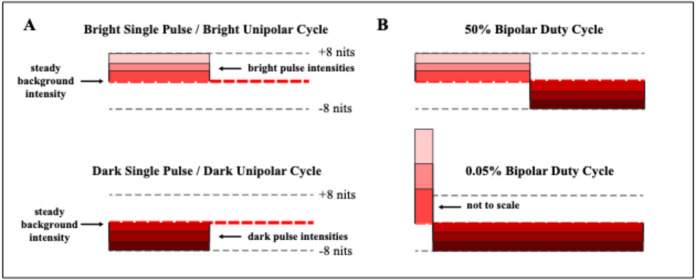 Figure 2
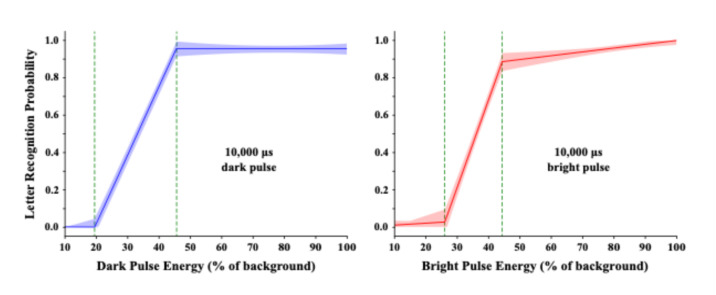 Figure 3
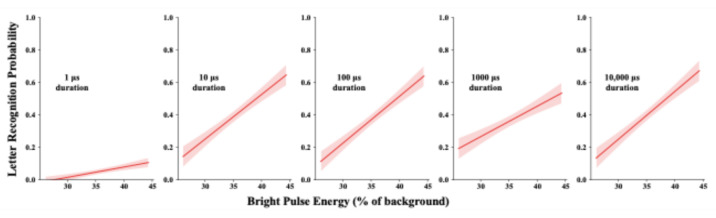 Figure 4
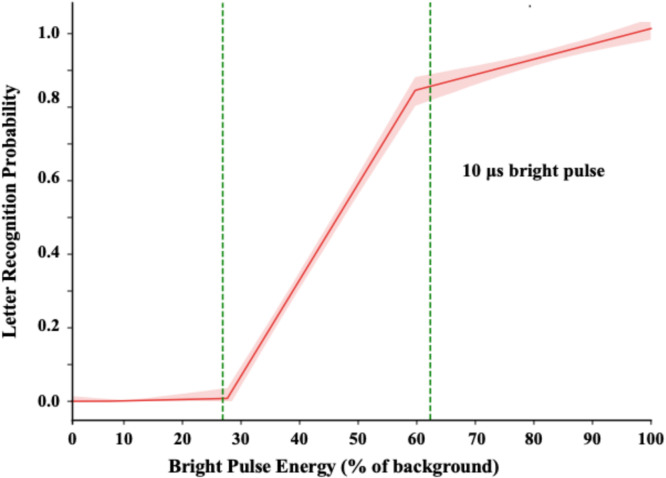 Figure 5
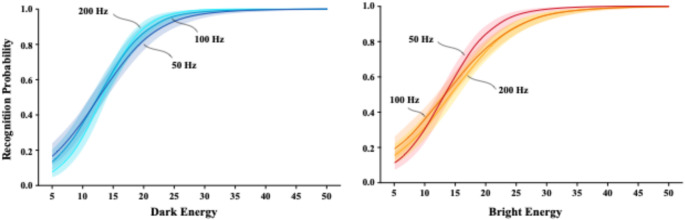 Figure 6
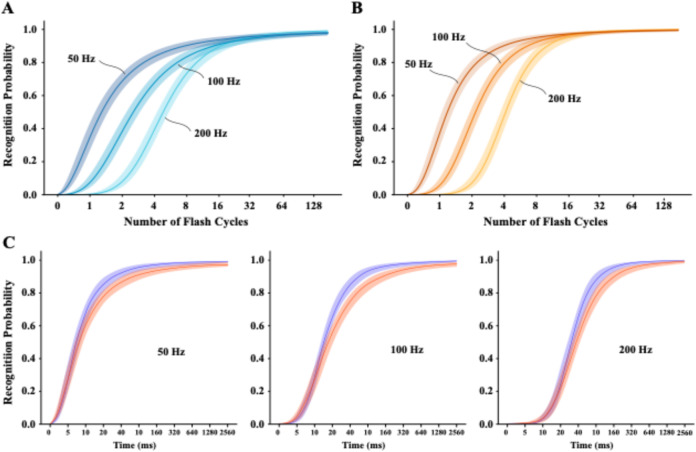 Figure 7
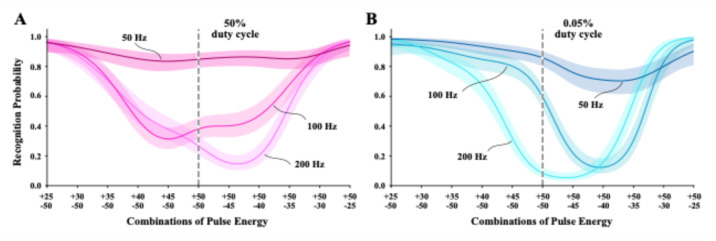 Figure 9
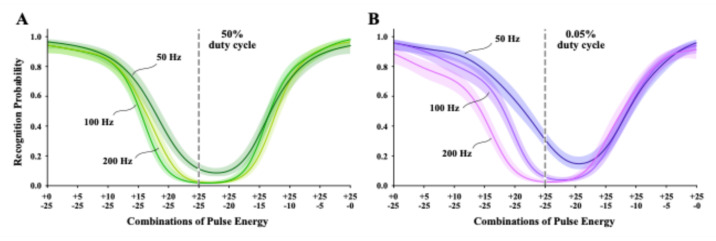 Figure 10
Peer Reviews
No public reviews on file for this paper yet. If you reviewed it on a platform where reviews are public (OpenReview, ICLR, NeurIPS, ICML), you can paste yours below so the community can read it here.
Videos
No videos yet. Explain this paper in a talk, walkthrough, or lecture? Add one.
Taxonomy
TopicsFace Recognition and Perception · Visual perception and processing mechanisms · Neural and Behavioral Psychology Studies