Successful Surgical Treatment of Hemosuccus Pancreaticus Caused by Rupture of a Transverse Pancreatic Artery Aneurysm: A Case Report
Ayaka Ogura, Fuminori Mihara, Mai Nakamura, Takashi Kokudo, Yuichiro Mihara, Fuyuki Inagaki, Takeyuki Watadani, Hideki Miyazaki, Toru Igari, Norihiro Kokudo

TL;DR
A rare case of a pancreatic artery aneurysm causing repeated bleeding was successfully treated with surgery after diagnostic challenges.
Contribution
This case report highlights the successful surgical management of a transverse pancreatic artery pseudoaneurysm causing obscure gastrointestinal bleeding.
Findings
A 49-year-old male with chronic pancreatitis had a transverse pancreatic artery pseudoaneurysm causing recurrent bleeding.
Coil embolization failed due to anatomical complexity, but emergency surgery resolved the issue with no recurrence at 6 months.
Early angiographic investigation and surgical intervention are critical for managing such rare pseudoaneurysms.
Abstract
A pancreatic pseudoaneurysm is a rare but potentially life-threatening complication of pancreatitis. Although pseudoaneurysms typically arise from the splenic, gastroduodenal, or pancreaticoduodenal arteries, transverse pancreatic artery involvement is uncommon. Here, we report the case of a pseudoaneurysm in the transverse pancreatic artery that presented with repeated episodes of obscure gastrointestinal bleeding over an extended period, with a clinical course suggestive of pancreatic duct rupture. A 49-year-old male with chronic alcohol-related pancreatitis was brought to our hospital via ambulance because of abdominal pain and lower gastrointestinal bleeding. He had a history of recurrent obscure gastrointestinal bleeding for >11 years, with no source identified despite repeated upper and lower endoscopies, capsule endoscopy, and double-balloon enteroscopy. On admission, the…
Genes, proteins, chemicals, diseases, species, mutations and cell lines named across the full text — each resolved to its canonical identifier and authoritative record.
Click any figure to enlarge with its caption.
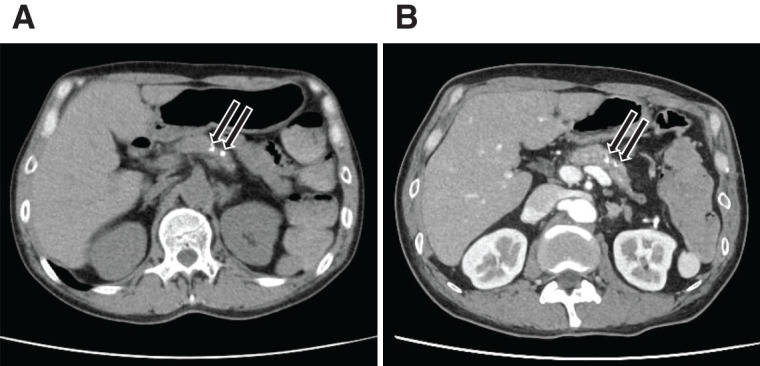 Figure 1
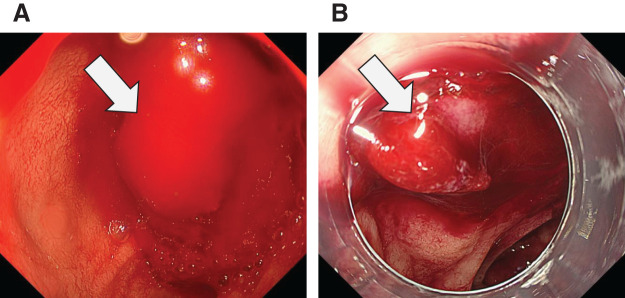 Figure 2
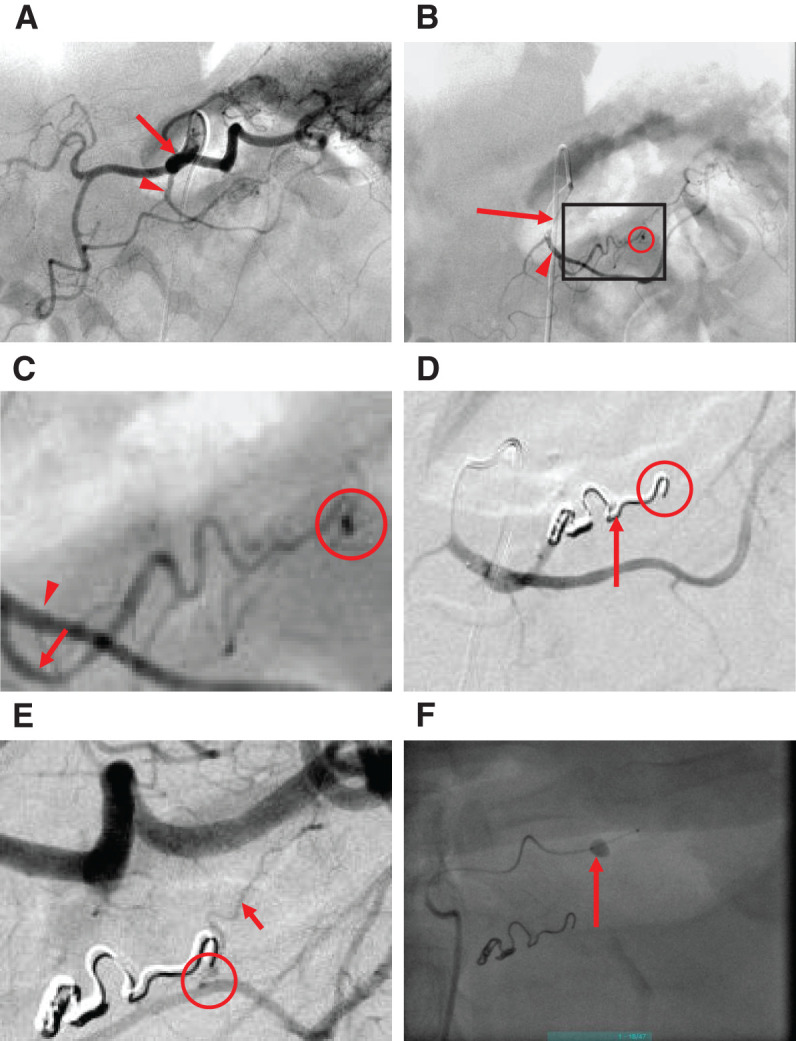 Figure 3
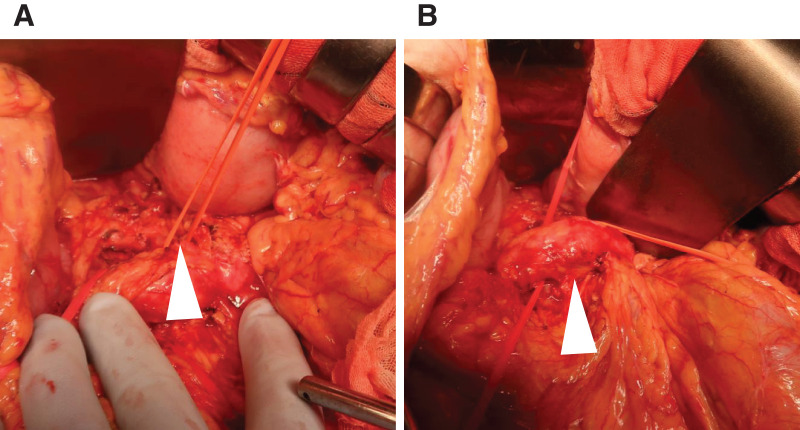 Figure 4
Peer Reviews
No public reviews on file for this paper yet. If you reviewed it on a platform where reviews are public (OpenReview, ICLR, NeurIPS, ICML), you can paste yours below so the community can read it here.
Videos
No videos yet. Explain this paper in a talk, walkthrough, or lecture? Add one.
Taxonomy
TopicsAbdominal vascular conditions and treatments · Infectious Aortic and Vascular Conditions · Gallbladder and Bile Duct Disorders