Validation of an in vitro muscle platform to evaluate myogenesis and calcium handling in control and dystrophic human myotubes
Laura Mosqueira-Martín, Carolina Prendes-García, Camila Vesga-Castro, Pablo Marco-Moreno, Ainhoa Irastorza, Ander Izeta, Iratxe Madarieta, Itxaso Martí-Carrera, Jacobo Paredes, Adolfo López de Munain, Ainara Vallejo-Illarramendi

TL;DR
This study validates an in vitro muscle platform using impedance measurements to monitor muscle cell development and calcium handling in healthy and dystrophic human cells.
Contribution
The novel contribution is the validation of a high-throughput impedance-based platform for studying myogenesis and calcium handling in dystrophic human myotubes.
Findings
Impedance measurements effectively detect early differentiation and maturation differences in dystrophic myoblasts.
A specific differentiation protocol showed superior impedance profile reproducibility over time.
Calcium homeostasis was successfully assessed in both control and dystrophic myotubes using 96-well impedance plates.
Abstract
Electrical impedance has emerged as a powerful tool for real-time, label-free, and non-invasive monitoring of cellular processes. Here, we employed an impedance-based assay to characterize the myogenic process of control and dystrophic human myoblasts. First, we conducted a comprehensive analysis of control myoblast differentiation, assessing the effects of initial seeding density and various extracellular matrix coatings. We also evaluated the influence of electrode presence and current application, both of which improved myoblast alignment. Immortalized myoblasts from Duchenne muscular dystrophy patients exhibited marked alterations in early differentiation and maturation, which were readily detected via impedance measurements. We further compared two differentiation protocols using one control and one dystrophic representative cell line. While both protocols supported the formation…
Genes, proteins, chemicals, diseases, species, mutations and cell lines named across the full text — each resolved to its canonical identifier and authoritative record.
Click any figure to enlarge with its caption.
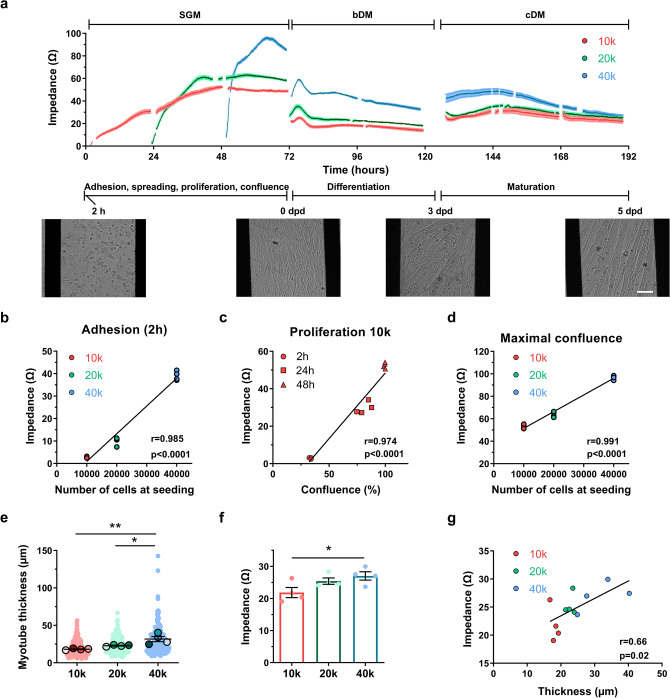 Figure 1
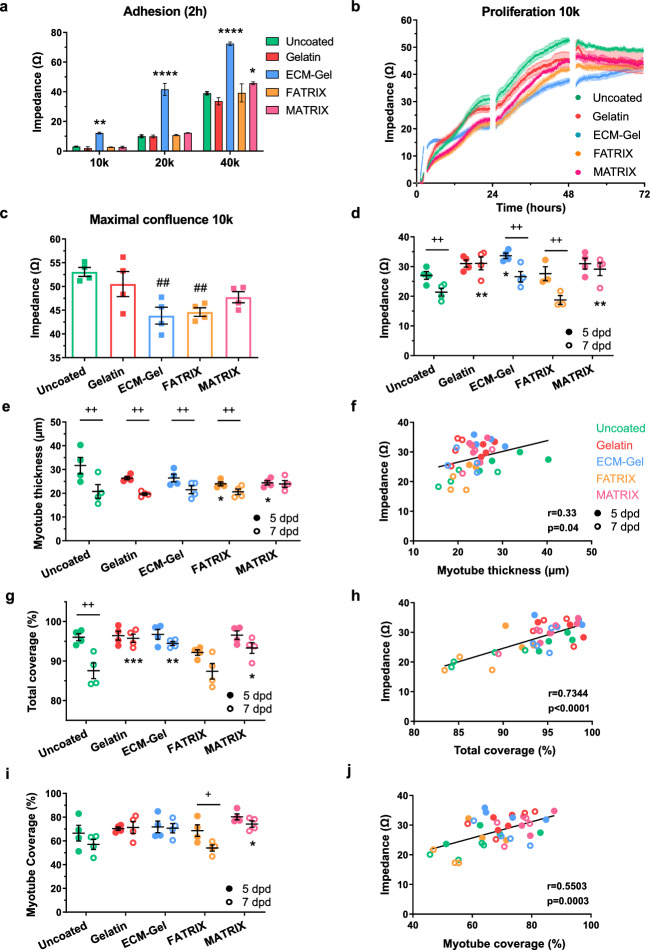 Figure 2
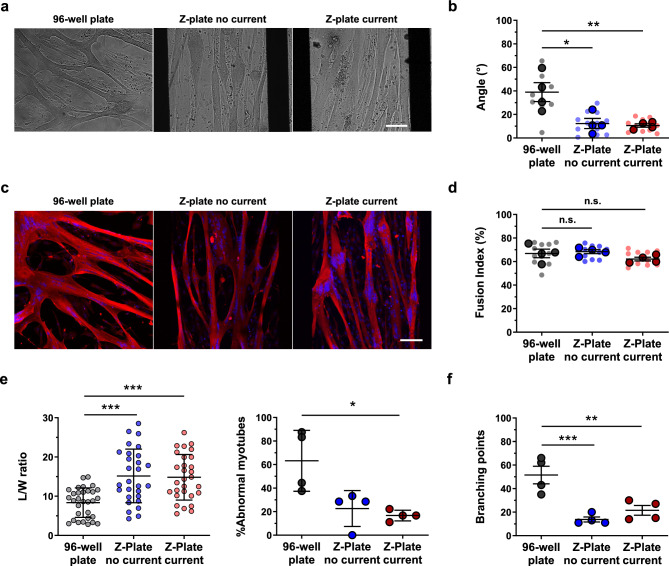 Figure 3
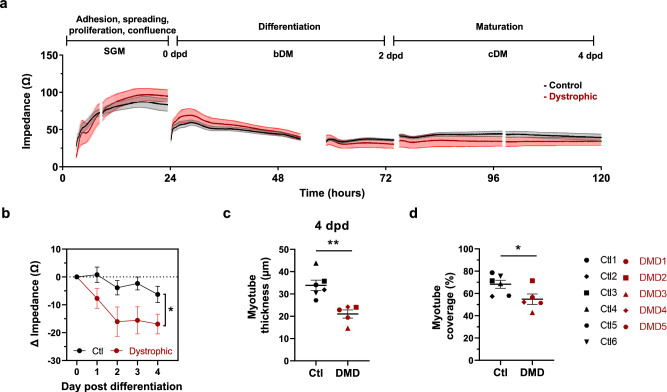 Figure 4
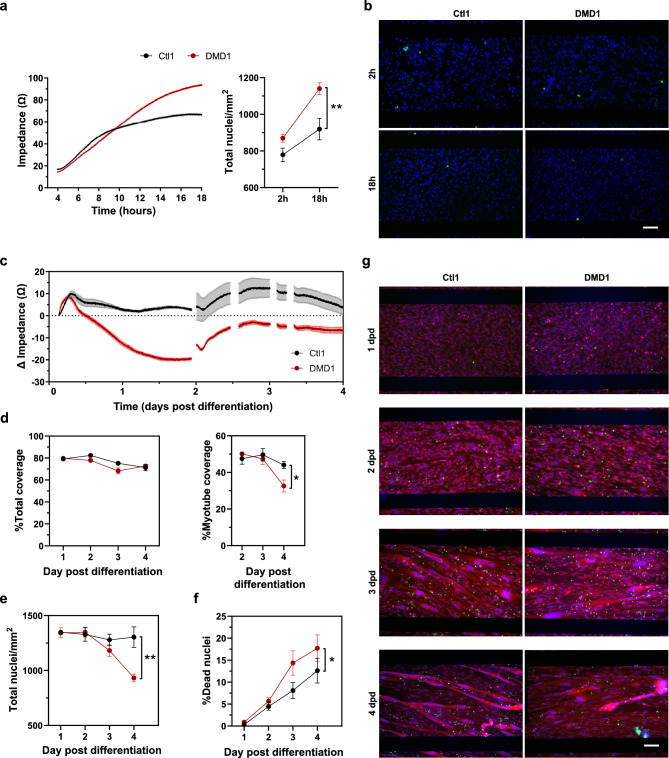 Figure 5
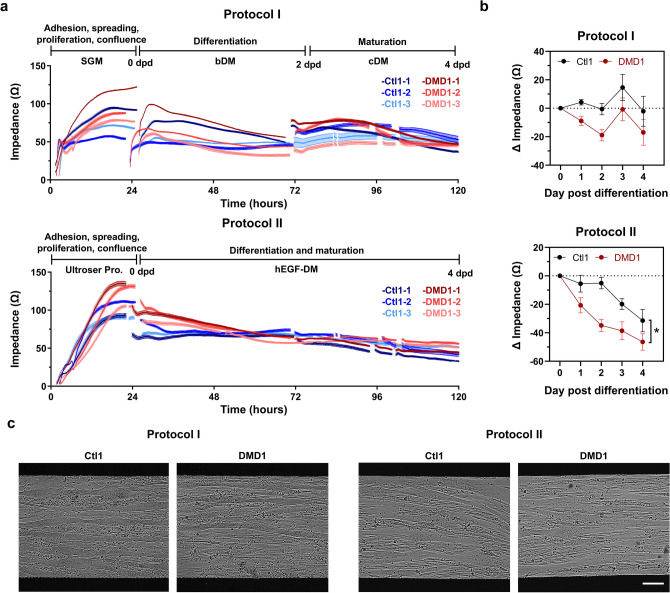 Figure 6
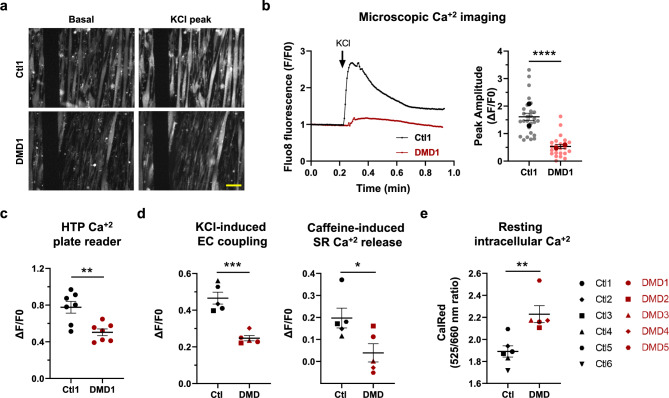 Figure 7
Peer Reviews
No public reviews on file for this paper yet. If you reviewed it on a platform where reviews are public (OpenReview, ICLR, NeurIPS, ICML), you can paste yours below so the community can read it here.
Videos
No videos yet. Explain this paper in a talk, walkthrough, or lecture? Add one.
Taxonomy
TopicsBody Composition Measurement Techniques · Planarian Biology and Electrostimulation · 3D Printing in Biomedical Research