Miniature inverted repeat transposable elements in the genome of sugar beet and their impact on gene expression
Emilia Morańska, Gabriela Machaj, Wiktoria Piestrzyńska, Monika Szewczyk, Marcelina Skrabucha, Adam Sitarski, Alicja Macko-Podgórni, Dariusz Grzebelus

TL;DR
This study maps MITEs in the sugar beet genome and shows how they influence gene expression, especially in regulatory regions.
Contribution
The first comprehensive annotation of MITEs in the sugar beet genome and their link to gene expression regulation.
Findings
MITEs cover 3% of the sugar beet genome, with Stowaway-like elements being the most common.
Over 60% of MITEs are located in genic regions, suggesting a role in gene regulation.
MITE insertions are associated with differentially expressed genes in sugar beet families.
Abstract
Miniature inverted-repeat transposable elements (MITEs) are the most abundant group among class II mobile elements in plant genomes. They are frequently located in gene-rich regions, which may affect gene structure and expression, leading to functional diversity. Our research aimed to perform a comprehensive global annotation of MITEs in the sugar beet genome, which has been lacking to date. We also attempted to elucidate the association between the presence of MITE insertions and the regulation of gene expression. Analysis of the MITEs distribution in sugar beet revealed that MITEs cover about 3% of the genome, with the largest group comprising Stowaway-like elements. Approximately 60% of all identified MITEs were located within genic regions, indicating their potential impact on gene expression regulation. Stowaway and Tourist-like elements were frequently present in introns and…
Genes, proteins, chemicals, diseases, species, mutations and cell lines named across the full text — each resolved to its canonical identifier and authoritative record.
Click any figure to enlarge with its caption.
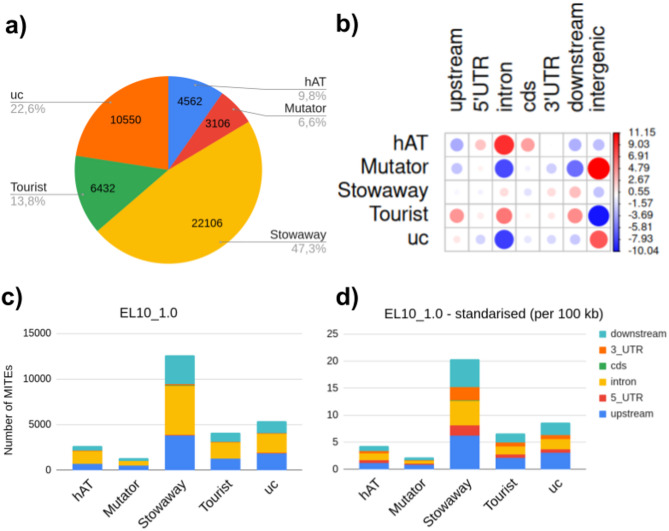 Figure 1
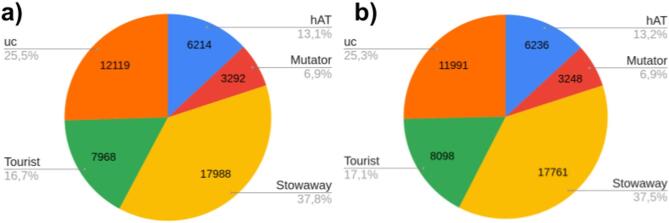 Figure 2
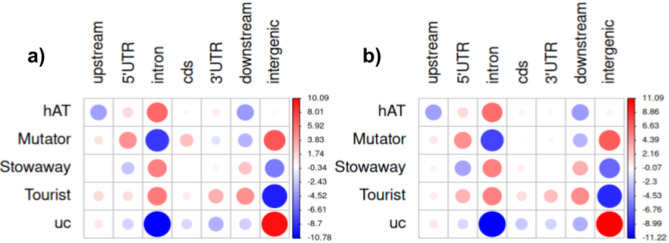 Figure 3
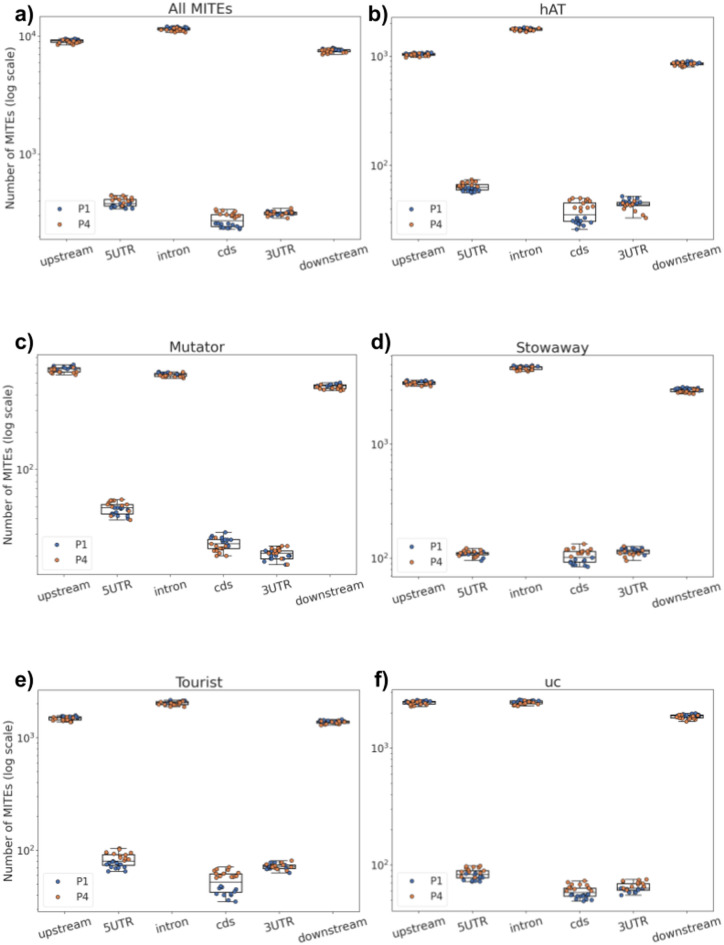 Figure 4
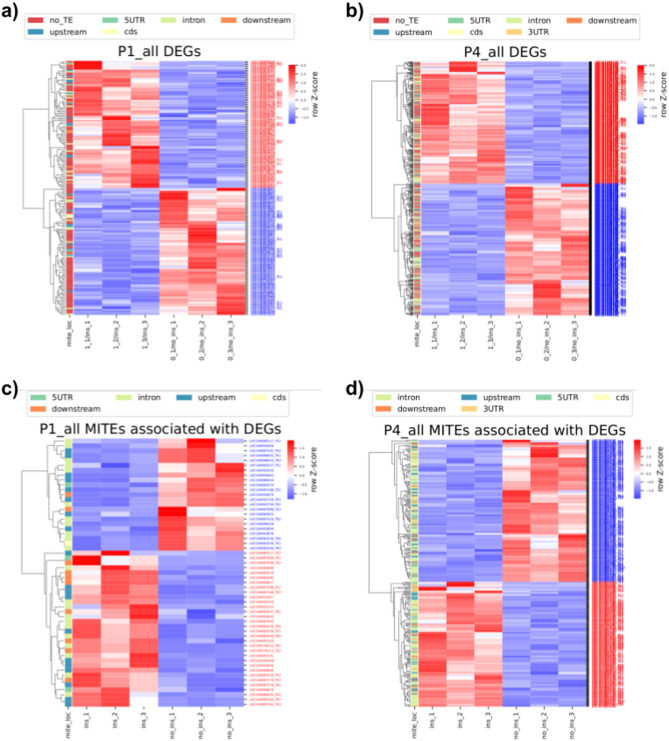 Figure 5
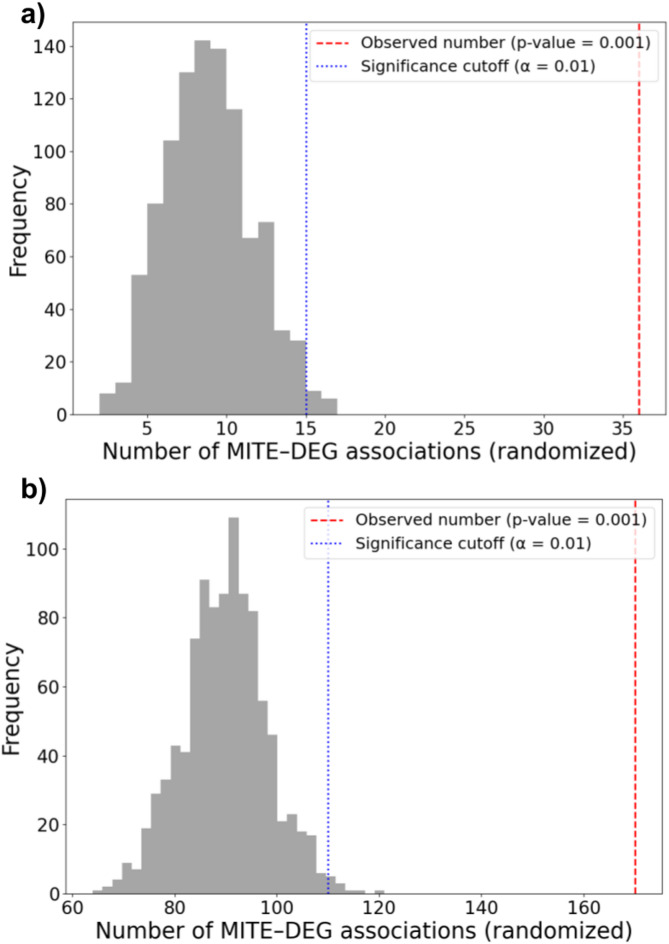 Figure 6
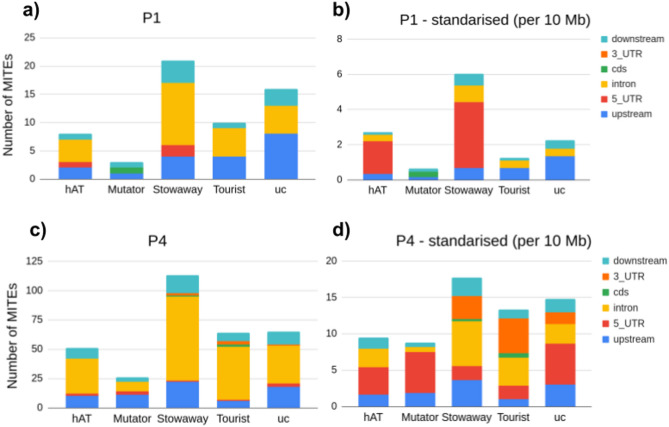 Figure 7
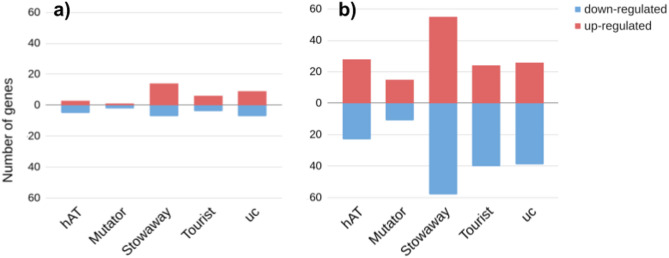 Figure 8
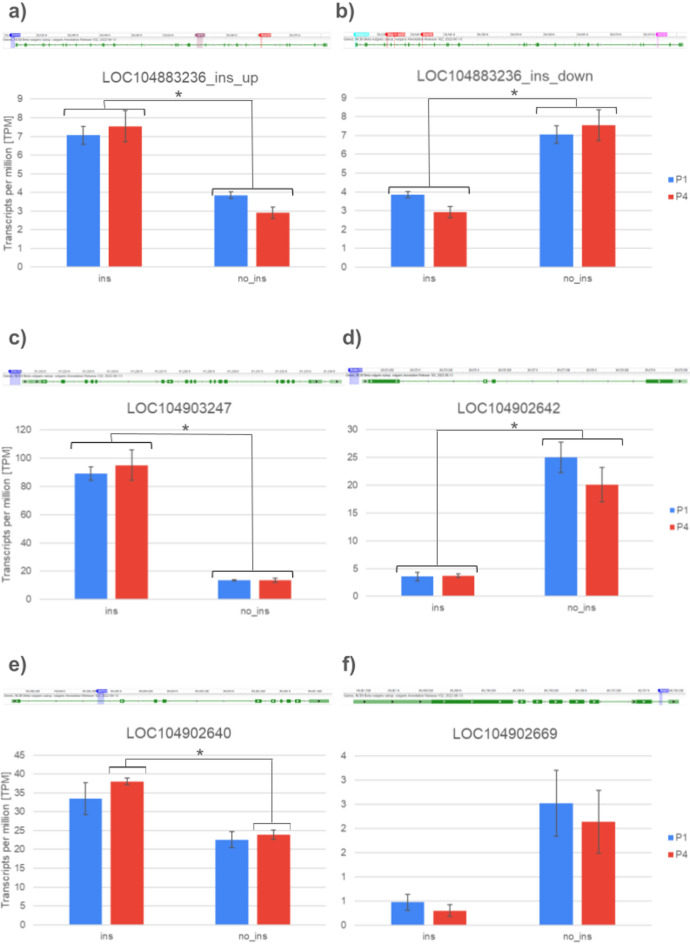 Figure 9
Peer Reviews
No public reviews on file for this paper yet. If you reviewed it on a platform where reviews are public (OpenReview, ICLR, NeurIPS, ICML), you can paste yours below so the community can read it here.
Videos
No videos yet. Explain this paper in a talk, walkthrough, or lecture? Add one.
Taxonomy
TopicsChromosomal and Genetic Variations · Genomics and Chromatin Dynamics · Genome Rearrangement Algorithms