Multimodal neuroimaging reveals brain neurochemical disturbances associated with superoxide dismutase in first-episode drug-naïve schizophrenia
Zijia Zhu, Zhuo Wang, Xiuxia Yuan, Yawen Zou, Chenxiang Zheng, Yanqin Wen, Gangrui Hei, Xueqin Song, Yongyong Shi

TL;DR
This study finds that reduced antioxidant levels in early schizophrenia are linked to brain structure and function changes, which may affect cognition.
Contribution
The study introduces a multimodal neuroimaging approach to link antioxidant stress with structural-functional and neurochemical brain changes in schizophrenia.
Findings
Reduced SOD levels correlate with altered gray matter volume and functional activity in key brain networks.
Altered neuroimaging biomarkers are associated with disrupted excitatory-inhibitory receptor balance in schizophrenia.
Lower SOD levels are linked to cognitive deficits in processing speed and visual learning.
Abstract
Reduced antioxidant defense observed in first-episode drug-naïve schizophrenia (SCZ) may contribute to impaired cognition of SCZ. However, the underlying relationships among antioxidant stress-neuroimaging-cognition pathway and neurotransmitter dysfunction remain unclear. In this study, 75 patients with first-episode drug-naïve SCZ and 85 age and sex matched healthy controls underwent clinical evaluation and brain MRI. Two brain imaging measurements, including gray matter volume (GMV) from structural MRI (sMRI) and fractional amplitude of low frequency fluctuations (fALFF) from resting-state functional MRI, were jointly analyzed with a data-driven multivariate fusion method. Serum superoxide dismutase (SOD) levels was used as a reference to guide fusion of two MRI features. To investigate specific neurotransmitter system alterations associated with SOD-related SCZ patients, we used the…
Genes, proteins, chemicals, diseases, species, mutations and cell lines named across the full text — each resolved to its canonical identifier and authoritative record.
Click any figure to enlarge with its caption.
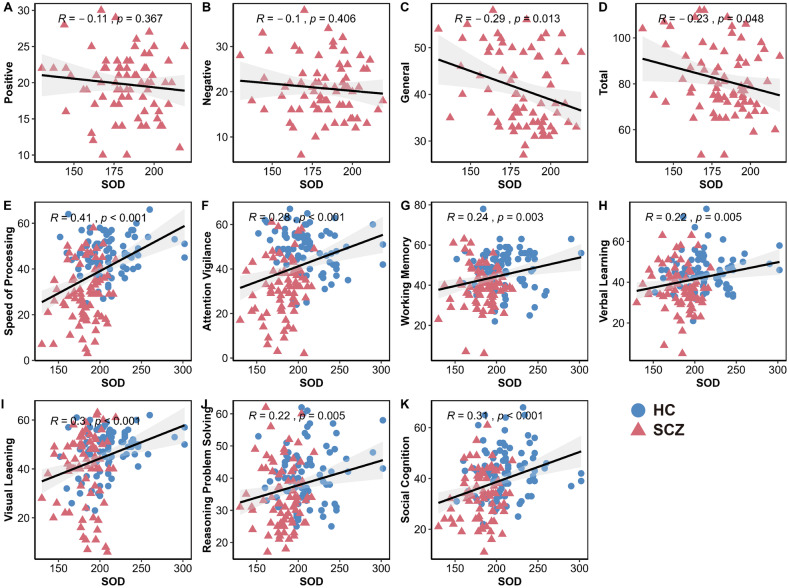 Figure 1
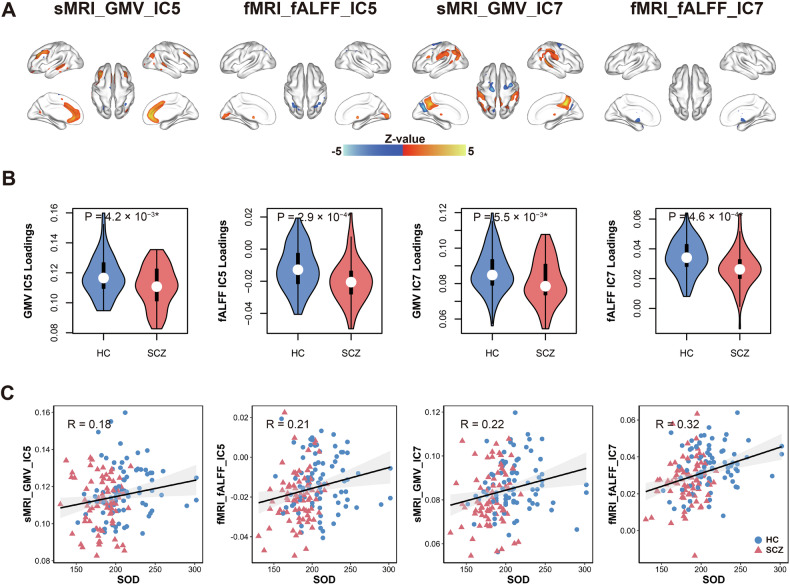 Figure 2
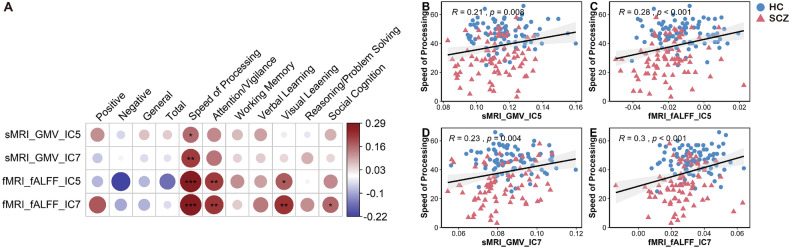 Figure 3
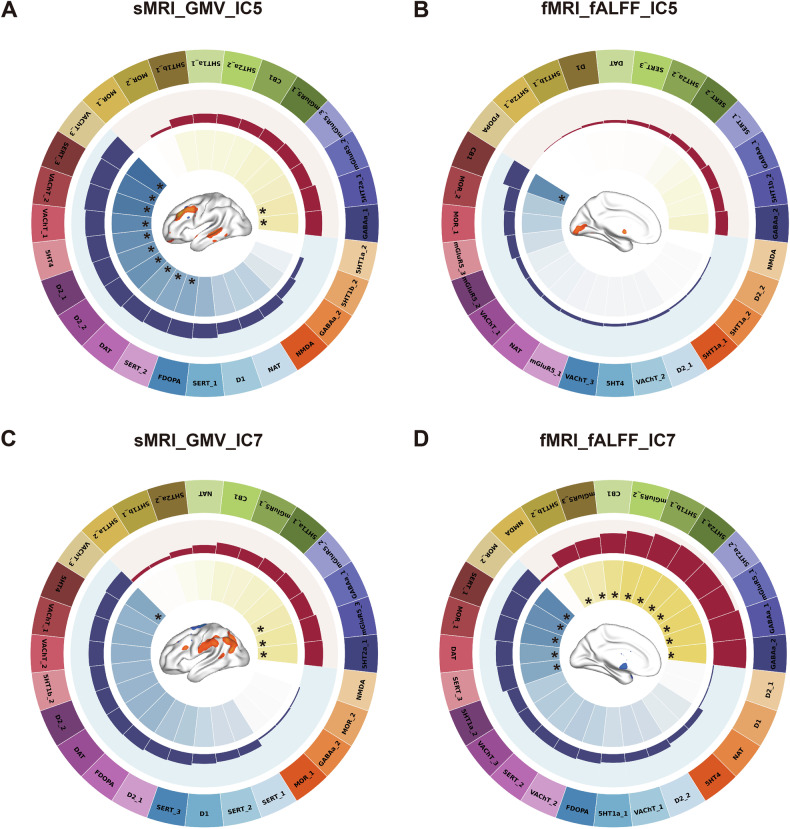 Figure 4
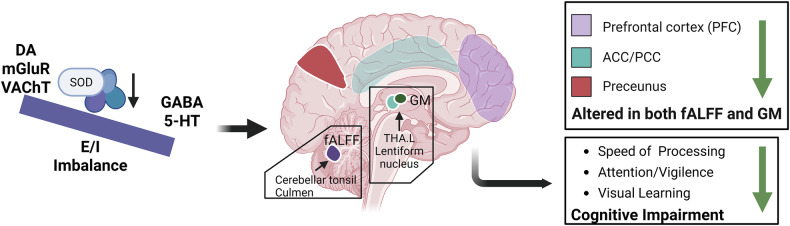 Figure 5
Peer Reviews
No public reviews on file for this paper yet. If you reviewed it on a platform where reviews are public (OpenReview, ICLR, NeurIPS, ICML), you can paste yours below so the community can read it here.
Videos
No videos yet. Explain this paper in a talk, walkthrough, or lecture? Add one.
Taxonomy
TopicsFunctional Brain Connectivity Studies · Schizophrenia research and treatment · Tryptophan and brain disorders