Associations between neighborhood socioeconomic status with depressive symptoms, and psychological distress among Asian American adults in New York City
Suditi Shyamsunder, Dyuthy Ramachandran, Chaeyoung Kim, Jaiveer Singh, Shozen Dan, Malathi Srinivasan, Latha Palaniappan, Eugene Yang, Tali Elfassy

TL;DR
This study explores how neighborhood socioeconomic status affects mental health among Asian American adults in New York City.
Contribution
The study reveals distinct mental health associations with neighborhood socioeconomic status among specific Asian American subgroups.
Findings
Living in high socioeconomic status neighborhoods was linked to fewer depression symptoms among Chinese Americans.
High socioeconomic status neighborhoods were associated with greater psychological distress among Asians from the Indian Subcontinent.
Aggregating Asian American groups can hide important mental health differences related to neighborhood context.
Abstract
The relationship between neighborhood socioeconomic status (NSES) with mental health among Asian Americans (AA) is underexamined. We sought to determine whether NSES is associated with symptoms of psychological distress or depression among AA residents of New York City (NYC). We examined 4,557 Chinese, Asian from the Indian Subcontinent (ISC), or Other Asian participants of the NYC Community Health Survey, 2018–2020. Participants self-reported psychological distress using the (Kessler-6 (K6)) and depressive symptoms using the Patient Health Questionnaire-8 (PHQ8), with higher scores indicating worse mental health. The neighborhood was defined by residence in one of 55 districts. We constructed a NSES factor score from neighborhood levels of: unemployment, poverty, high rent burden, and a college or greater education. NSES was categorized into tertiles. Hierarchical linear models…
Genes, proteins, chemicals, diseases, species, mutations and cell lines named across the full text — each resolved to its canonical identifier and authoritative record.
Click any figure to enlarge with its caption.
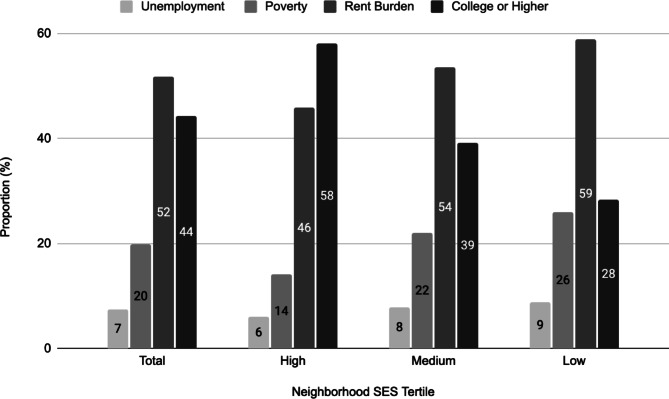 Figure 1
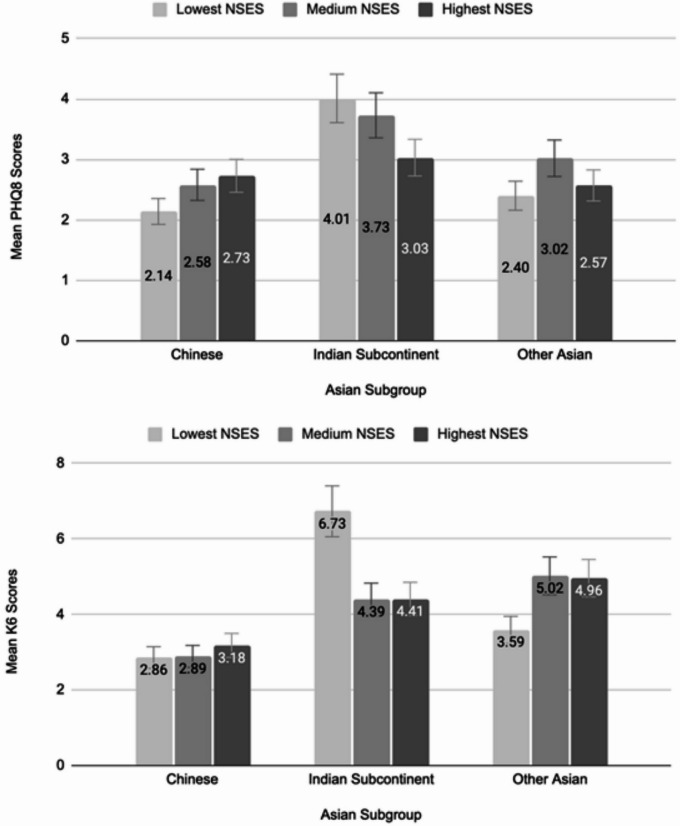 Figure 2
Peer Reviews
No public reviews on file for this paper yet. If you reviewed it on a platform where reviews are public (OpenReview, ICLR, NeurIPS, ICML), you can paste yours below so the community can read it here.
Videos
No videos yet. Explain this paper in a talk, walkthrough, or lecture? Add one.
Taxonomy
TopicsHealth disparities and outcomes · Mental Health Treatment and Access · Urban, Neighborhood, and Segregation Studies