Anion effects govern efficiency of electrochemical amine-mediated CO2 capture/release
Liang Liang, Frederik Firschke, Jie Wang, Li Yang, Xingli Wang, Wen Ju, Matthew T. Mayer, Peter Strasser

TL;DR
This study explores how different anions affect the efficiency of electrochemical CO2 capture and release processes, revealing that chloride ions are more effective than others.
Contribution
The study provides molecular-level insights into how anions influence CO2 release kinetics in electrochemical systems.
Findings
Chloride ions are more effective than nitrate or perchlorate in facilitating CO2 release via copper ion release.
Strong surface interactions between copper and chloride ions enhance CO2 and carbamate adsorption kinetics.
In-situ analytics can guide the design of efficient electrochemical CO2 capture systems.
Abstract
Ambient electrochemical CO2 capture powered by renewable energy offers a promising carbon removal route, exemplified by the emerging electrochemically mediated amine regeneration (EMAR) process demonstrated in lab-scale single cells and stacks. However, molecular-level insight into EMAR interfacial kinetics is still missing, particularly at the anode, where CO2 release involves a mechanistically non-trivial re-complexation process at the electrode–electrolyte interface, coupling heterogeneous metal-ion release with bulk complexation. Here, we report the time-resolved characterization of the interfacial molecular processes of the EMAR CO2 release process. Using in situ Fourier-transform infrared (FTIR) spectroscopy and ultraviolet-visible (UV-vis) spectroscopy, cyclic voltammetry, and real-time differential electrochemical mass spectrometry (DEMS), we examine how the nature of the…
Genes, proteins, chemicals, diseases, species, mutations and cell lines named across the full text — each resolved to its canonical identifier and authoritative record.
Click any figure to enlarge with its caption.
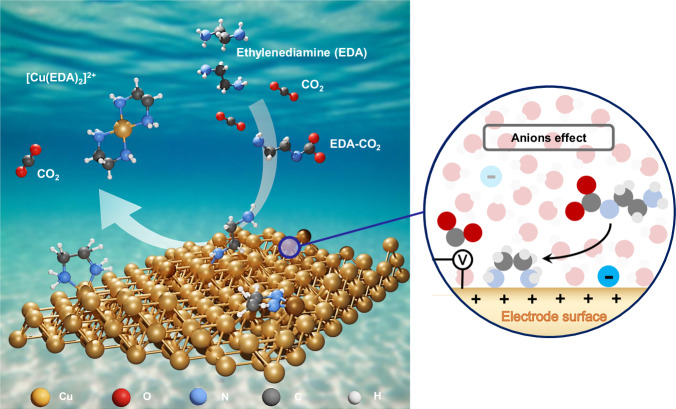 Figure 1
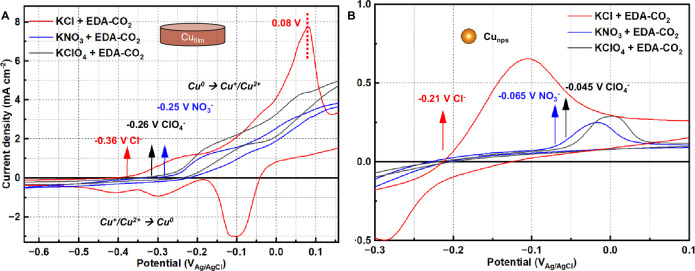 Figure 2
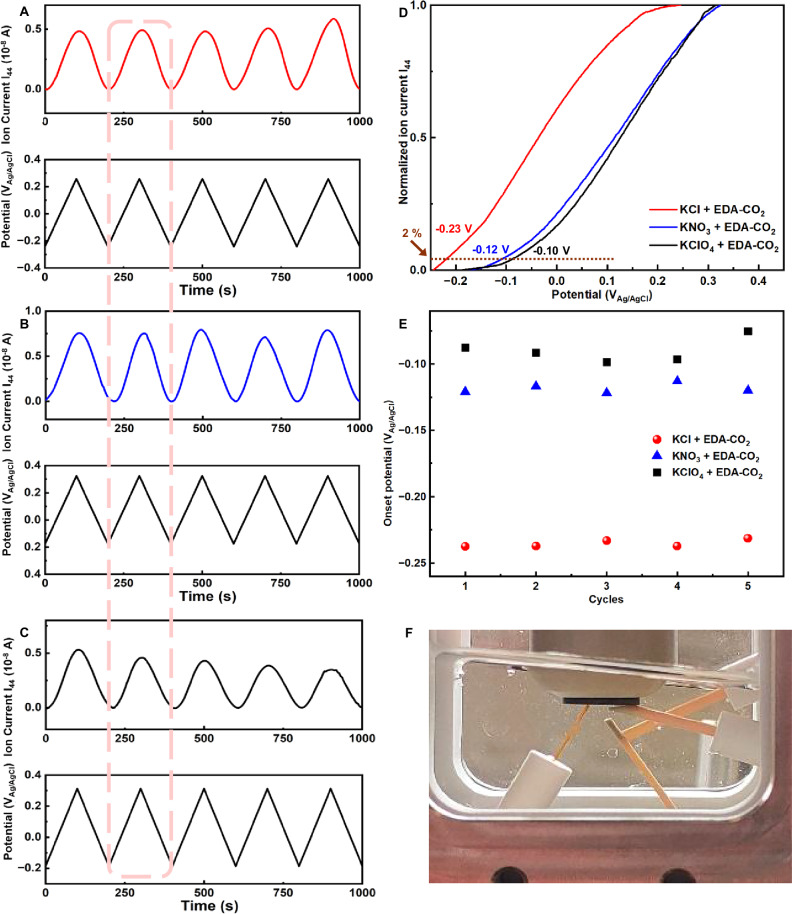 Figure 3
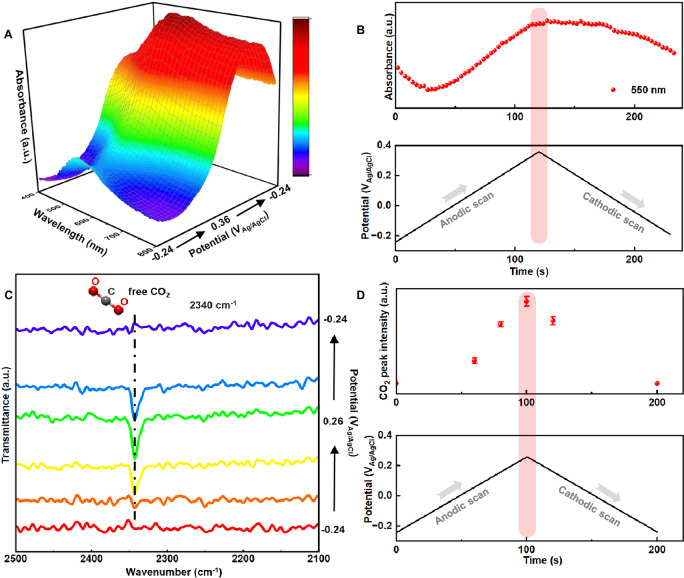 Figure 4
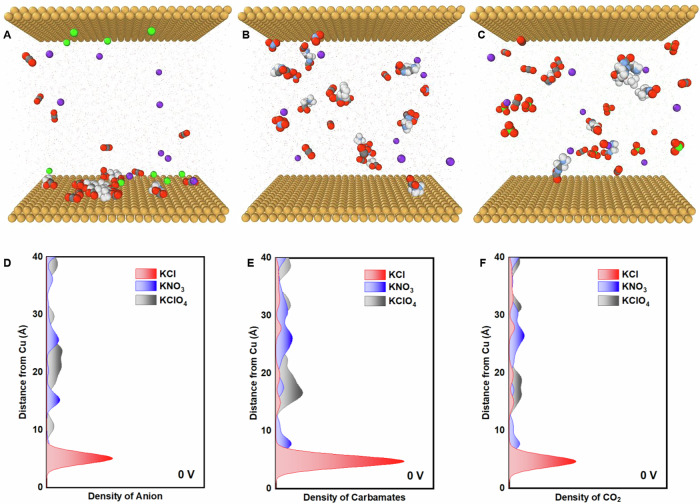 Figure 5
Peer Reviews
No public reviews on file for this paper yet. If you reviewed it on a platform where reviews are public (OpenReview, ICLR, NeurIPS, ICML), you can paste yours below so the community can read it here.
Videos
No videos yet. Explain this paper in a talk, walkthrough, or lecture? Add one.
Taxonomy
TopicsCarbon Dioxide Capture Technologies · CO2 Reduction Techniques and Catalysts · CO2 Sequestration and Geologic Interactions