Microwave-assisted synthesis of new triangulenium dyes for lifetime imaging microscopy (FLIM)
Carmen Viedma-Barba, Esther M. Ortega-Naranjo, Federico Movilla, Antonio Reinoso, Marta Andrades-Amate, Pablo Peñalver, Juan C. Morales, Juan A. González-Vera, Marta Gutiérrez-Rodríguez, Angel Orte

TL;DR
A new microwave method creates triangulenium dyes with long fluorescence lifetimes, useful for advanced cell imaging techniques like FLIM.
Contribution
A novel microwave-assisted synthesis method for triangulenium dyes with improved efficiency and broader applicability.
Findings
ADOTA derivatives accumulate in mitochondria and show short fluorescence lifetimes due to electron transfer.
DAOTA dyes stain nuclei and endocytic vesicles, with lifetime reductions due to partial aggregation.
The dyes enable subcellular compartment discrimination via FLIM lifetime contrast.
Abstract
We introduce a novel microwave-assisted method for the rapid and efficient synthesis of triangulenium dyes, enabling the creation of a broader range of these fluorophores, which are characterized by very long fluorescence lifetimes. We prepared different azadioxatriangulenium (ADOTA) and diazaoxatriangulenium (DAOTA) derivatives and thoroughly characterized their photophysical properties. We investigated their solvatochromic properties and the effects of the solvent, aided by computational chemistry results. The new ADOTA and DAOTA dyes were applied in multiple in cellulo microscopy modalities, including confocal, fluorescence lifetime imaging microscopy (FLIM), and super-resolution imaging. ADOTA derivatives predominantly accumulated in mitochondria, while DAOTAs showed pronounced nuclear staining and participation in endocytic pathways. Notably, these dyes enable clear discrimination…
Genes, proteins, chemicals, diseases, species, mutations and cell lines named across the full text — each resolved to its canonical identifier and authoritative record.
Click any figure to enlarge with its caption.
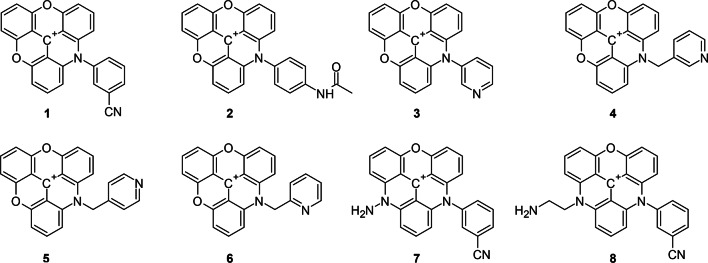 Figure 1
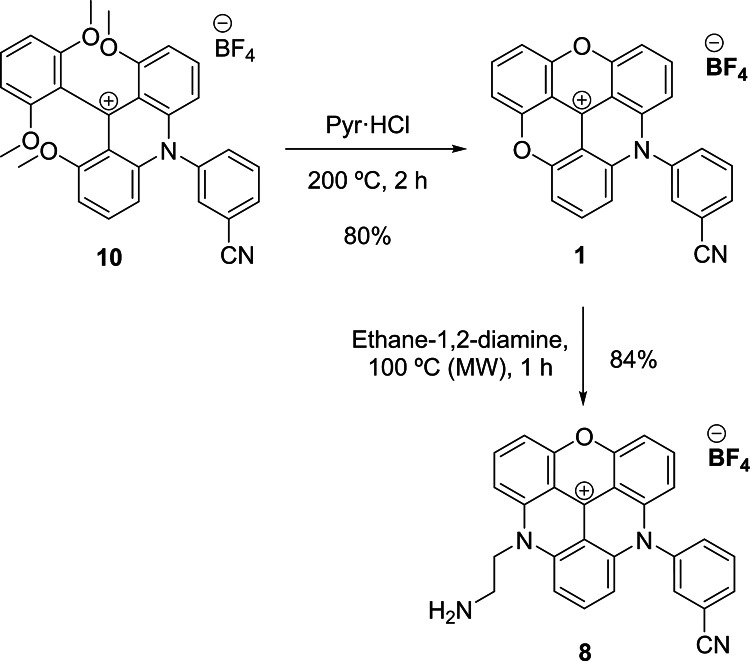 Figure 2
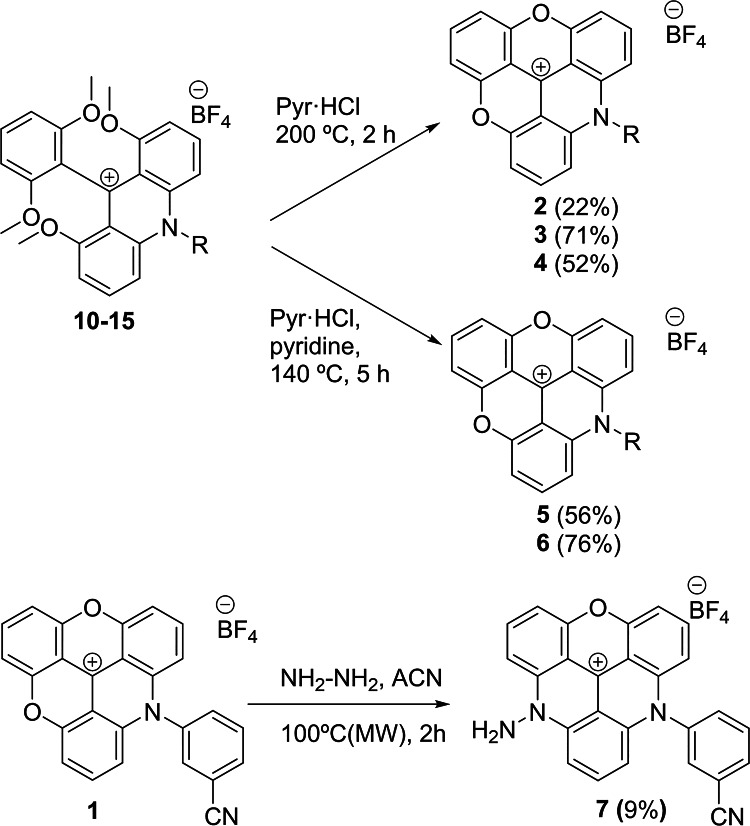 Figure 3
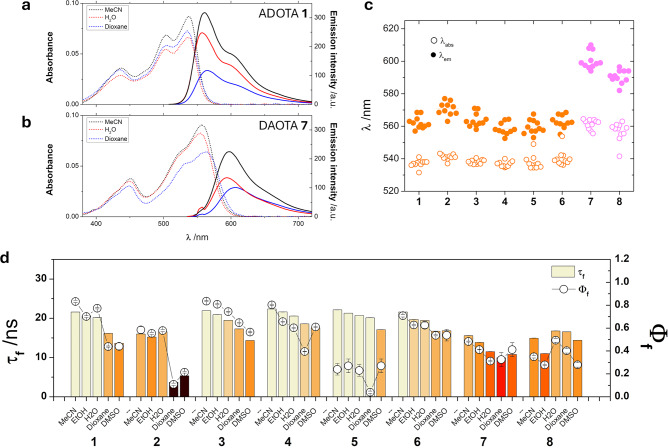 Figure 4
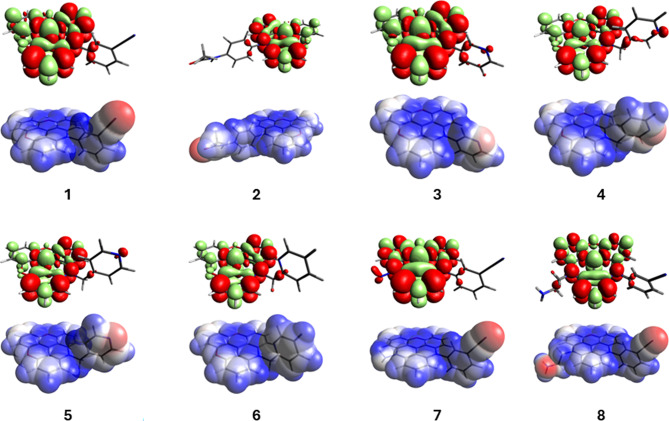 Figure 5
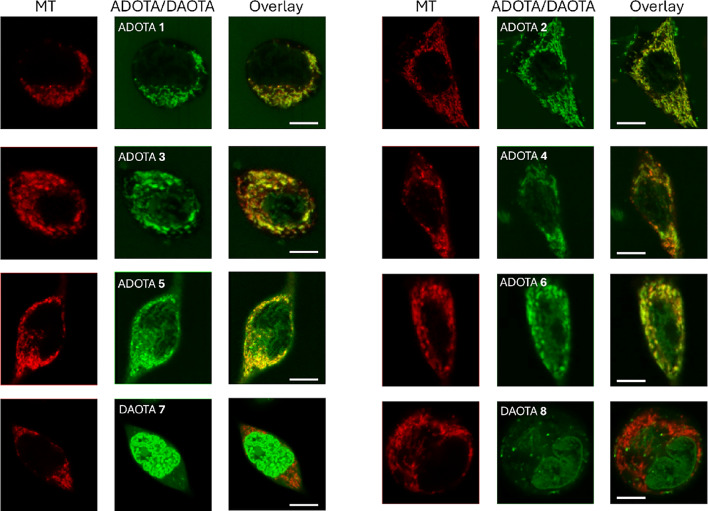 Figure 6
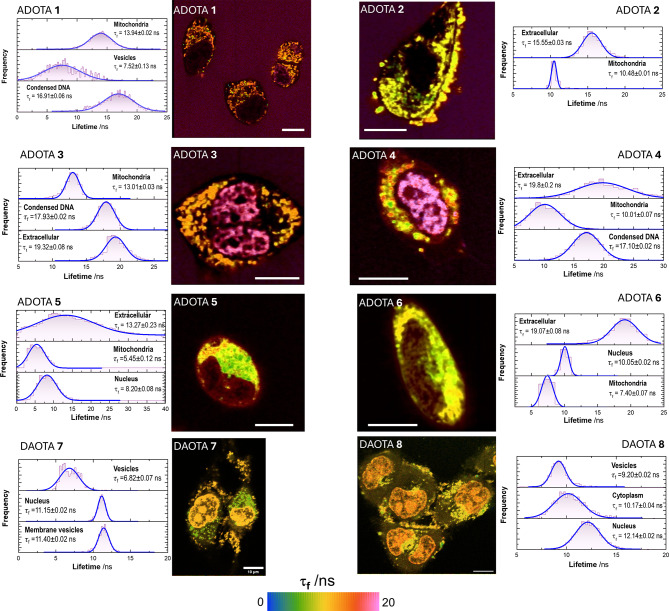 Figure 7
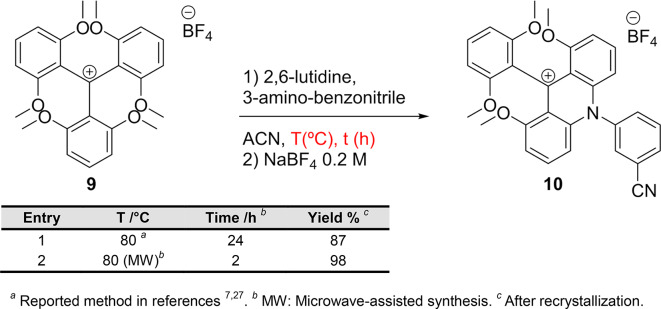 Figure 8
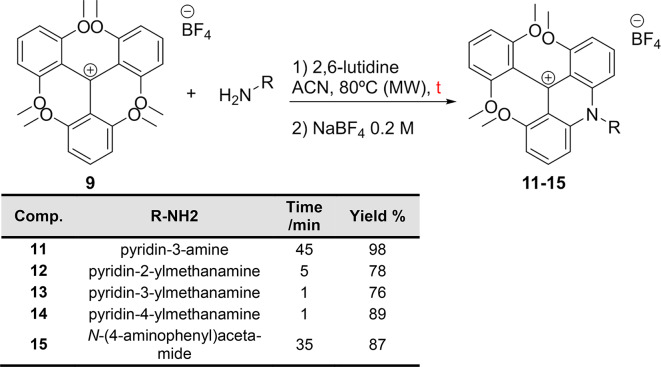 Figure 9
Peer Reviews
No public reviews on file for this paper yet. If you reviewed it on a platform where reviews are public (OpenReview, ICLR, NeurIPS, ICML), you can paste yours below so the community can read it here.
Videos
No videos yet. Explain this paper in a talk, walkthrough, or lecture? Add one.
Taxonomy
TopicsAdvanced Fluorescence Microscopy Techniques · Near-Field Optical Microscopy · Click Chemistry and Applications