Predictive potential of patient-specific immunological characteristics in solid cancers: circulating monocytes, myeloid-derived suppressor cells, T cells, and the T-cell receptor repertoire
C. Zierfuss, B. Niederdorfer, B. Fendl, K. Syböck, J. Schedl, L. Kohl, G. Heller, E. Tomasich, J.M. Berger, V. Sunder-Plassmann, M. Kleinberger, L. Gottmann, M. Korpan, A.M. Starzer, I. Solano Henao, J. Fürst, J. Wolfsberg, M. Grohmannova, N. Dobrovits, C. Ay, N. Vladic

TL;DR
This study shows that specific types of monocytes in the blood can predict survival and treatment response in cancer patients, independent of the tumor type.
Contribution
The study identifies monocyte subsets as potential tumor-agnostic, patient-specific biomarkers for predicting therapy response in solid cancers.
Findings
High non-classical monocytes at baseline were linked to improved progression-free survival and response to chemotherapy.
Intermediate monocytes increased in ICI responders compared to non-responders, suggesting a role in predicting checkpoint inhibitor response.
TCR diversity, T cells, and MDSCs showed no association with patient outcomes across therapies.
Abstract
Response prediction to immune checkpoint inhibitors (ICIs) relies on tumor-specific biomarkers, while patient-specific characteristics are underrepresented. Therefore, we explored patient-specific immunological characteristics, including peripheral monocytes, myeloid-derived suppressor cells (MDSCs), T cells, and the T-cell receptor (TCR) repertoire, to investigate associations with survival and therapy response. Patients with solid tumors were prospectively recruited to explore the association of absolute lymphocyte and monocyte counts, leukocyte-to-lymphocyte ratio (LLR), and monocyte-to-lymphocyte ratio (MLR) with overall survival (OS). Monocytes, MDSCs, T cells, and the TCR repertoire were characterized before therapy start (baseline) and, if available, at first radiological restaging (follow-up). We analyzed their association with radiological therapy response using current…
Genes, proteins, chemicals, diseases, species, mutations and cell lines named across the full text — each resolved to its canonical identifier and authoritative record.
Click any figure to enlarge with its caption.
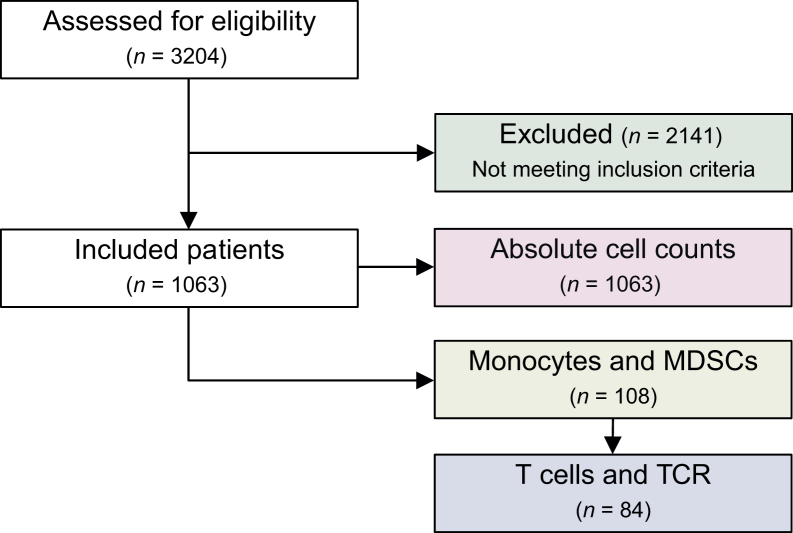 Figure 1
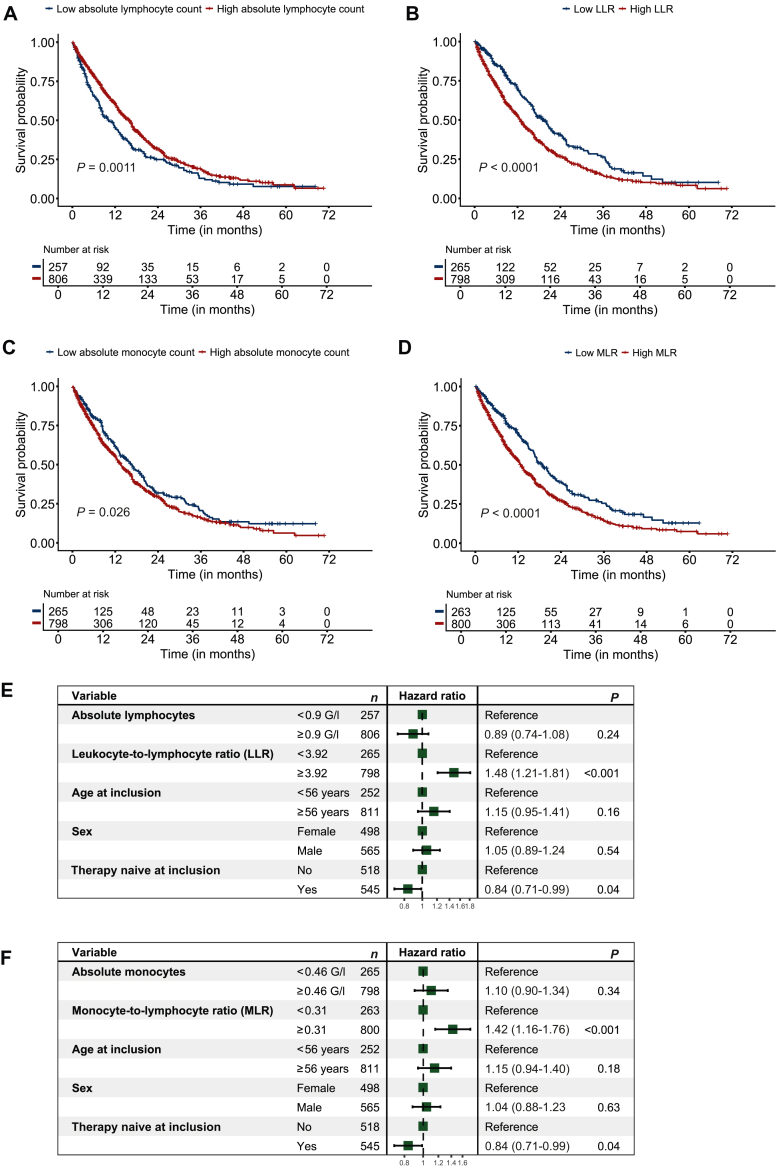 Figure 2
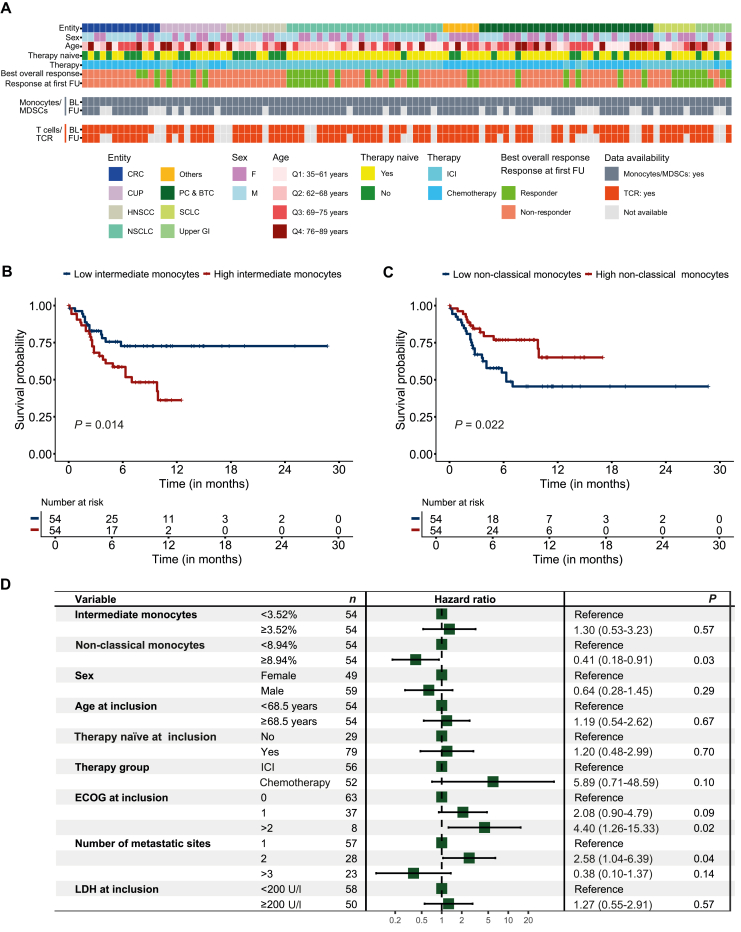 Figure 3
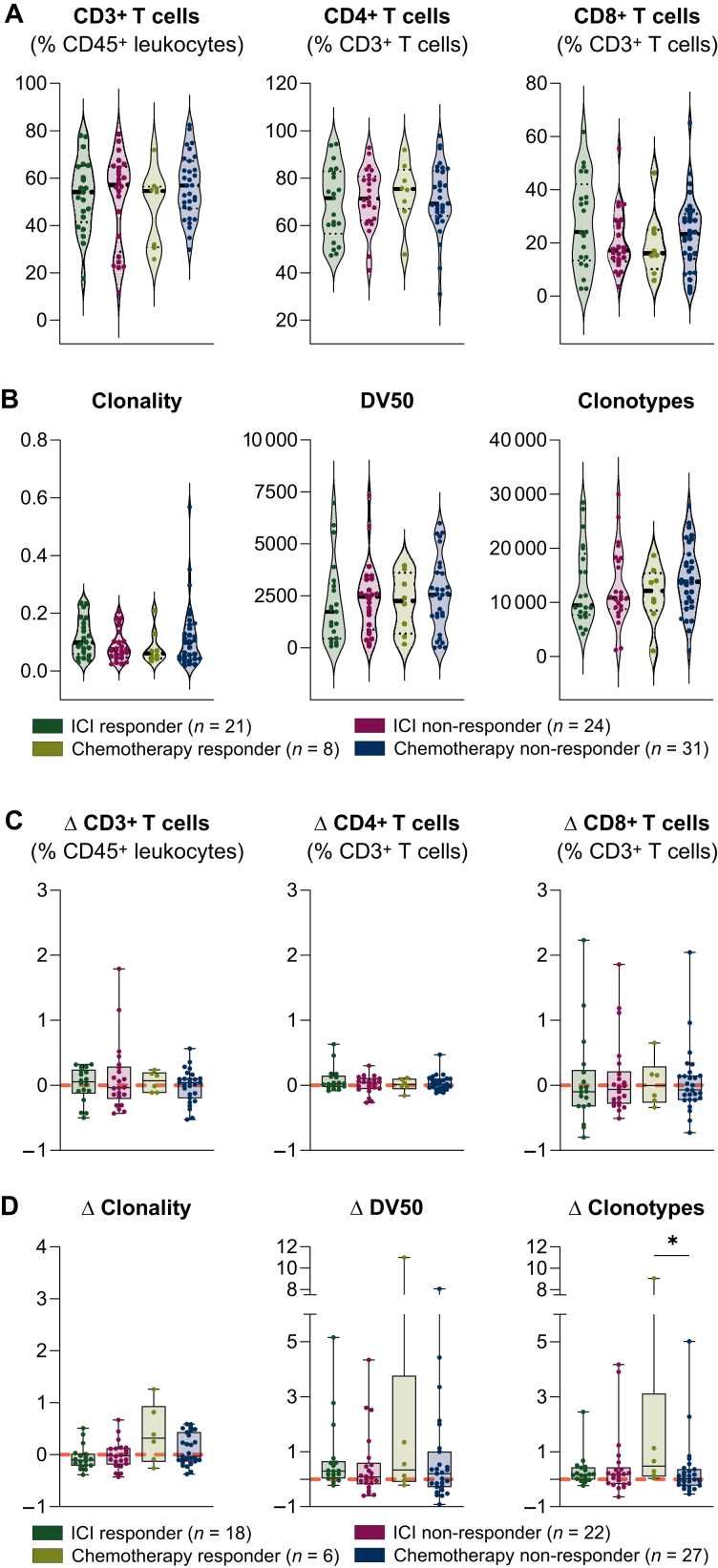 Figure 4
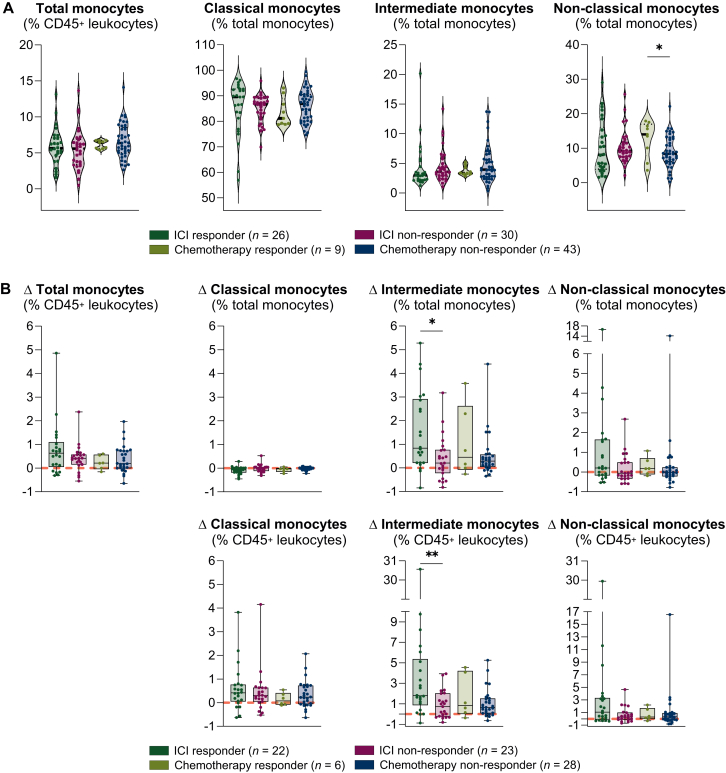 Figure 5
Peer Reviews
No public reviews on file for this paper yet. If you reviewed it on a platform where reviews are public (OpenReview, ICLR, NeurIPS, ICML), you can paste yours below so the community can read it here.
Videos
No videos yet. Explain this paper in a talk, walkthrough, or lecture? Add one.
Taxonomy
TopicsImmune cells in cancer · Cancer Immunotherapy and Biomarkers · Single-cell and spatial transcriptomics