Histone Lactylation Couples FSH-Driven Lactate Metabolism to Mitochondrial Biogenesis by Enhancing HDAC4-Mediated Deacetylation of PGC-1α in Granulosa Cells
Gang Wu, Min Chen, Chengyu Li, Mengli Wei, Yitong Pan, Tong He, Zhaojun Liu, Hongmin Li, Chunlei Zhang, Jia-Qing Zhang, Yanan Sheng, Yang Liu, Honglin Liu, Ming Shen

TL;DR
This study reveals how lactate metabolism, controlled by FSH, influences mitochondrial development in ovarian cells through epigenetic changes.
Contribution
The study identifies a novel metabolic-epigenetic pathway involving histone lactylation that connects FSH-driven glycolysis to mitochondrial biogenesis.
Findings
FSH increases lactate levels, leading to histone H4 lactylation (H4K5la) via P300/CBP.
H4K5la enhances HDAC4 expression, which deacetylates PGC-1α to promote mitochondrial biogenesis.
Disrupting the H4K5la/HDAC4/PGC-1α pathway impairs follicular development and mitochondrial function in mice.
Abstract
Follicle-stimulating hormone (FSH) coordinates ovarian follicle development by aligning mitochondrial biogenesis with increased metabolic demand. Although FSH is known to stimulate glycolysis in granulosa cells (GCs), the mechanism by which glycolytic flux coupled to mitochondrial biogenesis remains unclear. Here, we demonstrate that histone lactylation functions as a lactate-sensitive epigenetic mediator linking FSH-driven metabolic alterations to mitochondrial biogenesis in GCs. Mechanistically, FSH increases intracellular lactate levels through glycolytic activation, thereby promoting P300/CBP-dependent lactylation of histone H4 at lysine 5 (H4K5la). H4K5la directly enhances HDAC4 expression, and HDAC4 subsequently deacetylates PGC-1α at lysine residues 329/330. Deacetylated PGC-1α cooperates with nuclear respiratory factors NRF1/2 to drive transcription of key mitochondrial…
Genes, proteins, chemicals, diseases, species, mutations and cell lines named across the full text — each resolved to its canonical identifier and authoritative record.
Click any figure to enlarge with its caption.
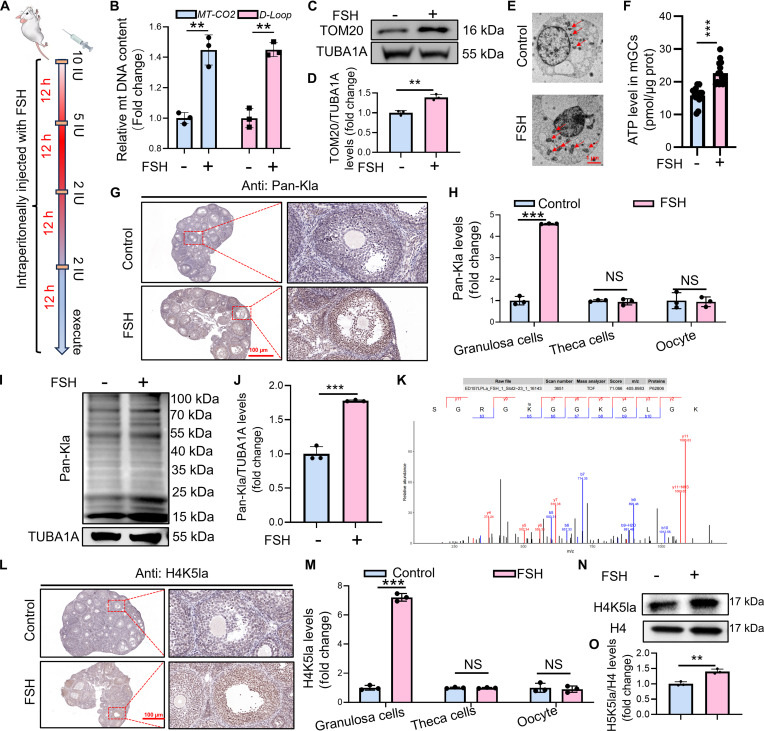 Figure 1
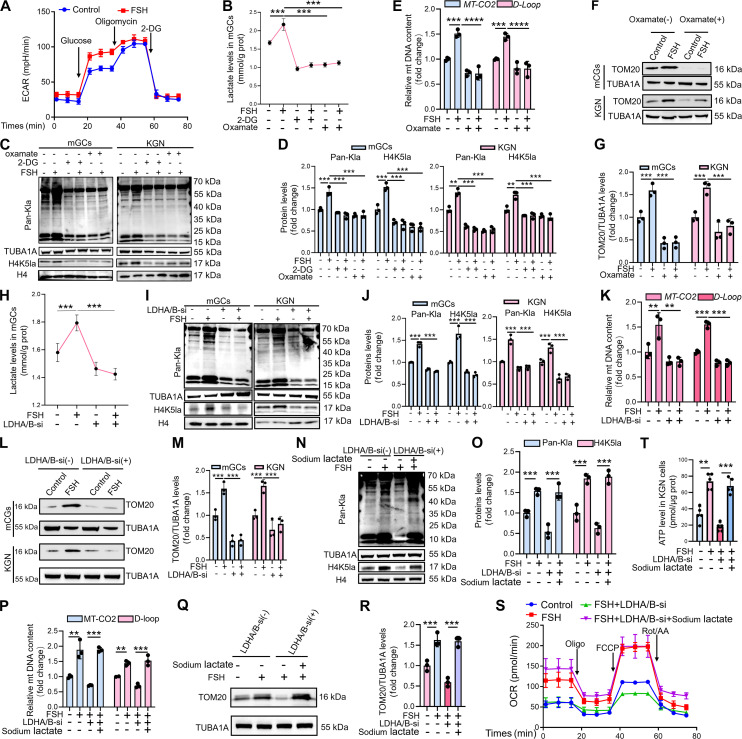 Figure 2
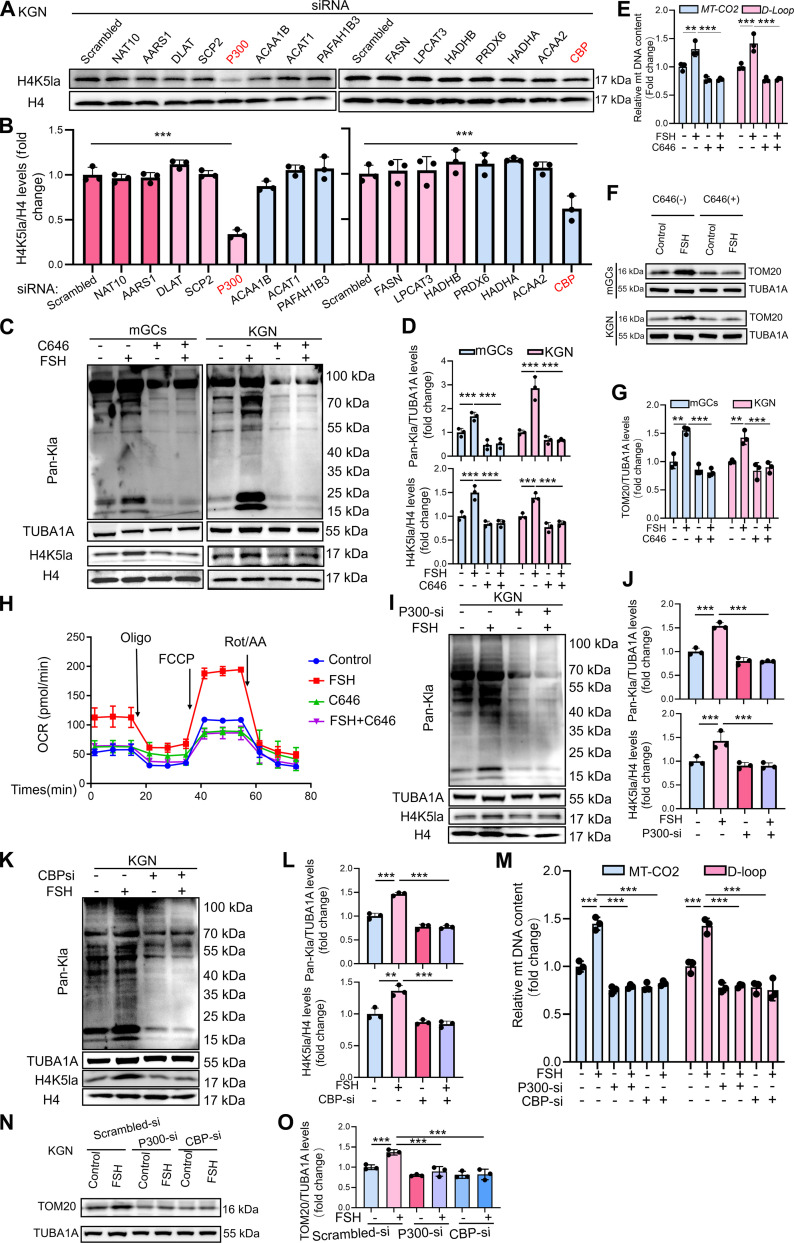 Figure 3
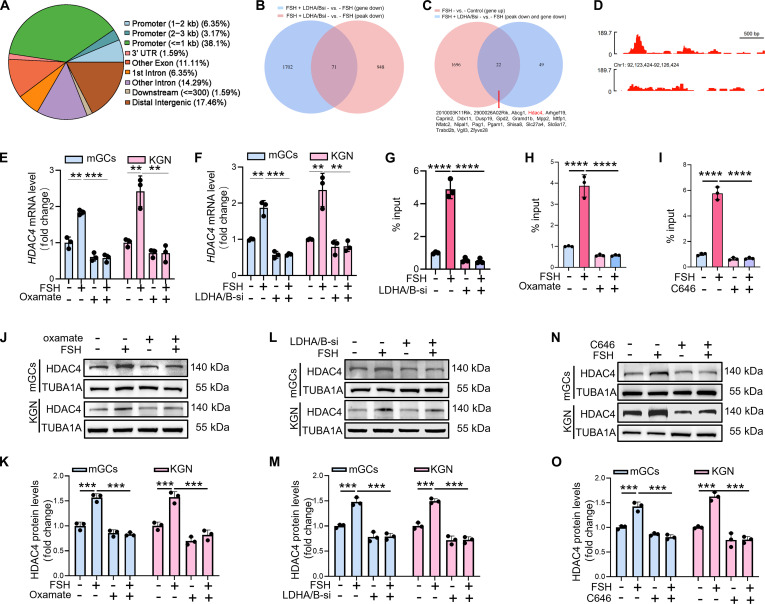 Figure 4
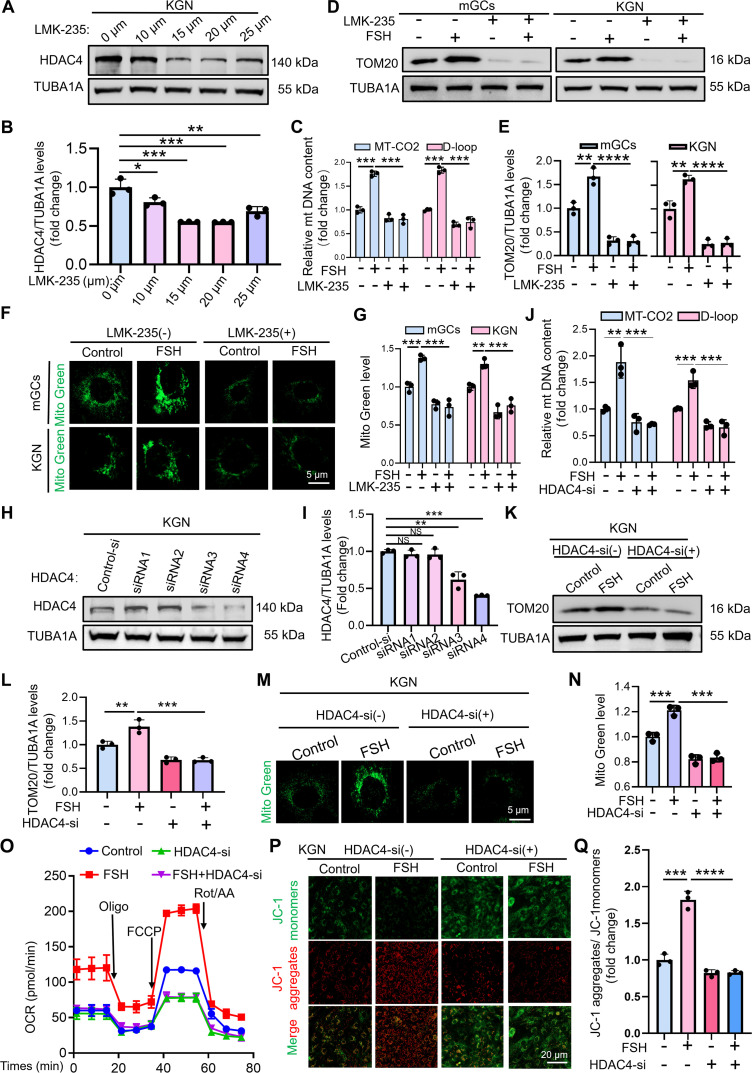 Figure 5
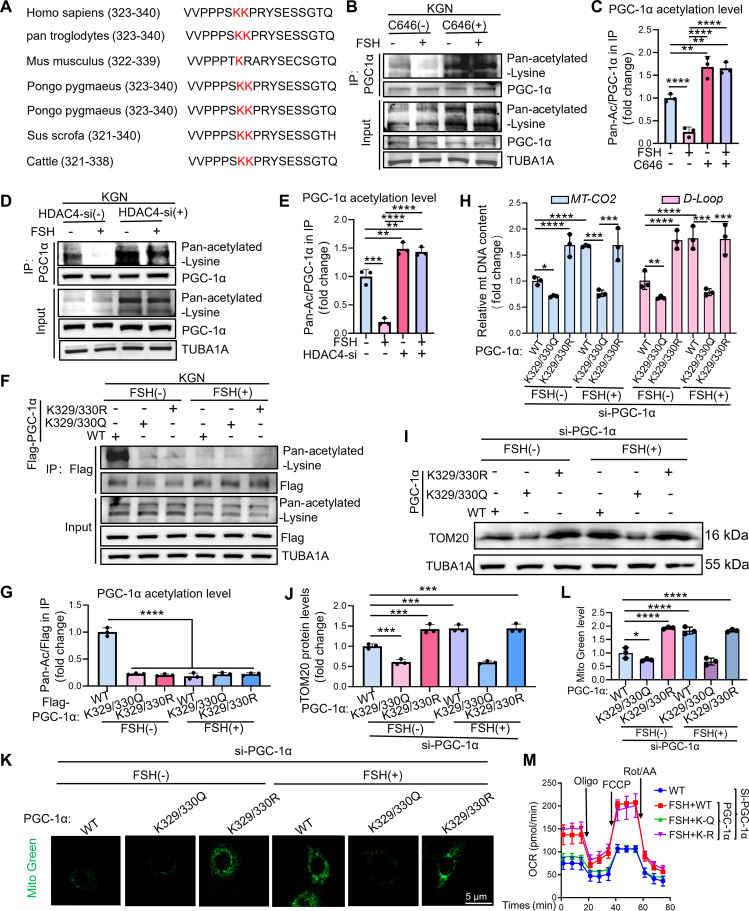 Figure 6
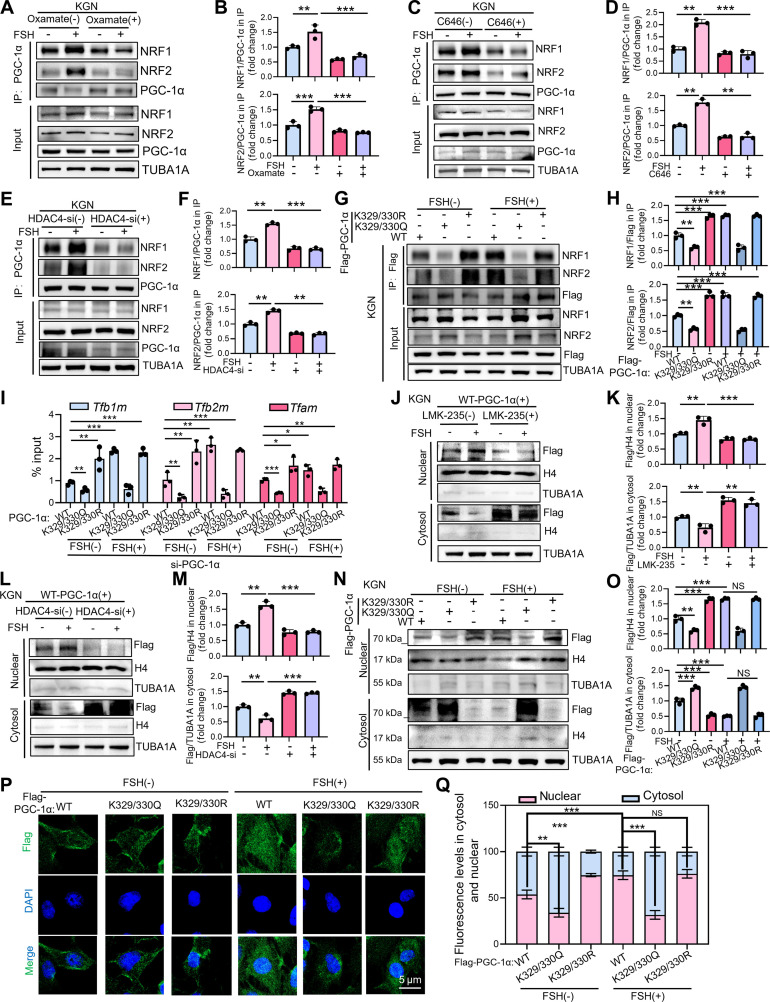 Figure 7
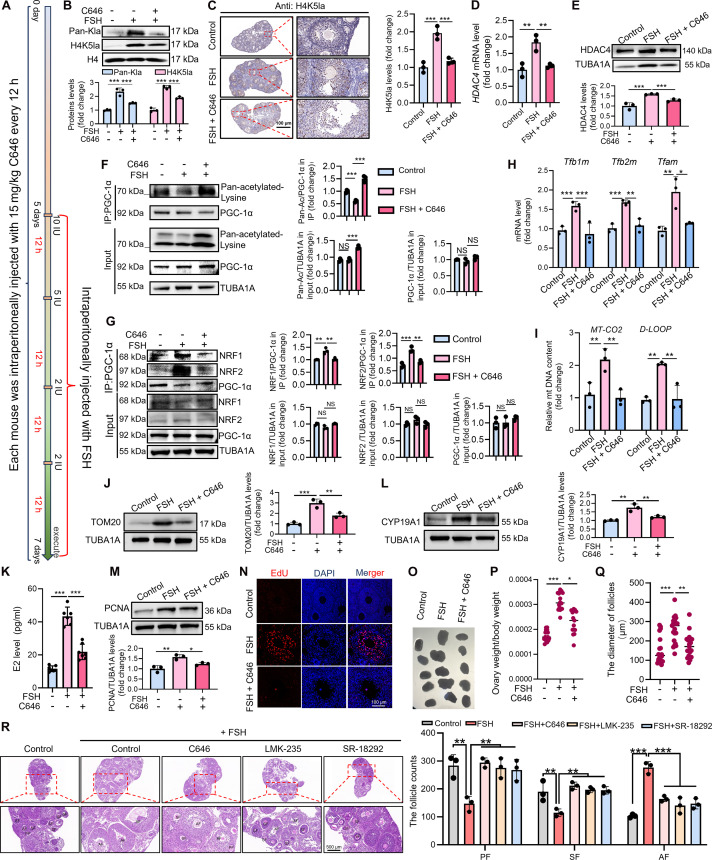 Figure 8
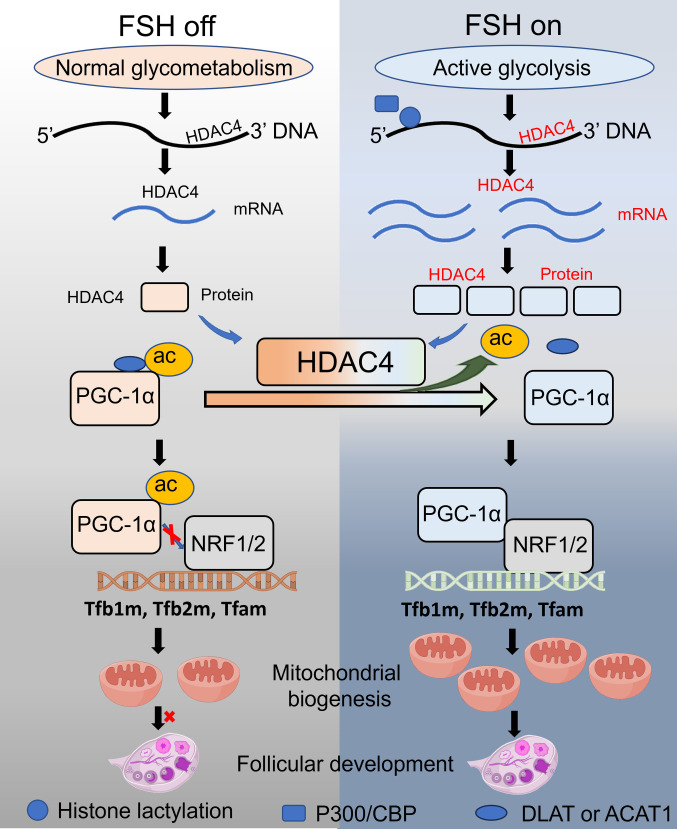 Figure 9
Peer Reviews
No public reviews on file for this paper yet. If you reviewed it on a platform where reviews are public (OpenReview, ICLR, NeurIPS, ICML), you can paste yours below so the community can read it here.
Videos
No videos yet. Explain this paper in a talk, walkthrough, or lecture? Add one.
Taxonomy
TopicsReproductive Biology and Fertility · Ovarian function and disorders · Epigenetics and DNA Methylation