Vulnerability and protective factors for PTSD in the academic community during the pandemic
Rachel Silva Machado Lana, Marta de Freitas Nudelman, Sarah Rocha Alves, Orlando Fernandes Junior, Raquel Menezes Gonçalves, Arthur Viana Machado, Rony Magalhães Martins, Liana Catarina Lima Portugal, Isabel de Paula Antunes David, William Berger, Fátima Cristina Smith Erthal

TL;DR
This study explores factors that increase or reduce the risk of PTSD among Brazilian academics during the pandemic, finding that undergraduates and those with higher fear or loneliness are more vulnerable.
Contribution
The study identifies specific vulnerability and protective factors for PTSD in the academic community during the pandemic.
Findings
Undergraduates were 1.84 times more likely to develop PTSD compared to professors.
Higher fear of COVID-19 and loneliness increased PTSD risk by 25% and 18.8%, respectively.
Optimism reduced the likelihood of PTSD by 10.7%.
Abstract
The COVID-19 pandemic exposed individuals to potentially traumatic events, which can lead to the development of posttraumatic stress disorder (PTSD). However, only a portion of exposed people develop this disorder. This study aimed to examine the cross-sectional relationship between vulnerability factors and protective factors that can mitigate or exacerbate the development or severity of PTSD-related COVID-19 in the academic community. Members of the Brazilian academic community completed an online survey that included sociodemographic questions, the Traumatic Experiences During the COVID-19 Pandemic Questionnaire, the PTSD Checklist for the DSM-5, the Three-Item Loneliness Scale, the Fear of COVID-19 Scale, and the Life Orientation Test-Revised. Bivariate and multivariate logistic regression analyses were used to investigate the associations between vulnerability and protective…
Genes, proteins, chemicals, diseases, species, mutations and cell lines named across the full text — each resolved to its canonical identifier and authoritative record.
Click any figure to enlarge with its caption.
 Figure 1
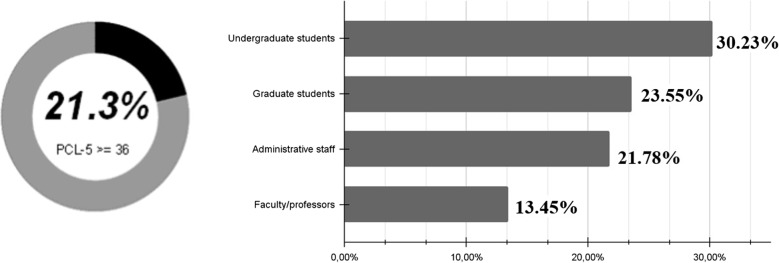 Figure 2
Peer Reviews
No public reviews on file for this paper yet. If you reviewed it on a platform where reviews are public (OpenReview, ICLR, NeurIPS, ICML), you can paste yours below so the community can read it here.
Videos
No videos yet. Explain this paper in a talk, walkthrough, or lecture? Add one.
Taxonomy
TopicsCOVID-19 and Mental Health · Posttraumatic Stress Disorder Research · Healthcare professionals’ stress and burnout