P2Y14 receptor activation and neutrophil signaling: linking inflammation to systemic pathophysiology
Renan da Silva Ebone, Pedro Henrique Doleski, Matheus Henrique Jantsch, Rafaella Pereira da Silveira, Daniela Bitencourt Rosa Leal

TL;DR
This paper reviews how the P2Y14 receptor influences neutrophil activity in inflammation and disease, suggesting it could be a target for reducing harmful immune responses.
Contribution
The paper provides a comprehensive review of P2Y14 receptor signaling in neutrophils and its implications in inflammation and disease.
Findings
P2Y14 receptor activation modulates neutrophil chemotaxis and oxidative responses via Gi/o and RhoA signaling.
P2Y14 is implicated in diseases like glioblastoma and COVID-19 through increased neutrophil infiltration and inflammation.
Targeting P2Y14 may help mitigate harmful inflammatory responses and tissue damage.
Abstract
Neutrophils are essential effector cells of the innate immune system, acting as the first line of defense against infection and tissue injury. Among the purinergic receptors expressed in these cells, P2Y14 has gained increasing attention in recent years for its role in modulating neutrophil recruitment and activation in inflammatory contexts. This receptor is activated mainly by uridine diphosphoglucose (UDP-glucose) and other UDP-sugars released during cellular stress or damage. Through the activation of G protein–coupled pathways, particularly via Gi/o and RhoA signaling, P2Y14 influences key neutrophil functions, including chemotaxis, cytoskeletal rearrangements, and oxidative responses. Despite its pro-inflammatory potential, and the increasing amount of literature data in recent years, P2Y14’s complete physiological and pathological roles remain underexplored. Literature data also…
Genes, proteins, chemicals, diseases, species, mutations and cell lines named across the full text — each resolved to its canonical identifier and authoritative record.
Click any figure to enlarge with its caption.
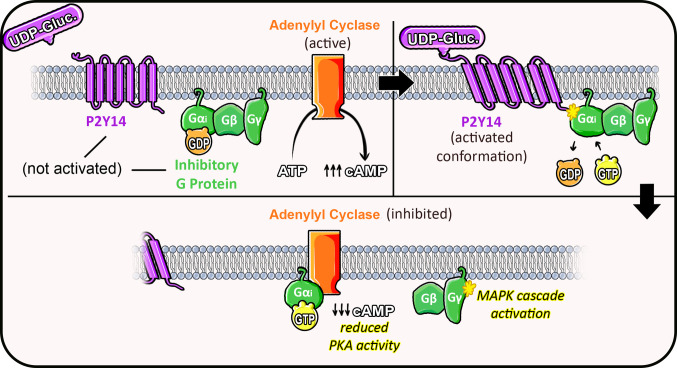 Figure 1
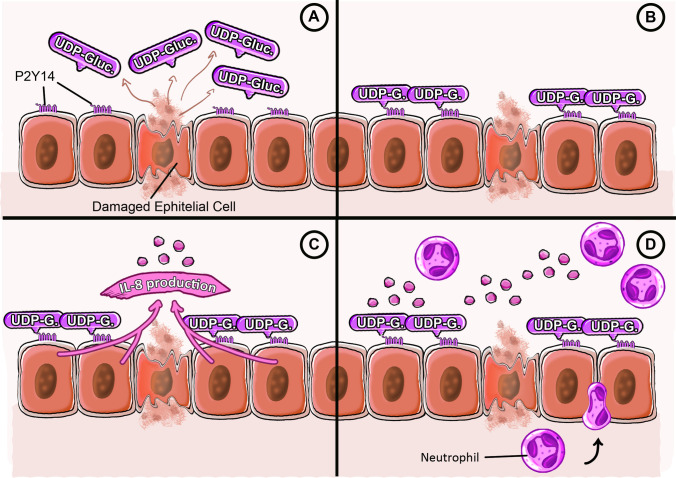 Figure 2
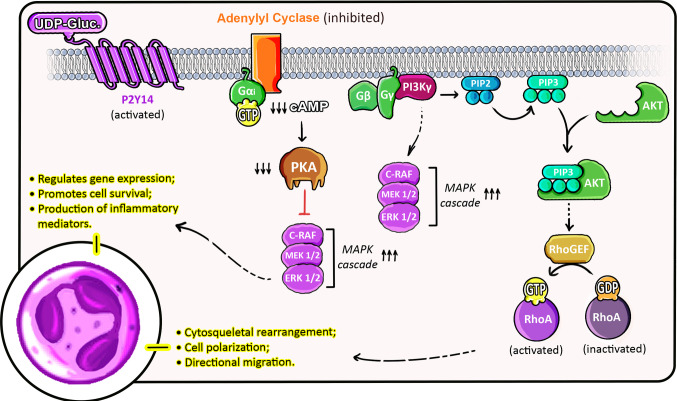 Figure 3
 Figure 4
Peer Reviews
No public reviews on file for this paper yet. If you reviewed it on a platform where reviews are public (OpenReview, ICLR, NeurIPS, ICML), you can paste yours below so the community can read it here.
Videos
No videos yet. Explain this paper in a talk, walkthrough, or lecture? Add one.
Taxonomy
TopicsAdenosine and Purinergic Signaling · Neutrophil, Myeloperoxidase and Oxidative Mechanisms · Cardiac Ischemia and Reperfusion