Craniofacial photography for detection of positional obstructive sleep apnoea
Kate Sutherland, John Wheatley, Kristina Kairaitis, Brendon J. Yee, Gary Cohen, Kerri Melehan, Stephen Lambert, Philip de Chazal, Peter A. Cistulli, Kate Sutherland, Kate Sutherland, John Wheatley, Kristina Kairaitis, Gary Cohen, Kerri Melehan, Stephen Lambert, Peter Cistulli

TL;DR
This study shows that craniofacial photos can help identify a specific type of sleep apnea that occurs mainly when lying on the back.
Contribution
The study introduces craniofacial photography as a potential tool for identifying supine-isolated obstructive sleep apnoea.
Findings
Supine-isolated OSA patients had distinct craniofacial features like longer upper face height and smaller mandibular width.
Differences in facial measurements were not significant after adjusting for body size and OSA severity.
The study suggests that facial photography could capture skeletal features related to supine-isolated OSA.
Abstract
Supine-dependent OSA is a well-recognised OSA phenotype and may relate to craniofacial structure. Our aim was to assess whether craniofacial photos are able to identify positional OSA, specifically supine-isolated OSA, in comparison to non-positional OSA. Frontal and profile craniofacial photographs of participants were acquired according to a standardised protocol. Photographs were analysed and compared between non-positional and supine-isolated OSA groups. A total of 156 OSA patients were included (54.5% supine-isolated OSA, 45.5% with non-positional OSA). The supine-isolated group had a longer upper face height and greater upper-to-lower face height ratio, smaller face width, reduced face width-to-height ratio, and smaller mandibular width, length, and size of the mandibular base. Differences in facial measurements were no longer significant after adjustment for body size and OSA…
Genes, proteins, chemicals, diseases, species, mutations and cell lines named across the full text — each resolved to its canonical identifier and authoritative record.
Click any figure to enlarge with its caption.
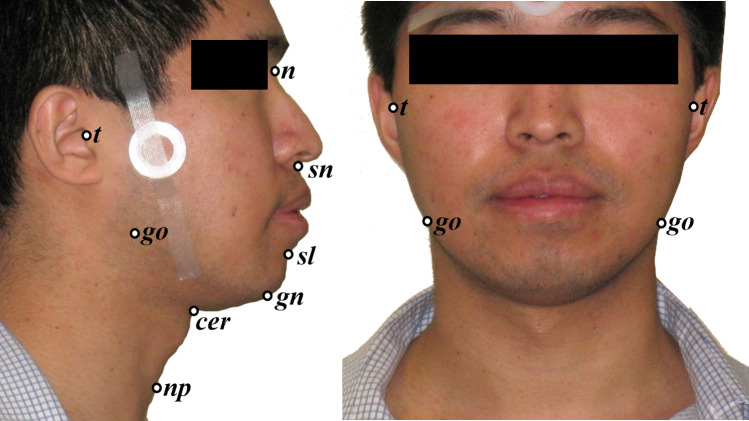 Figure 1
Peer Reviews
No public reviews on file for this paper yet. If you reviewed it on a platform where reviews are public (OpenReview, ICLR, NeurIPS, ICML), you can paste yours below so the community can read it here.
Videos
No videos yet. Explain this paper in a talk, walkthrough, or lecture? Add one.
Taxonomy
TopicsObstructive Sleep Apnea Research · Neuroscience of respiration and sleep · Cardiovascular and Diving-Related Complications