Variation in Soil Temperature Predicts Small Seasonal Shifts in Daily Activity Patterns of a Social Subterranean Rodent
Kyle T. Finn, Yannick Francioli, Jack Thorley, Markus Zöttl

TL;DR
This study shows that soil temperature changes influence the daily activity of subterranean mole-rats, causing small seasonal shifts in their behavior.
Contribution
The study demonstrates that temperature, not social factors, drives seasonal activity shifts in subterranean rodents.
Findings
Damaraland mole-rats show a daily activity peak around midday, coinciding with minimum nest temperatures.
Activity peak timing shifts by about 2 hours between seasons, linked to temperature changes.
Group-level foraging rhythms remain consistent across seasons despite low-level daily activity.
Abstract
Animals often show distinct activity rhythms which may align their behavior with favorable environmental conditions. In terrestrial species, daily and seasonal activity patterns are largely influenced by changes in photoperiod and temperature. However, subterranean animals experience weak or absent environmental variation due to minimal light exposure and reduced daily temperature fluctuations. Despite these conditions, many subterranean rodents display pronounced diel rhythms in physiological processes and locomotor activity, though the extent of seasonal variation remains unclear. In this study, we used radio frequency identification technology on wild groups of subterranean Damaraland mole-rats to assess their daily activity patterns. Our results show a population-wide daily activity peak around midday, which coincides with the minimum temperature at nesting depths and increasing…
Genes, proteins, chemicals, diseases, species, mutations and cell lines named across the full text — each resolved to its canonical identifier and authoritative record.
Click any figure to enlarge with its caption.
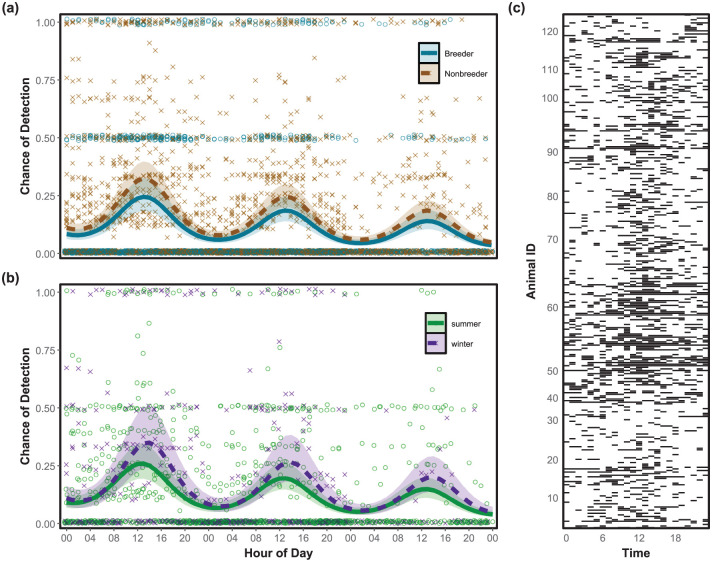 Figure 1
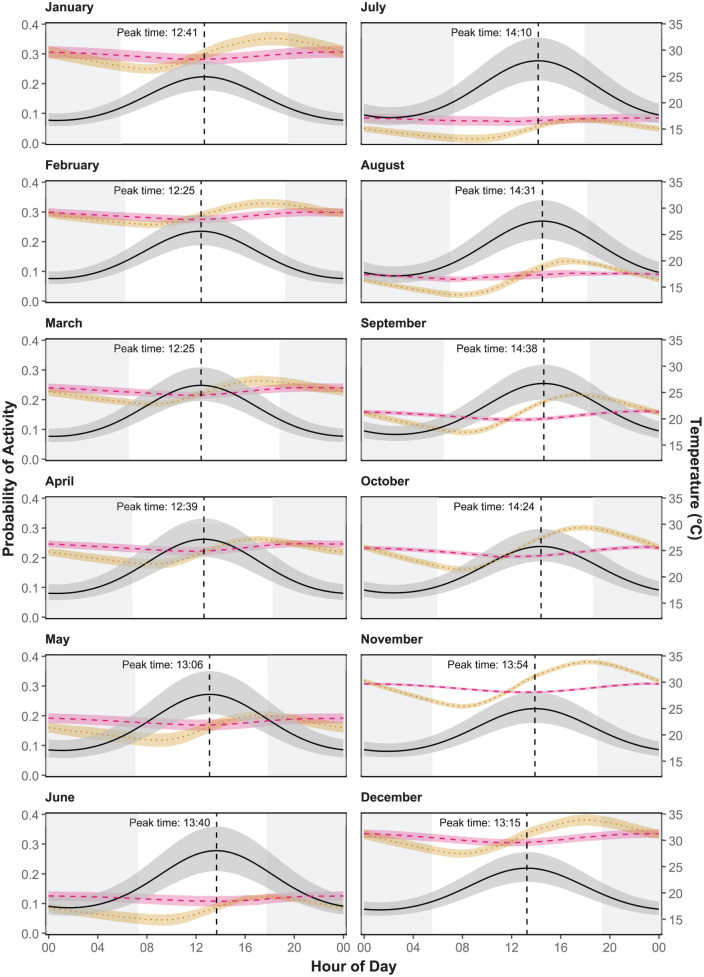 Figure 2
 Figure 3
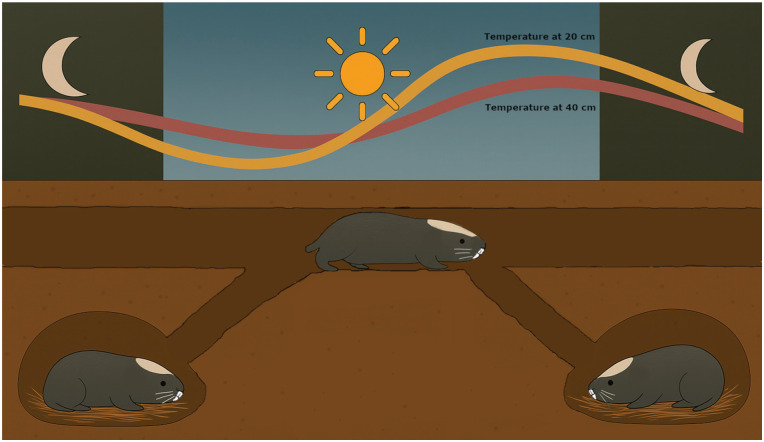 Figure 4
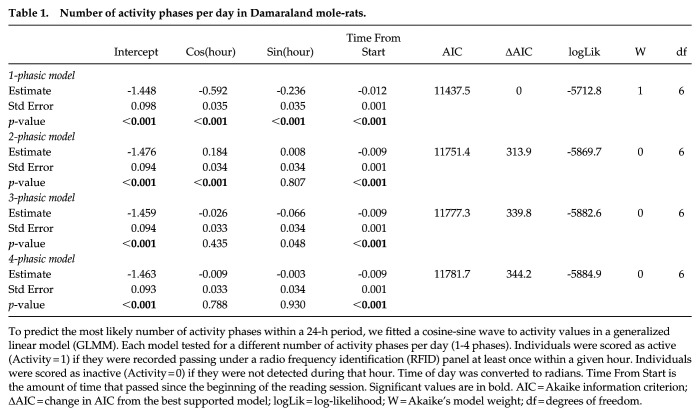 Figure 5
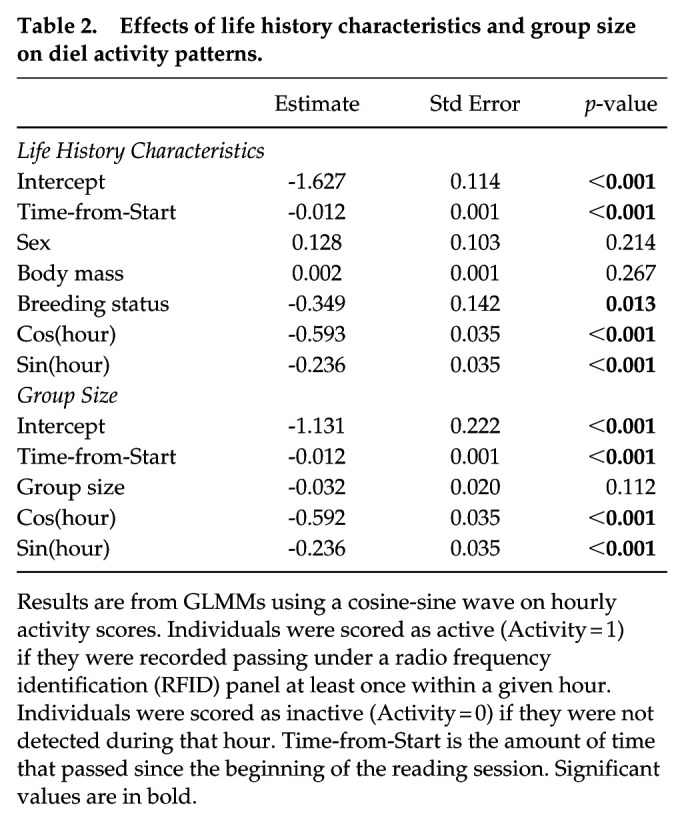 Figure 6
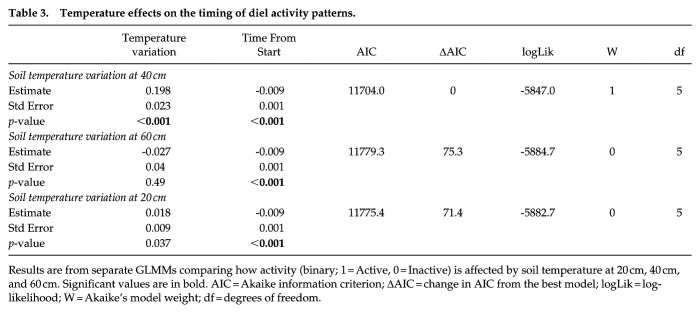 Figure 7
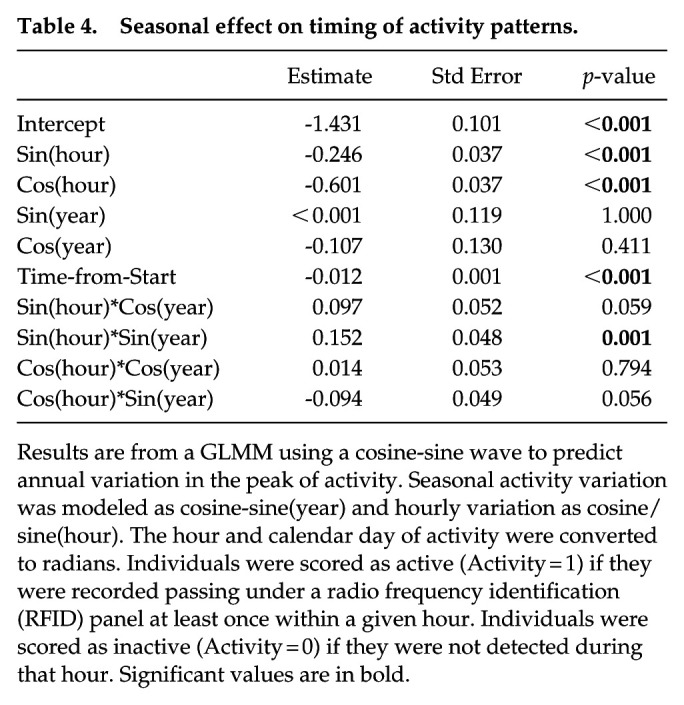 Figure 8
Peer Reviews
No public reviews on file for this paper yet. If you reviewed it on a platform where reviews are public (OpenReview, ICLR, NeurIPS, ICML), you can paste yours below so the community can read it here.
Videos
No videos yet. Explain this paper in a talk, walkthrough, or lecture? Add one.
Taxonomy
TopicsEvolution and Paleontology Studies · Primate Behavior and Ecology · Pleistocene-Era Hominins and Archaeology