Increased prosocial value orientation in autistic adults
Paul AG Forbes, Gillian Hughes, Leonhard Schilbach, Sarah White, Tobias Kalenscher

TL;DR
Autistic adults show more generosity towards strangers than non-autistic adults, and this is not due to repetitive behavior or different attitudes to money.
Contribution
The study shows that increased prosociality in autistic individuals towards socially distant others is genuine and not due to repetitive responding.
Findings
Autistic adults are more prosocial than non-autistic adults towards socially distant others.
The increased prosociality in autism is not driven by repetitive responding or differences in attitudes to money.
Differences in fairness norms may explain increased prosociality in autism, but this needs further testing.
Abstract
Social discounting describes the tendency to give fewer resources to those we feel less close to. Previous work suggests autistic individuals show a flatter decline in generosity towards socially distant others compared with non-autistic participants. We investigated whether this enhanced prosociality towards socially distant others in autism was driven by genuinely higher prosociality or instead a preference for repetitive responding. We measured prosocial preferences in 37 autistic and 38 non-autistic adults using the social value orientation questionnaire, where participants allocated money between themselves and people at six different social distances (e.g. friend vs stranger). We replicated previous findings by showing that autistic adults were more prosocial than non-autistic adults towards more socially distant others. Crucially, these effects were not driven by more repetitive…
Genes, proteins, chemicals, diseases, species, mutations and cell lines named across the full text — each resolved to its canonical identifier and authoritative record.
Click any figure to enlarge with its caption.
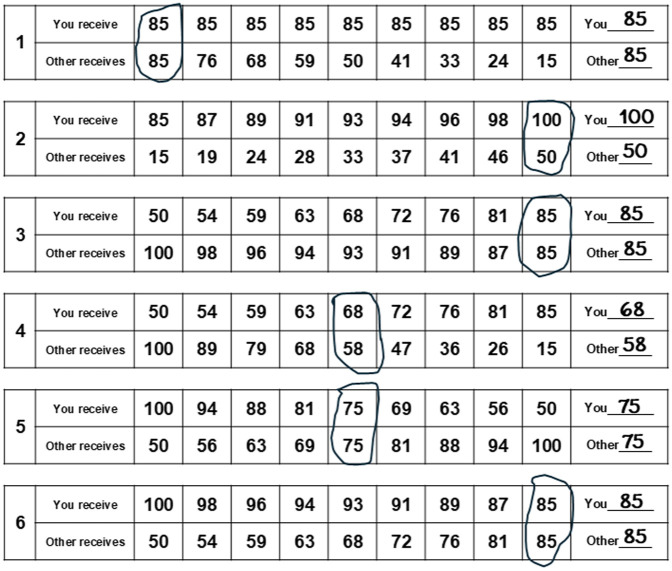 Figure 1
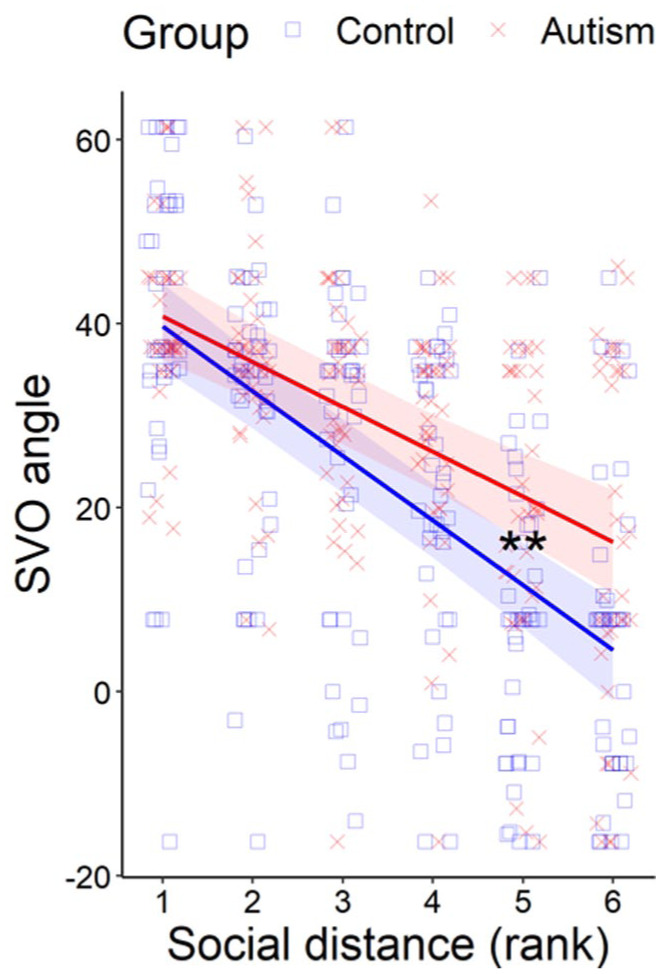 Figure 2
 Figure 3
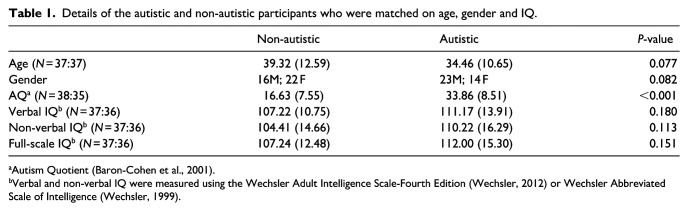 Figure 4
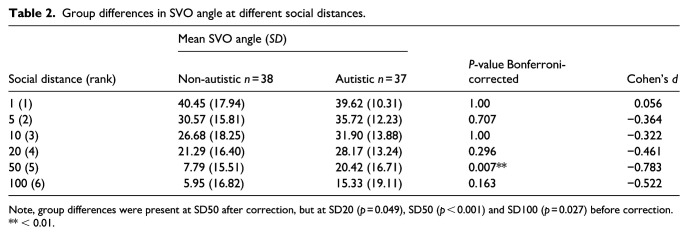 Figure 5
Peer Reviews
No public reviews on file for this paper yet. If you reviewed it on a platform where reviews are public (OpenReview, ICLR, NeurIPS, ICML), you can paste yours below so the community can read it here.
Videos
No videos yet. Explain this paper in a talk, walkthrough, or lecture? Add one.
Taxonomy
TopicsAutism Spectrum Disorder Research · Psychology of Moral and Emotional Judgment · Child and Animal Learning Development