Mini-GRID enhances survival and reduces toxicity in an orthotopic murine model of oral squamous cell carcinoma: A proof-of-concept study
Loris Roncali, Maria Isabel Acuña-Perez, Julie Espenon, Manuel Sánchez-García, Victor Luna-Vega, Eva G. Kölmel, Cristèle Gilbert, Mathieu Sertorio, Marjorie Juchaux, Yolanda Prezado

TL;DR
Mini-GRID radiotherapy improves survival and reduces toxicity in a mouse model of oral cancer compared to conventional methods.
Contribution
Demonstrates mini-GRID RT as a novel high-dose radiotherapy approach with better outcomes in oral squamous cell carcinoma.
Findings
Mini-GRID RT significantly extended median survival compared to controls and conventional RT.
Mini-GRID preserved normal tissues and reduced acute toxicity compared to conventional RT.
Toxicity increased at 25 Gy, suggesting 20 Gy as the optimal single fraction dose.
Abstract
•Mini-GRID RT extended survival compared with control and conv-RT.•Normal tissues were preserved under mini-GRID, with reduced acute toxicity.•Toxicity increased at 25 Gy, indicating 20 Gy as the ideal single fraction. Mini-GRID RT extended survival compared with control and conv-RT. Normal tissues were preserved under mini-GRID, with reduced acute toxicity. Toxicity increased at 25 Gy, indicating 20 Gy as the ideal single fraction. Oral squamous cell carcinoma (OSCC) remains a major clinical challenge, with limited therapeutic options and poor outcomes. Among the emerging approaches to address this unmet need, spatially fractionated radiotherapy (SFRT) using mini-GRID patterns has emerged as a promising approach, delivering high radiation doses through narrowly collimated beamlets that spare intervening normal tissue and may enhance the therapeutic index. This study evaluated the…
Genes, proteins, chemicals, diseases, species, mutations and cell lines named across the full text — each resolved to its canonical identifier and authoritative record.
Click any figure to enlarge with its caption.
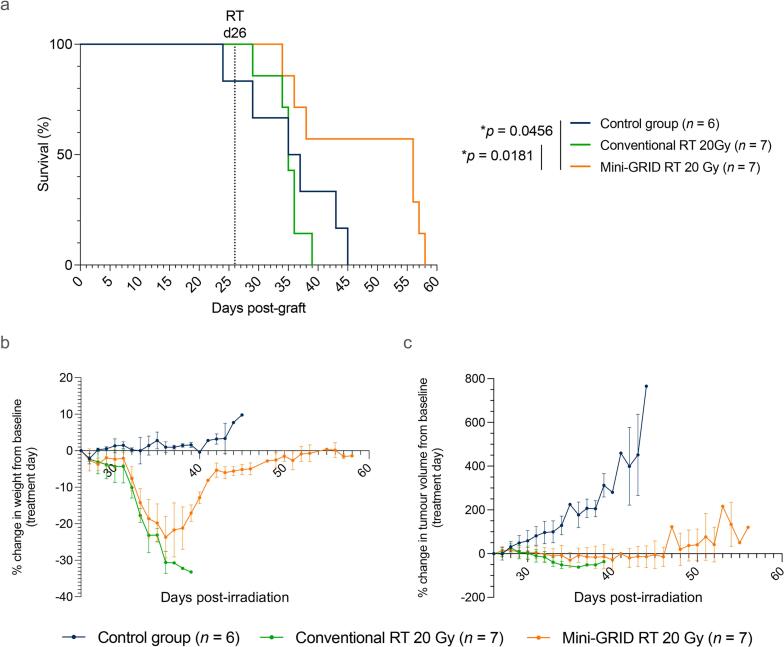 Figure 1
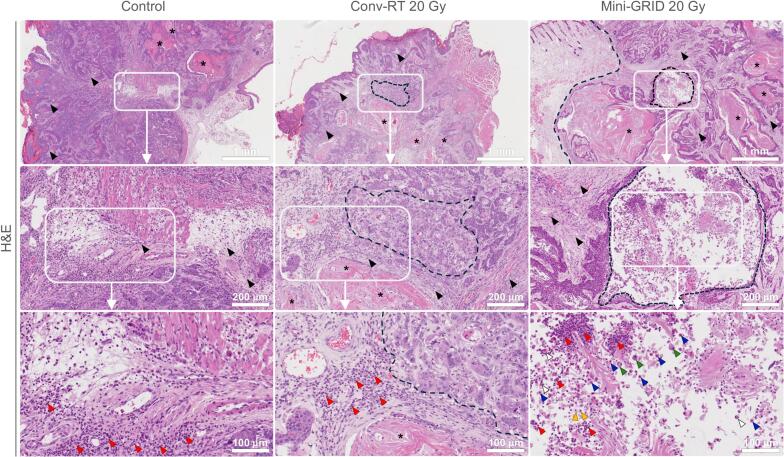 Figure 2
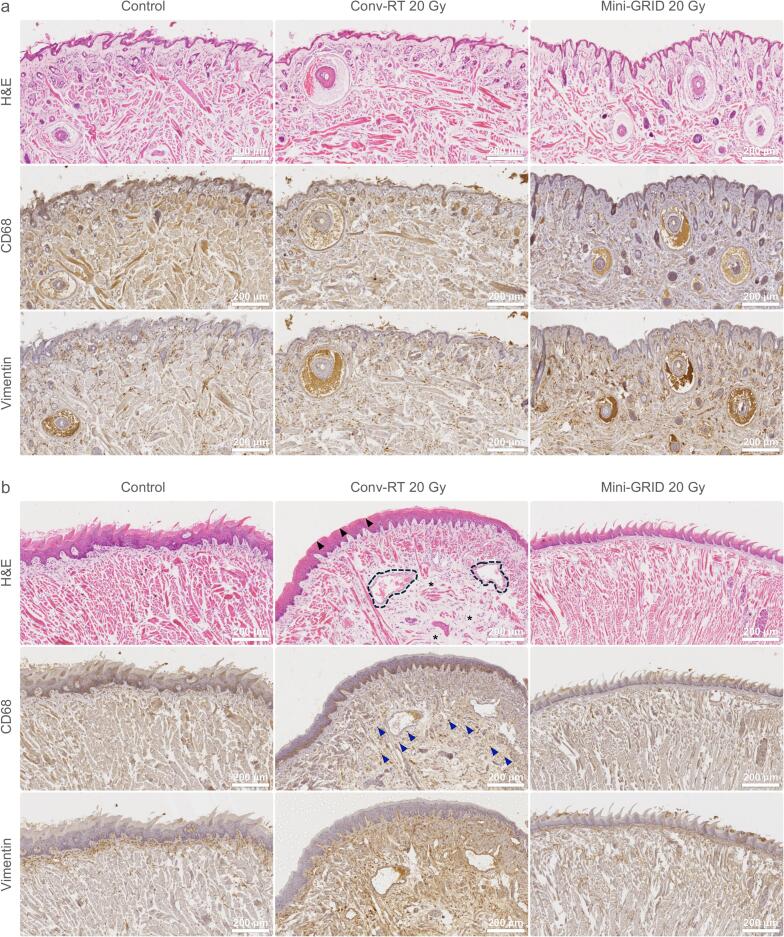 Figure 3
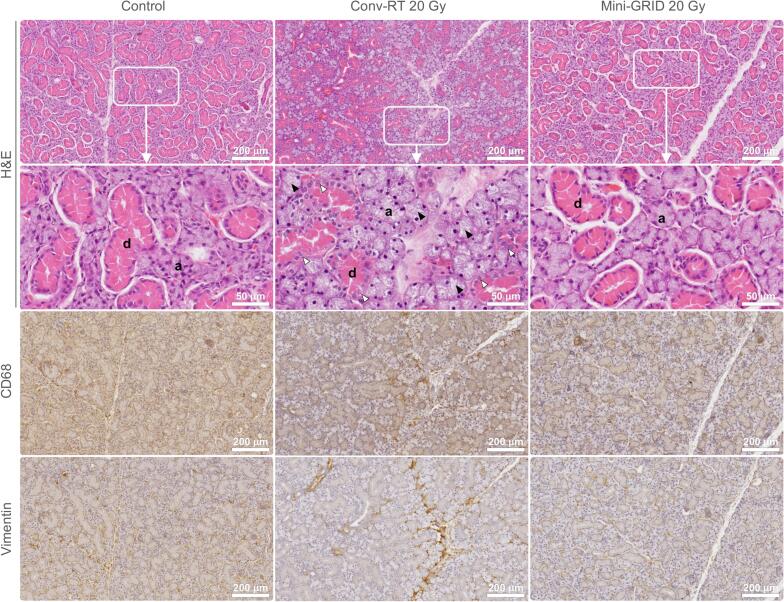 Figure 4
Peer Reviews
No public reviews on file for this paper yet. If you reviewed it on a platform where reviews are public (OpenReview, ICLR, NeurIPS, ICML), you can paste yours below so the community can read it here.
Videos
No videos yet. Explain this paper in a talk, walkthrough, or lecture? Add one.
Taxonomy
TopicsNanoplatforms for cancer theranostics · Cancer, Hypoxia, and Metabolism · Head and Neck Cancer Studies