Evaluating the utility of a novel 3D mobile imaging application in the surgical management of craniosynostosis
Emery Buckner-Wolfson, Geena Jung, Hailey Reisert, Margaret Keymakh, Timothy Kim, Genesis Liriano, Oren Tepper, Andrew Kobets

TL;DR
This paper evaluates a new 3D mobile imaging app for tracking head shape changes in children with craniosynostosis before and after surgery.
Contribution
The study introduces and validates MirrorMe3D, a novel mobile imaging application for surgical monitoring of craniosynostosis.
Findings
MirrorMe3D enabled efficient generation of 3D skull models within 5 minutes.
The app showed measurable depth changes of 3.01 mm and 3.12 mm in two patients post-surgery.
3D models provided clear visualizations of skull contour changes for both clinicians and families.
Abstract
Craniosynostosis is one of the most common craniofacial defects. It is typically treated with surgical intervention to correct abnormal head shape. Currently, there is no standard method for evaluating treatment effectiveness. We aim to assess the utility of MirrorMe3D, a novel three-dimensional mobile imaging application, in monitoring the head shape changes of two patients with craniosynostosis. We implemented the application in the surgical management of a 22-month-old with mild metopic craniosynostosis and a 19-month-old with severe trigonocephaly. Using the application, scans were taken preoperatively, intraoperatively, and postoperatively. Three-dimensional models were generated from these scans then compared qualitatively through visualization of the skull contour and quantitatively using depth and volume analysis features of MirrorMe3D. The application was easily integrated…
Genes, proteins, chemicals, diseases, species, mutations and cell lines named across the full text — each resolved to its canonical identifier and authoritative record.
Click any figure to enlarge with its caption.
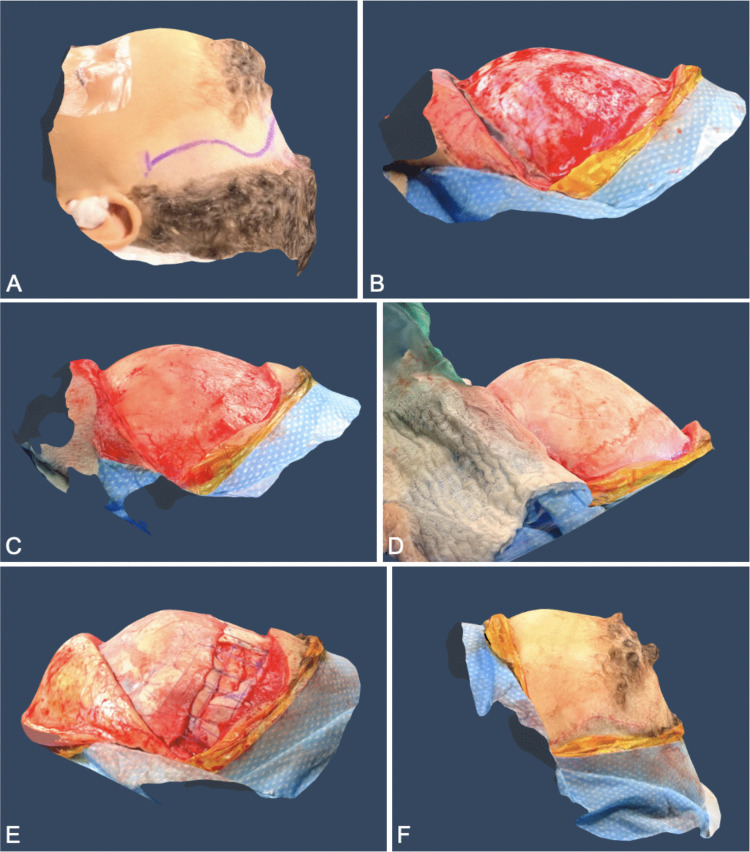 Figure 1
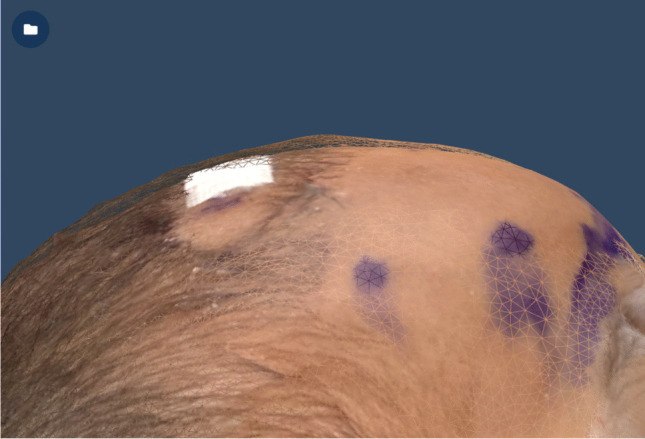 Figure 2
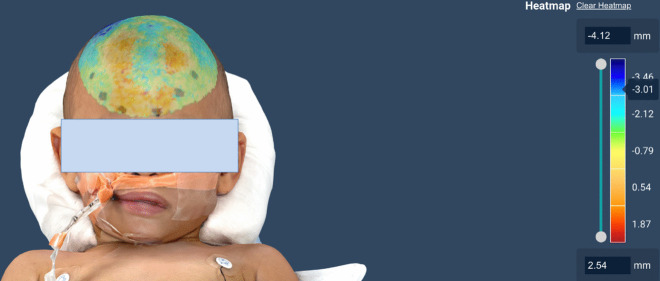 Figure 3
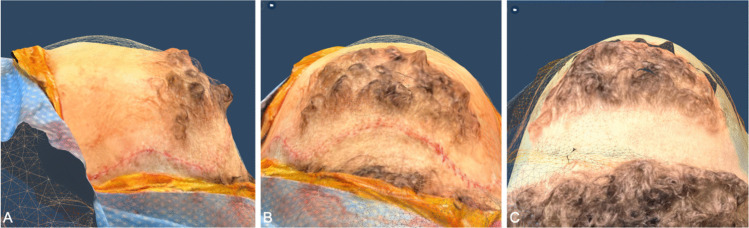 Figure 4
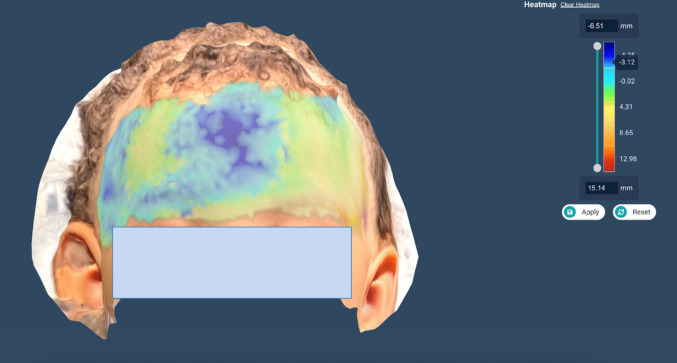 Figure 5
Peer Reviews
No public reviews on file for this paper yet. If you reviewed it on a platform where reviews are public (OpenReview, ICLR, NeurIPS, ICML), you can paste yours below so the community can read it here.
Videos
No videos yet. Explain this paper in a talk, walkthrough, or lecture? Add one.
Taxonomy
TopicsCraniofacial Disorders and Treatments · Facial Trauma and Fracture Management · Ocular Disorders and Treatments