The representational nature of action–effect relations: A memory process dissociation approach
Marcel R. Schreiner, Wilfried Kunde

TL;DR
This study explores how people learn how their actions affect the environment, finding that explicit memory plays a key role in learning action-effect relationships.
Contribution
The study introduces a process dissociation approach to distinguish explicit and implicit memory contributions in learning action-effect relations.
Findings
Action-effect relations are primarily represented in explicit memory.
Intentional learning enhances memory compared to incidental learning.
Divided attention during encoding reduces memory performance.
Abstract
Learning how actions change the environment is crucial for goal-directed actions and skill acquisition. Here, we applied a process dissociation approach to investigate the contribution of explicit and implicit memory to the learning of action–effect relations across four experiments. Participants produced object images by pressing one of two keys, with each action–effect episode experienced three times. Learning was either incidental (Experiments 1-2) or intentional (Experiments 2-4) and occurred under full (Experiments 1-4) or divided (Experiments 3-4) attention. In a test phase, participants were re-presented the effect images and asked to either reproduce or alternate the action that had produced them. Results obtained through cognitive modeling revealed that action–effect relations are primarily represented in explicit memory, with minimal contributions of implicit memory.…
Genes, proteins, chemicals, diseases, species, mutations and cell lines named across the full text — each resolved to its canonical identifier and authoritative record.
Click any figure to enlarge with its caption.
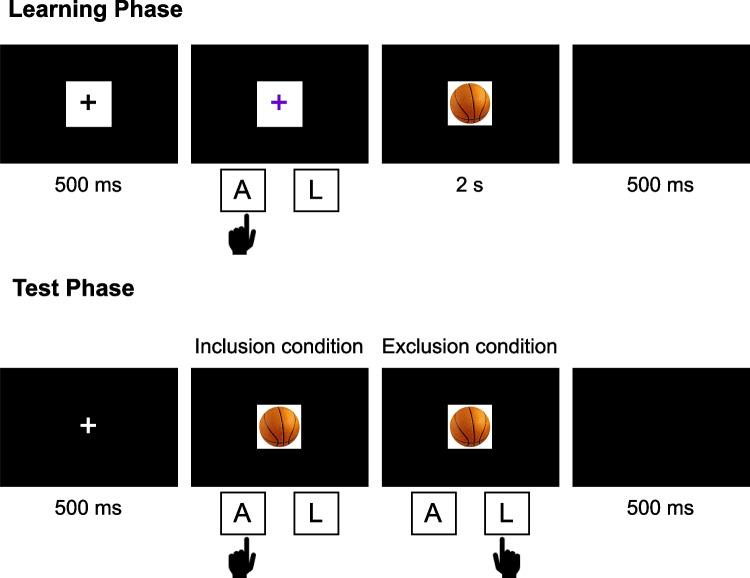 Figure 1
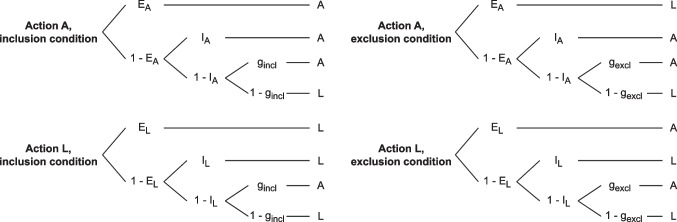 Figure 2
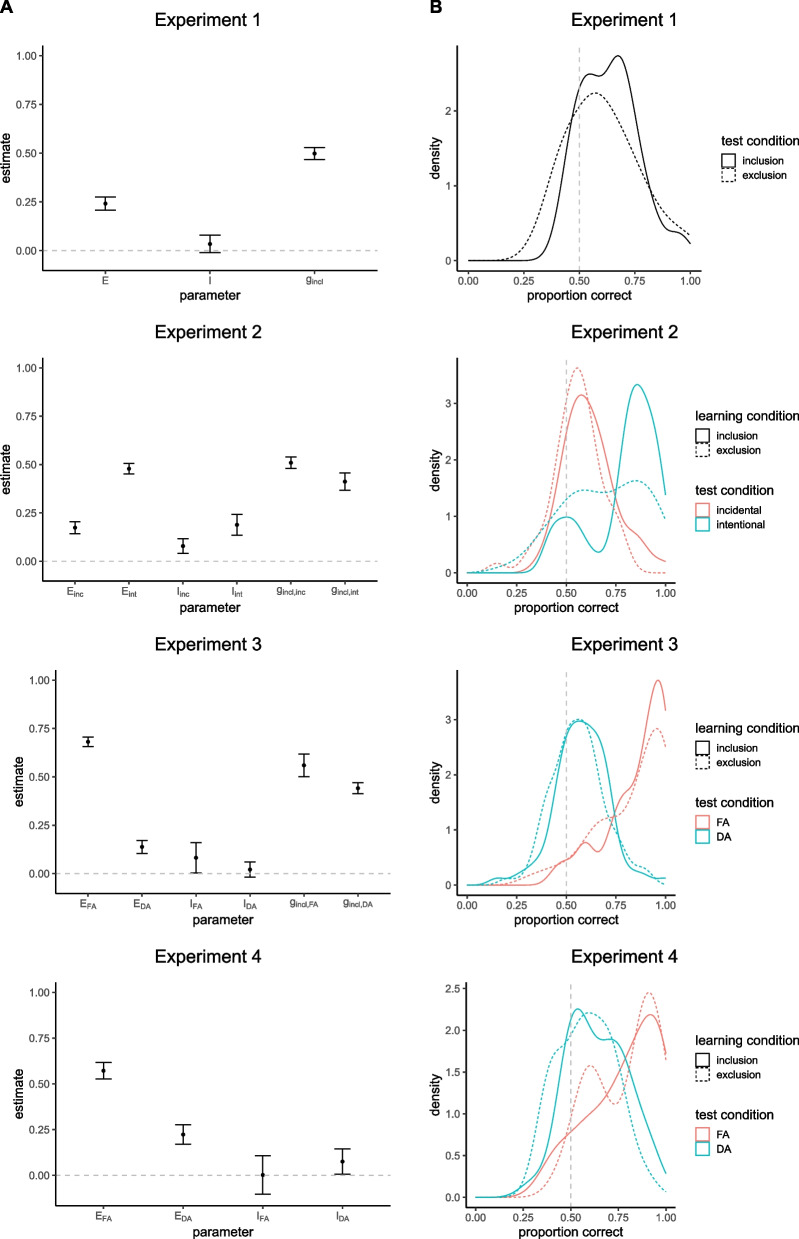 Figure 3
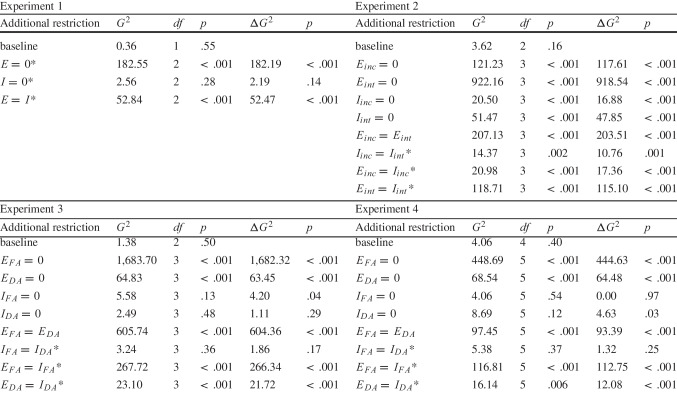 Figure 4
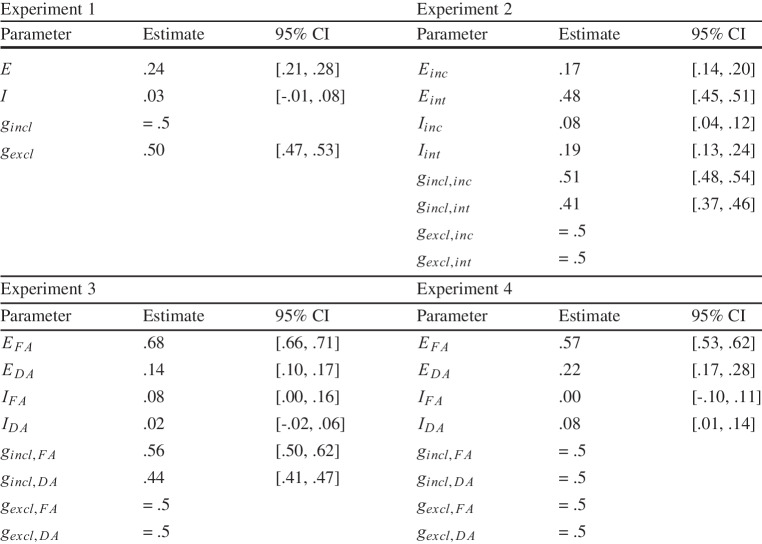 Figure 5
Peer Reviews
No public reviews on file for this paper yet. If you reviewed it on a platform where reviews are public (OpenReview, ICLR, NeurIPS, ICML), you can paste yours below so the community can read it here.
Videos
No videos yet. Explain this paper in a talk, walkthrough, or lecture? Add one.
Taxonomy
TopicsAction Observation and Synchronization · Motor Control and Adaptation · Embodied and Extended Cognition