Detection of Prostate Cancer Metastases During Pelvic Lymph Node Dissection with the PSMA-Targeted Fluorescent Agent OTL78: A Phase II Study
Judith A. Stibbe, Daan F. G. Linders, Robin A. Faber, Rob F. M. Bevers, Erik J. van Gennep, Stijn A. S. L. P. Crobach, Shadhvi S. Bhairosingh, Timothy G. Biro, Prof Jacobus Burggraaf, Prof Alexander L. Vahrmeijer

TL;DR
This study tested a fluorescent tracer called OTL78 to detect prostate cancer metastases in lymph nodes during surgery, showing promising results in identifying cancerous nodes.
Contribution
The study demonstrates the feasibility of using OTL78, a PSMA-targeted fluorescent agent, for intraoperative detection of prostate cancer metastases in lymph nodes.
Findings
Fluorescence imaging with OTL78 showed 66.7% sensitivity and 91.7% specificity for detecting metastatic lymph nodes.
Metastasized lymph nodes had significantly higher fluorescence intensity than benign nodes, confirmed by histopathology and immunohistochemistry.
No adverse reactions to OTL78 were observed in the six patients tested.
Abstract
This study aimed to assess the feasibility of intraoperative fluorescence imaging using the PSMA-targeted fluorescent tracer OTL78 for detecting lymph node metastases during pelvic lymph node dissection (PLND) in patients undergoing staging or salvage surgery for prostate cancer. In a prospective pilot study, six patients scheduled for robot-assisted PLND received a single intravenous infusion of OTL78 at a dose of either 0.06 mg/kg or 0.03 mg/kg, administered 1–2 h prior to surgery. Intraoperatively, lymph node clusters were evaluated using fluorescence imaging. Post-surgical histopathological analysis and immunohistochemistry were performed to confirm tumor presence and PSMA overexpression in fluorescent nodes. The primary outcome was the feasibility of fluorescence imaging in detecting metastatic lymph nodes during PLND. Fluorescence imaging demonstrated a sensitivity of 66.7% and…
Genes, proteins, chemicals, diseases, species, mutations and cell lines named across the full text — each resolved to its canonical identifier and authoritative record.
Click any figure to enlarge with its caption.
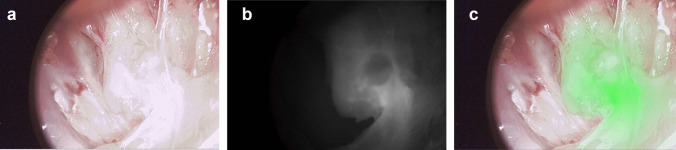 Figure 1
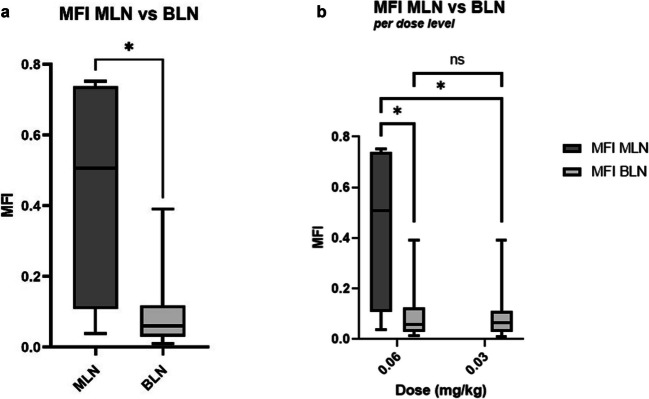 Figure 2
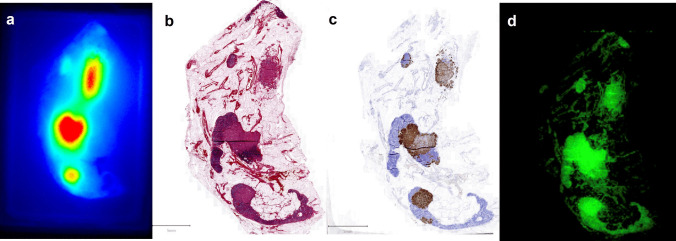 Figure 3
Peer Reviews
No public reviews on file for this paper yet. If you reviewed it on a platform where reviews are public (OpenReview, ICLR, NeurIPS, ICML), you can paste yours below so the community can read it here.
Videos
No videos yet. Explain this paper in a talk, walkthrough, or lecture? Add one.
Taxonomy
TopicsProstate Cancer Diagnosis and Treatment · Prostate Cancer Treatment and Research · Urologic and reproductive health conditions