Subcutaneous and visceral adipose tissue lipidome in children reveals novel lipid species involved in obesity
Andrea Soria-Gondek, Carolina Gonzalez-Riano, Pablo Fernández-García, Belén Requena, Lorena González, Marjorie Reyes-Farias, Marta Murillo, Aina Valls, Nativitat Real, Francesc Villarroya, Patricia Corrales, Rubén Cereijo, Laura Herrero, Coral Barbas, David Sánchez-Infantes

TL;DR
This study identifies new lipid species in children's fat tissue that are linked to obesity and its health effects like insulin resistance and oxidative stress.
Contribution
The study reveals novel lipid species in subcutaneous and visceral fat of children with obesity, highlighting depot-specific and shared mechanisms.
Findings
Ether-linked triglycerides and oxidized lipids are altered in subcutaneous fat of obese children.
Visceral fat shows changes in glycerophosphocholines and ceramides linked to inflammation and insulin resistance.
Lipid correlations between fat depots indicate systemic dysregulation in childhood obesity.
Abstract
Overweight impacts over 390 million children and adolescents worldwide, of whom around 160 million are living with obesity. Adipose tissue biology in pediatric obesity is still relatively unknown. Adaptations to obesity including fat mobilization and remodeling are being investigated. The objective was to examine the lipidomic profile of subcutaneous and visceral adipose tissue (sWAT and vWAT, respectively) in children with obesity compared to those with normal weight, in order to identify novel lipid species modulated by obesity. Thirty pediatric patients with and without obesity were prospectively recruited at a referral single center and clinical data were reported. sWAT and vWAT samples were obtained for lipidomic analysis. Novel lipid species, including ether-linked triglycerides, ether-linked phosphatidylethanolamine, and oxidized triglycerides, were identified as altered in the…
Genes, proteins, chemicals, diseases, species, mutations and cell lines named across the full text — each resolved to its canonical identifier and authoritative record.
Click any figure to enlarge with its caption.
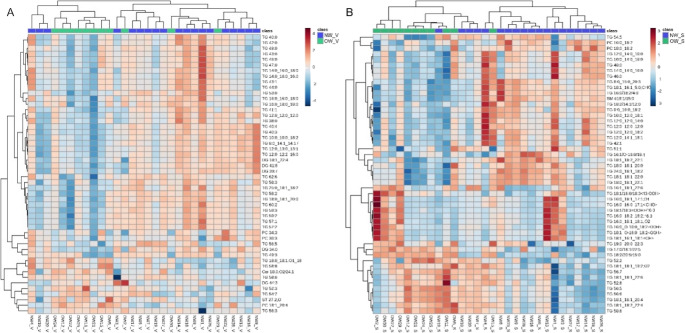 Figure 1
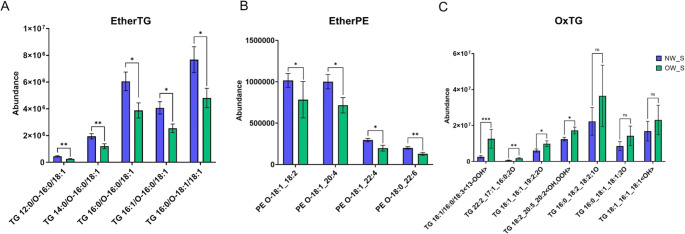 Figure 2
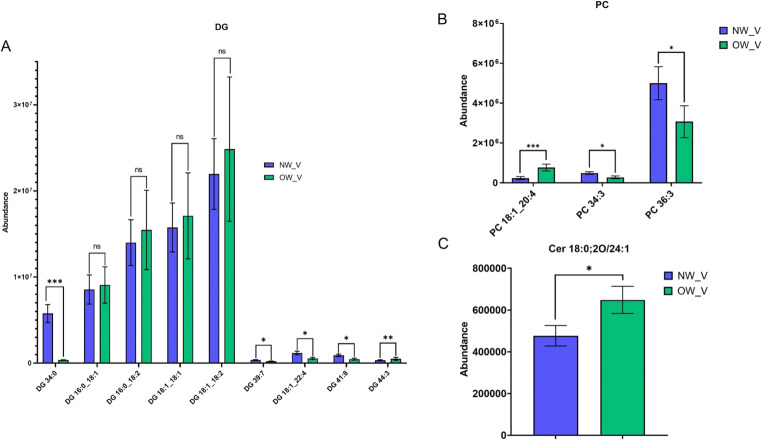 Figure 3
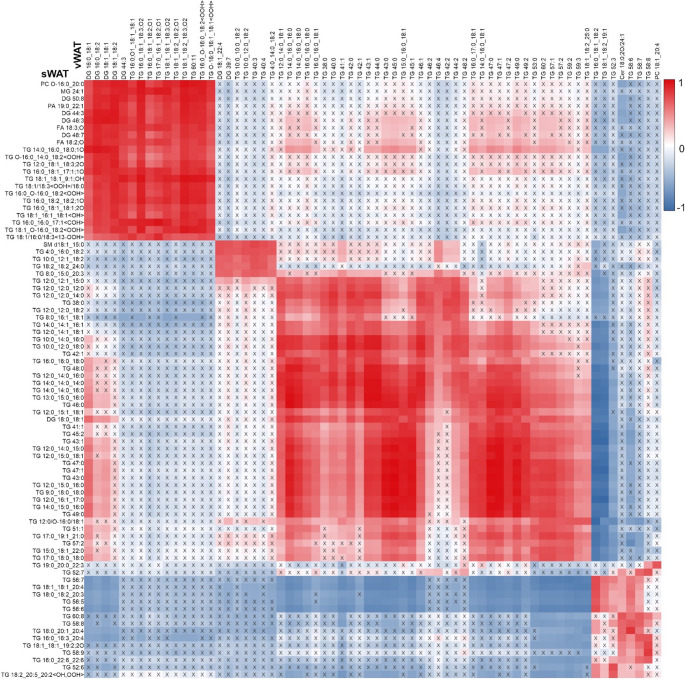 Figure 4
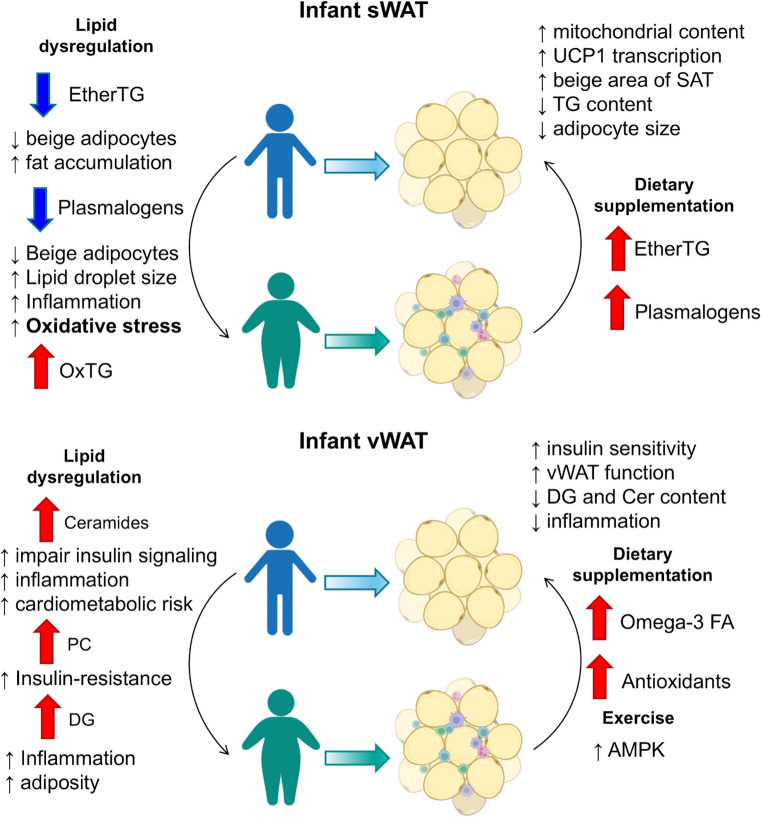 Figure 5
Peer Reviews
No public reviews on file for this paper yet. If you reviewed it on a platform where reviews are public (OpenReview, ICLR, NeurIPS, ICML), you can paste yours below so the community can read it here.
Videos
No videos yet. Explain this paper in a talk, walkthrough, or lecture? Add one.
Taxonomy
TopicsAdipokines, Inflammation, and Metabolic Diseases · Adipose Tissue and Metabolism · Peroxisome Proliferator-Activated Receptors