Coronal Streamer Brightness Profiles Investigated with BriLo Using Parker Solar Probe White-Light Data
Greta M. Cappello, Manuela Temmer, Andrea Lienhart, Giuseppe Nisticò, Guillermo Stenborg, Mark G. Linton, Yara De Leo, Stephan G. Heinemann, Paulett C. Liewer, Russell A. Howard, Volker Bothmer

TL;DR
A new method called BriLo is introduced to study solar streamers using white-light data from the Parker Solar Probe, providing insights into their location and structure.
Contribution
The BriLo method is a novel single-spacecraft technique for localizing and analyzing coronal streamers using Thomson scattering theory.
Findings
BriLo estimates streamer geometrical properties like angular width and directionality with reasonable accuracy.
LX data provides realistic streamer widths, while L3 data yields unrealistically narrow widths due to line-of-sight integration and F-corona removal.
Helmet streamers are near the heliospheric current sheet, while pseudostreamers are near active regions.
Abstract
We present the Brightness–Location (BriLo) method, a novel single-spacecraft technique which exploits the Thomson scattering theory for localizing extended coronal features such as streamers using white-light (WL) imaging. Beyond determining the longitude and latitude of coronal features, the method also provides estimates of their geometrical properties, such as angular width (column depth). Validation is performed through geometrical triangulation with multi-viewpoint coronagraphs (the Solar TErrestrial RElations Observatory A COR2 and the Solar and Heliospheric Observatory C2–C3). The method is applied to ten coronal streamers observed by the Wide-Field Imager for Solar Probe (WISPR) on board the Parker Solar Probe (PSP) between encounter 1 – 17. We applied BriLo to two different data products, L3 and LX, which differ in K-corona treatment and absolute brightness levels. The L3 and…
Genes, proteins, chemicals, diseases, species, mutations and cell lines named across the full text — each resolved to its canonical identifier and authoritative record.
Click any figure to enlarge with its caption.
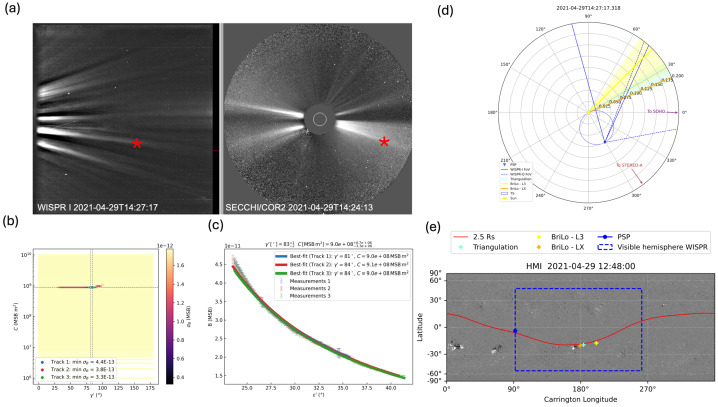 Figure 10
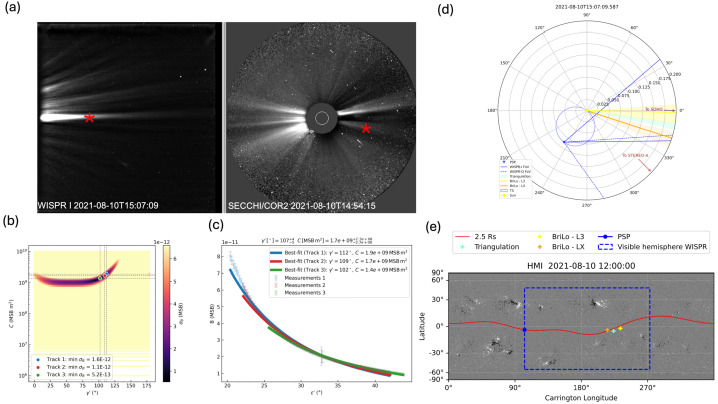 Figure 11
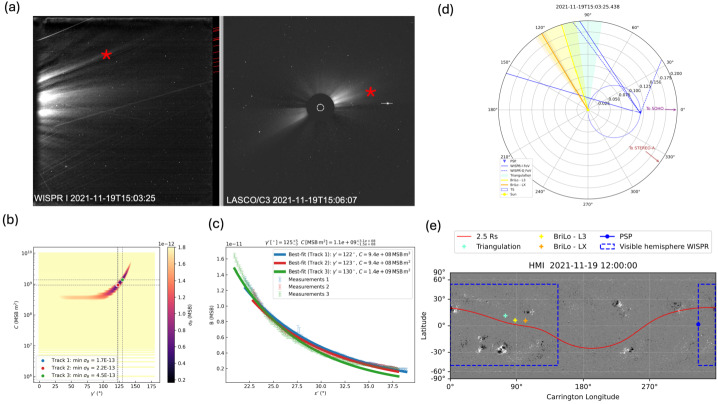 Figure 12
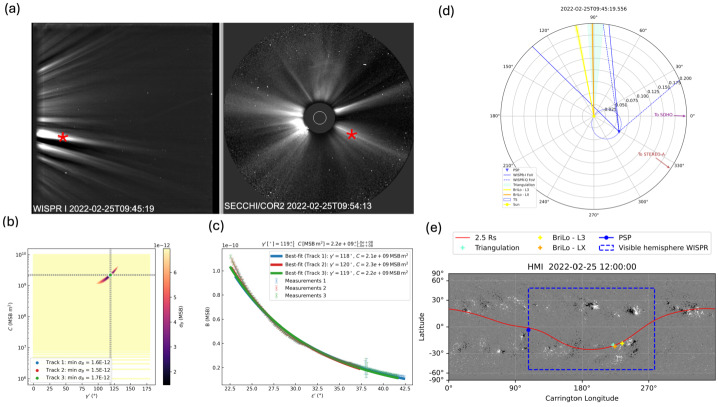 Figure 13
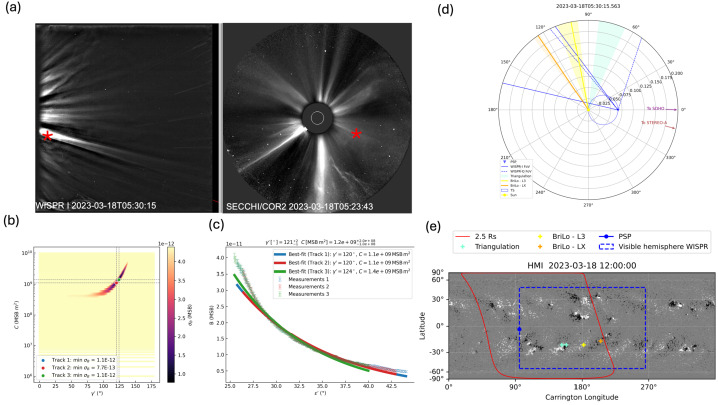 Figure 14
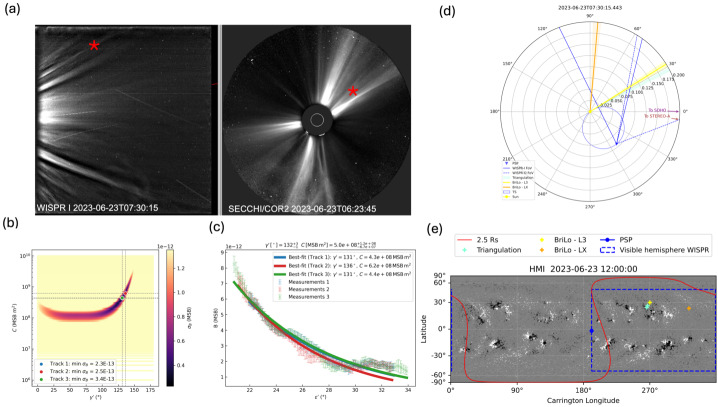 Figure 15
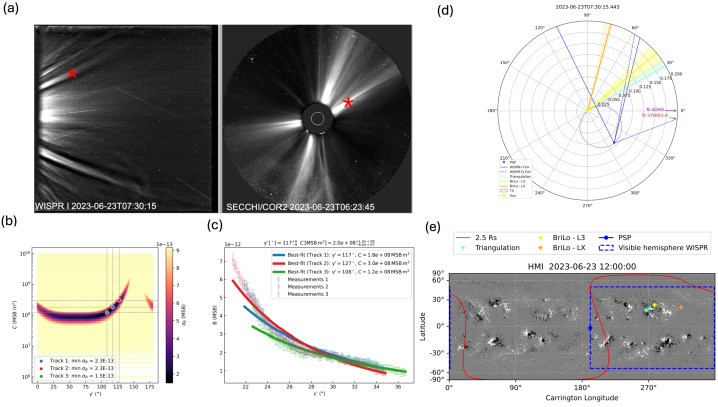 Figure 16
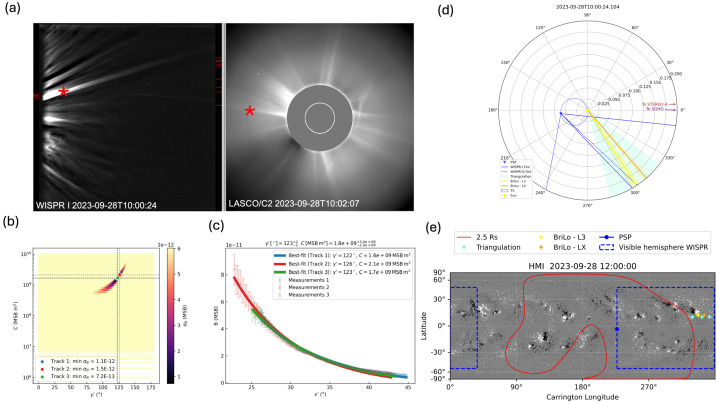 Figure 17
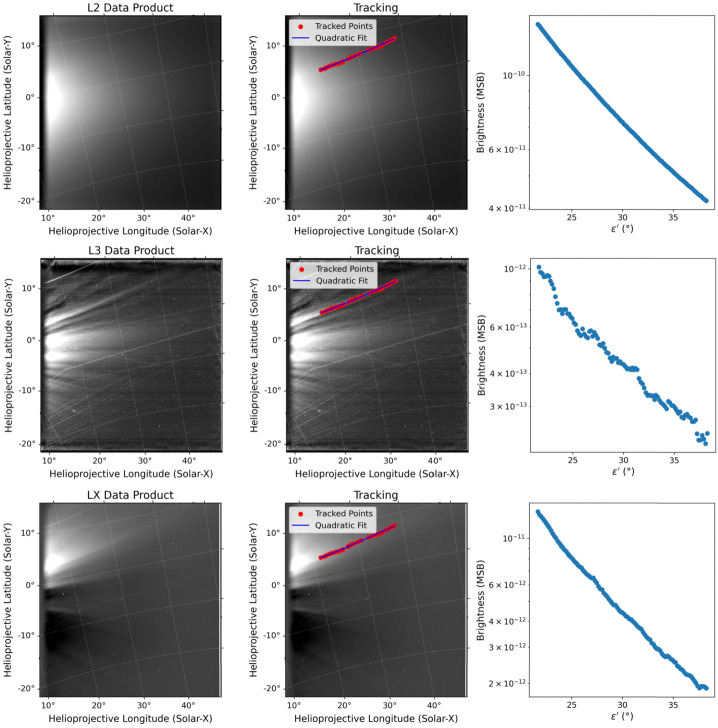 Figure 1
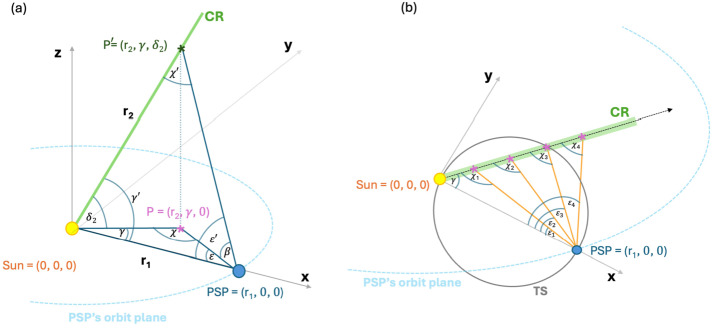 Figure 2
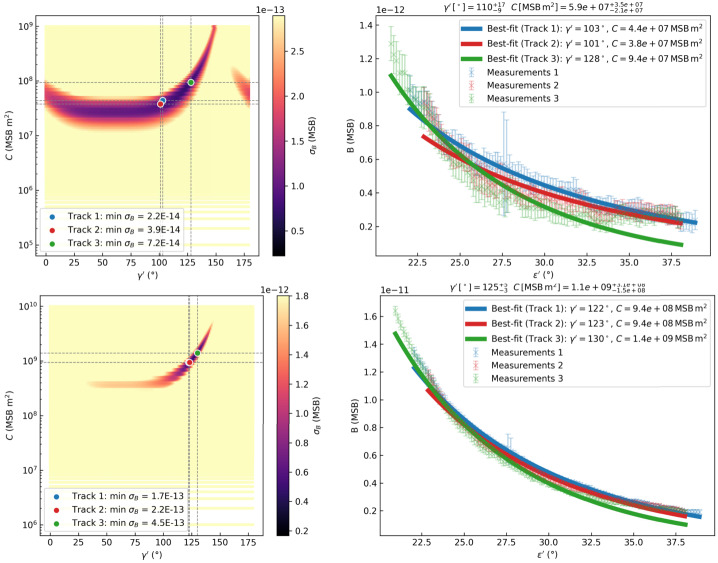 Figure 3
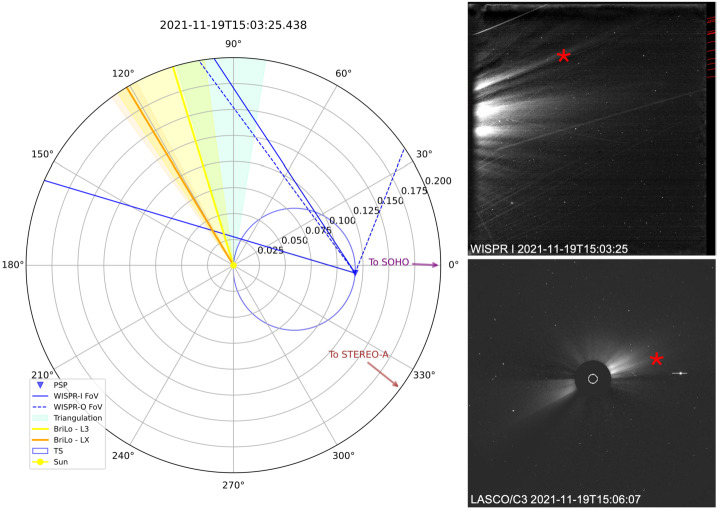 Figure 4
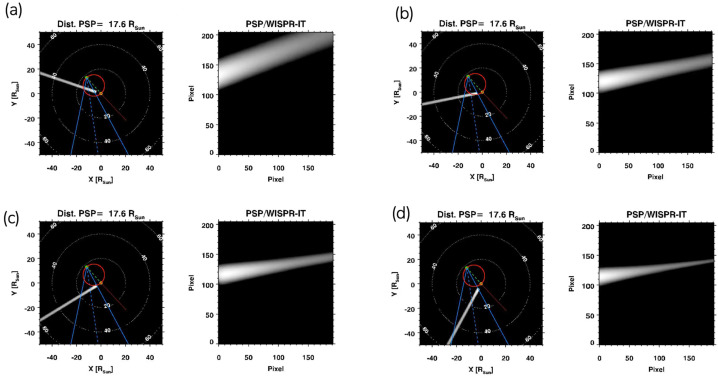 Figure 5
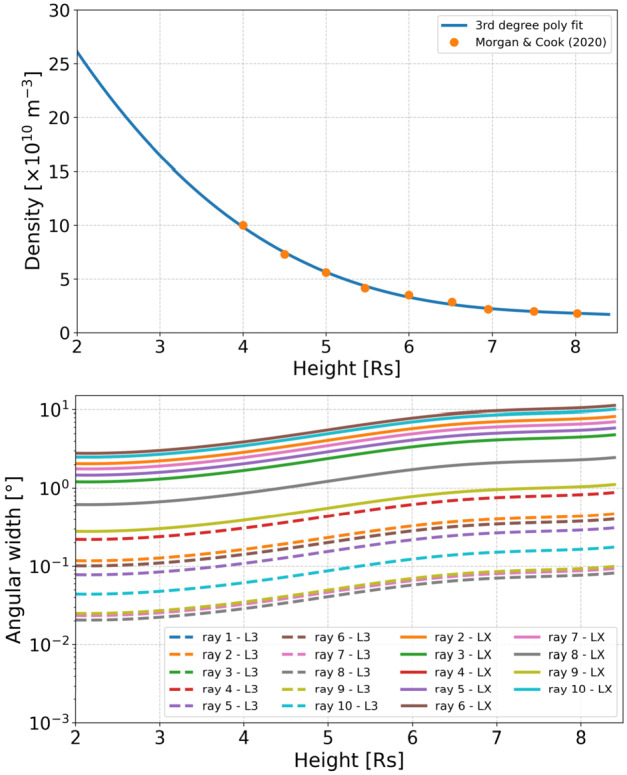 Figure 6
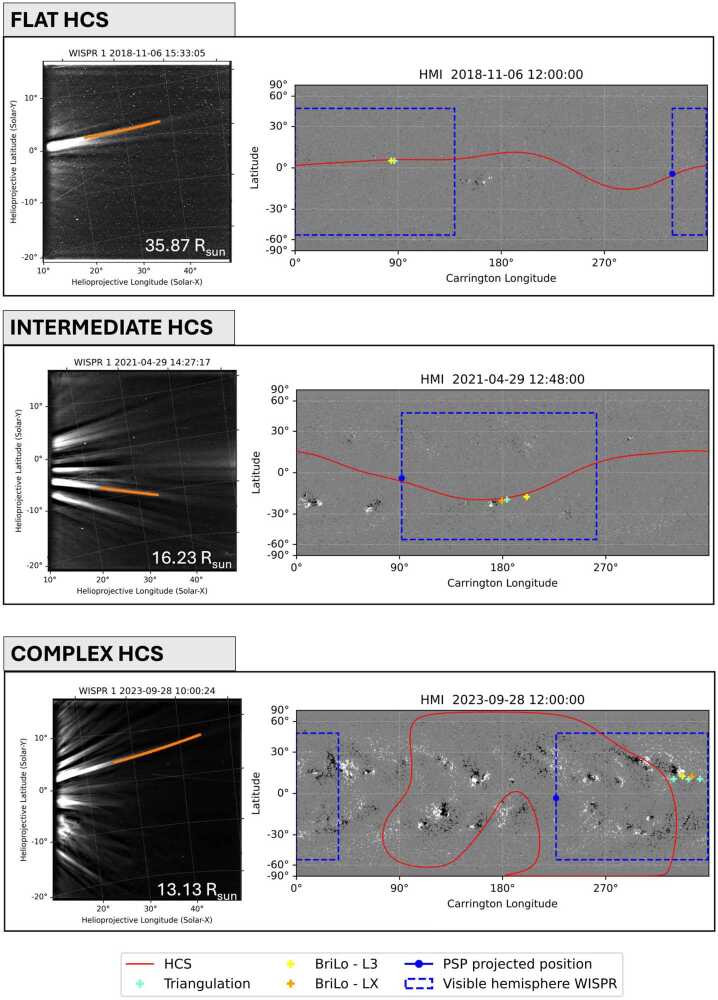 Figure 7
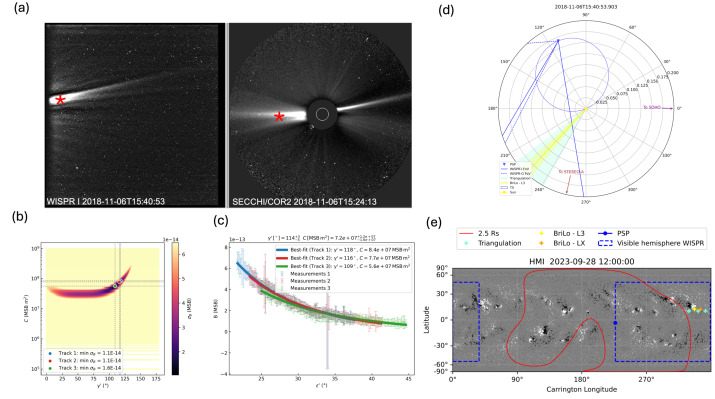 Figure 8
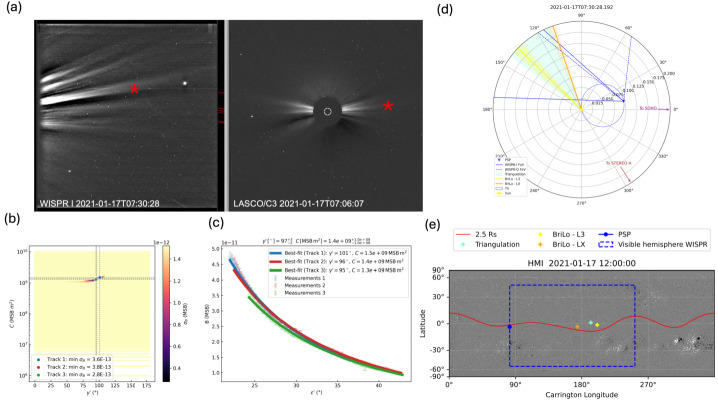 Figure 9
Peer Reviews
No public reviews on file for this paper yet. If you reviewed it on a platform where reviews are public (OpenReview, ICLR, NeurIPS, ICML), you can paste yours below so the community can read it here.
Videos
No videos yet. Explain this paper in a talk, walkthrough, or lecture? Add one.
Taxonomy
TopicsSolar and Space Plasma Dynamics · Ionosphere and magnetosphere dynamics · Earthquake Detection and Analysis