Social Reward Responsiveness Moderates the Association between Perceived Social Competence and Depressive Symptoms in Adolescents
Krupali R. Patel, Corinne N. Carlton, Lisa Venanzi, Samantha Pegg, Autumn Kujawa

TL;DR
This study shows that how teens respond to social rewards affects how their social skills relate to depression.
Contribution
The study identifies social reward responsiveness as a moderator in the link between social competence and depressive symptoms in adolescents.
Findings
Adolescents with low social competence and blunted social reward responses showed stronger depressive symptoms.
Social reward processing moderates the relationship between perceived social competence and depression.
Neural measures like RewP can help understand social-emotional processes in depression.
Abstract
Adolescence is an important social development period that is also marked by increased rates of depression. Positive social interactions are crucial for cultivating social skills and functioning, also known as social competence, and lower social competence has been related to greater depressive symptoms. Still, little is known about factors that impact why some adolescents with low self-perceptions of social competence develop depression while others do not. The present study addressed this gap by examining neural processing of social rewards as a potential moderator of the association between self-perceptions of social competence and depressive symptoms in adolescents. Data from 165 adolescents were collected using electroencephalography during a perceived peer interaction task, eliciting the reward positivity (RewP) event-related potential component in response to social acceptance…
Genes, proteins, chemicals, diseases, species, mutations and cell lines named across the full text — each resolved to its canonical identifier and authoritative record.
Click any figure to enlarge with its caption.
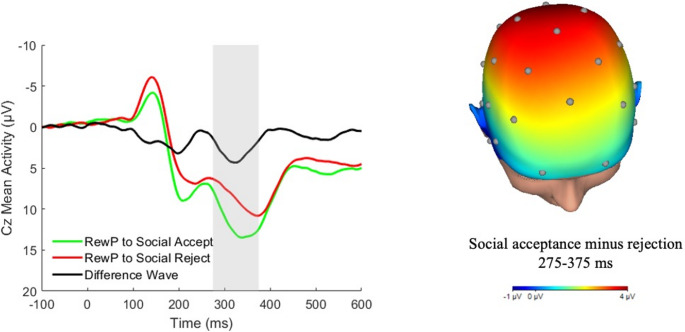 Figure 1
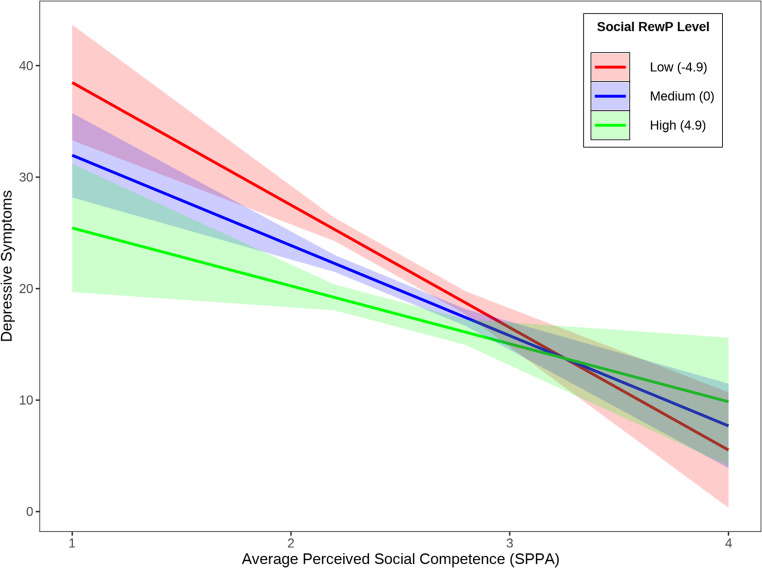 Figure 2
Peer Reviews
No public reviews on file for this paper yet. If you reviewed it on a platform where reviews are public (OpenReview, ICLR, NeurIPS, ICML), you can paste yours below so the community can read it here.
Videos
No videos yet. Explain this paper in a talk, walkthrough, or lecture? Add one.
Taxonomy
TopicsChild and Adolescent Psychosocial and Emotional Development · Emotion and Mood Recognition · Anxiety, Depression, Psychometrics, Treatment, Cognitive Processes