Cognitive alterations related to driving performance in Parkinson’s disease detected by a driving simulator
Almudena Cerezo-Zarzuelo, Francisco José Sánchez-Cuesta, Carlota Trigo, Eduardo Rocon, Jorge Villagra, Juan Felipe Medina-Lee, Vinicius Trentin, Juan Pablo Romero

TL;DR
This study shows that driving simulators can detect early driving impairments in Parkinson’s disease patients before they appear on standard cognitive tests.
Contribution
The study introduces the use of high-fidelity driving simulators to detect subtle driving impairments in early Parkinson’s disease.
Findings
PD participants showed slower response times and reduced lane control during driving simulations.
Driving difficulties were linked to disease severity and medication dosage.
Driving simulators were more sensitive than standard tests in detecting early impairments.
Abstract
Driving ability in individuals with Parkinson’s disease (PD) can be compromised early in the course of the illness, even before clear cognitive deficits emerge on standard neuropsychological tests. This study investigated subtle driving impairments in a group of non-demented people with PD using a high-fidelity driving simulator. Seven PD participants and seven healthy controls, matched for age and sex, completed cognitive assessments, reaction time tasks, and five simulated driving scenarios that measured lane keeping, steering control, and reaction to events. While most cognitive scores were comparable between groups, PD participants exhibited slower response times in basic tasks and showed reduced lane control, particularly during left turns. These difficulties were associated with disease severity and medication dosage. The simulator proved more sensitive than conventional tests in…
Genes, proteins, chemicals, diseases, species, mutations and cell lines named across the full text — each resolved to its canonical identifier and authoritative record.
Click any figure to enlarge with its caption.
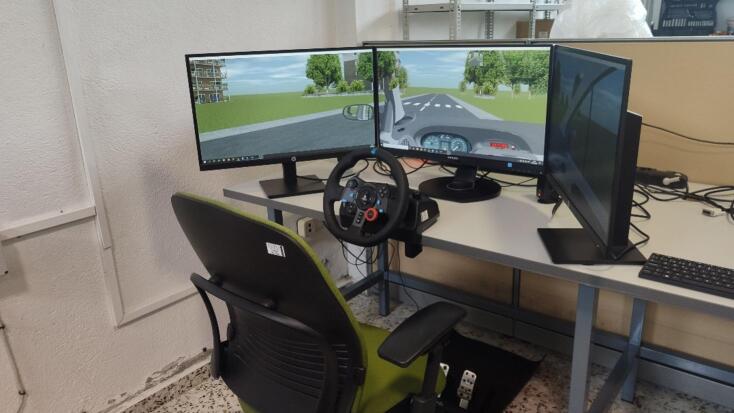 Figure 1
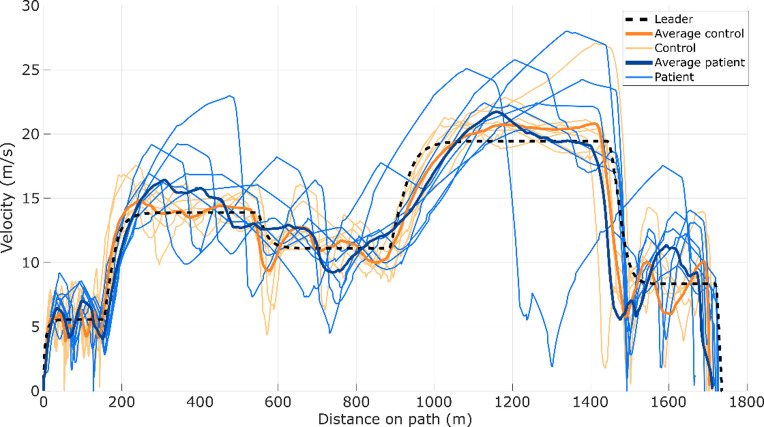 Figure 2
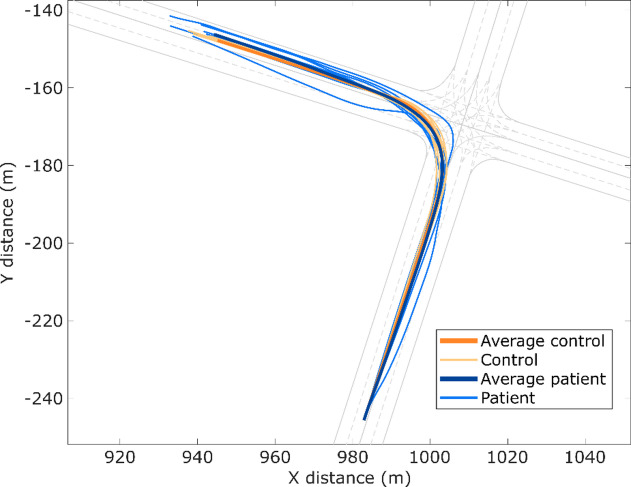 Figure 3
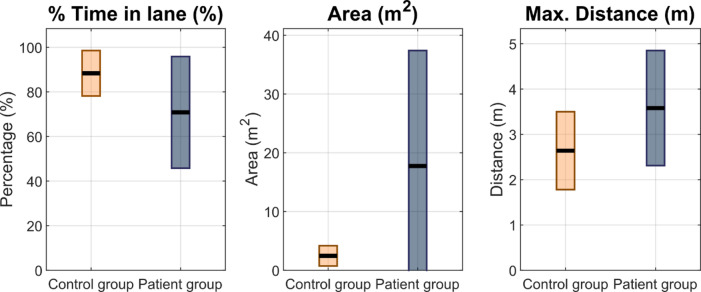 Figure 4
Peer Reviews
No public reviews on file for this paper yet. If you reviewed it on a platform where reviews are public (OpenReview, ICLR, NeurIPS, ICML), you can paste yours below so the community can read it here.
Videos
No videos yet. Explain this paper in a talk, walkthrough, or lecture? Add one.
Taxonomy
TopicsOlder Adults Driving Studies · Human-Automation Interaction and Safety · Spatial Neglect and Hemispheric Dysfunction