Oncolytic adenoviruses encoding bispecific T cell engagers or a novel trispecific T cell engager for dual-targeting of c-MET and EGFR
Martin A. Boos, Oliver Seifert, Stefanie Sawall, Jessica Genz, Annika Huber, Ilse Hofmann, Roland E. Kontermann, Guy Ungerechts, Dirk M. Nettelbeck

TL;DR
Researchers developed a new approach using oncolytic viruses to target two tumor proteins, EGFR and c-MET, using bispecific and trispecific T cell engagers to combat tumor diversity.
Contribution
The study introduces novel bispecific and trispecific T cell engagers encoded by oncolytic adenoviruses for dual-targeting tumor antigens.
Findings
Bispecific TCEs scDb-cMET and taFv-EGFR showed efficacy in vitro.
The trispecific Db-TriTE scDb-cMET-scFv-EGFR demonstrated superior dual-targeting and cytotoxicity.
Oncolytic adenoviruses encoding TCEs induced T cell activation and cytotoxicity in co-cultures.
Abstract
This study reports a strategy to overcome immune escape of tumors during viro-immunotherapy due to tumor heterogeneity. We pursued a dual-targeting approach of epidermal growth factor receptor (EGFR) and cellular mesenchymal epithelial transition factor (c-MET) facilitated by two bispecific T cell engagers (TCEs) or one trispecific TCE encoded by oncolytic adenoviruses (oAds). Different bi- and trispecific TCE formats were generated and characterized. We showed efficacy of bispecific TCEs single-chain diabody (scDb)-cMET and tandem scFv (taFv)-EFGR in vitro, encouraging the design of the diabody-based trispecific TCE (Db-TriTE) scDb-cMET-scFv-EGFR. The Db-TriTE exhibited effective dual-targeting, i.e., the induction of cytotoxicity for single-positive cells of both targets and superior efficacy on double-positive cells. Therefore, a panel of oAds was produced to test different TCE…
Genes, proteins, chemicals, diseases, species, mutations and cell lines named across the full text — each resolved to its canonical identifier and authoritative record.
Click any figure to enlarge with its caption.
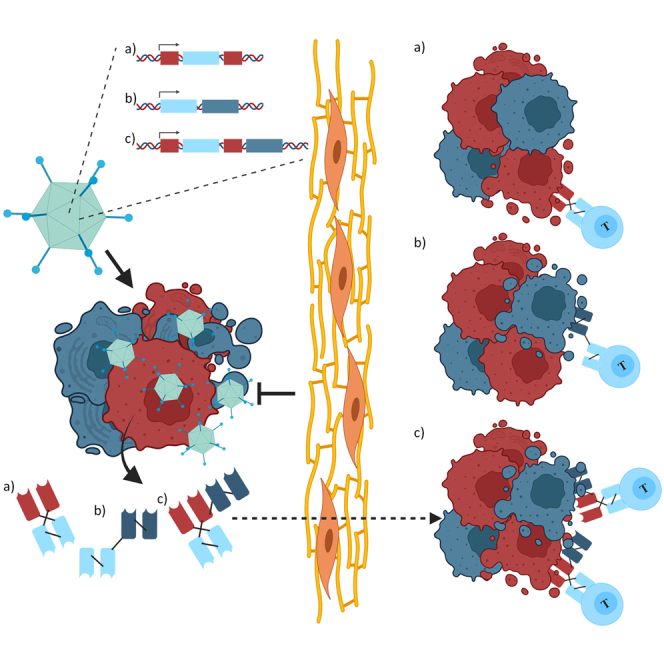 Figure 1
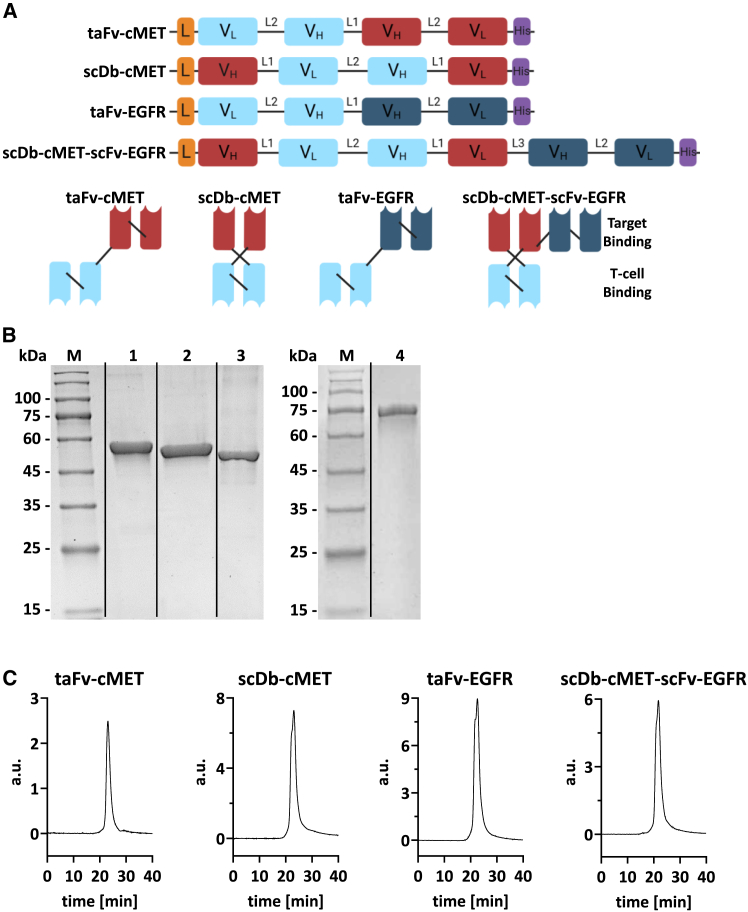 Figure 2
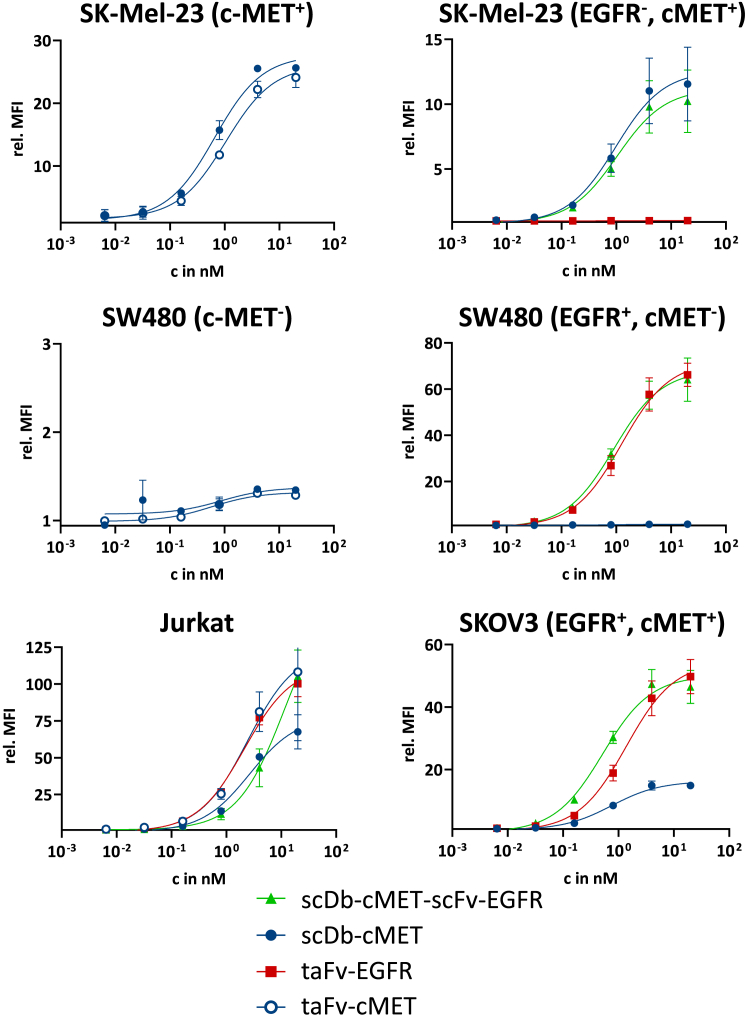 Figure 3
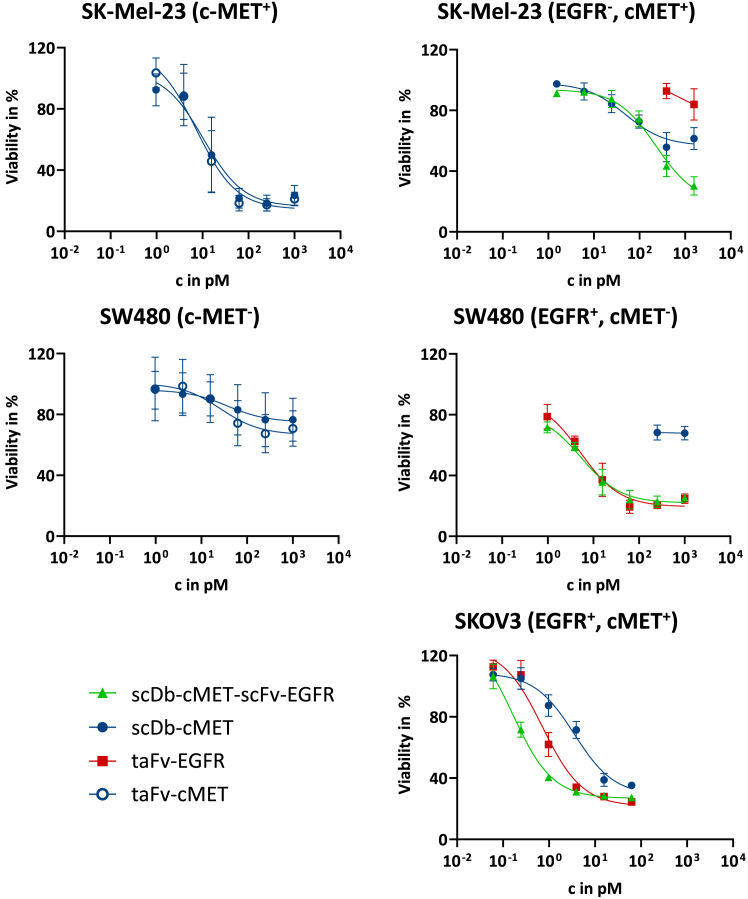 Figure 4
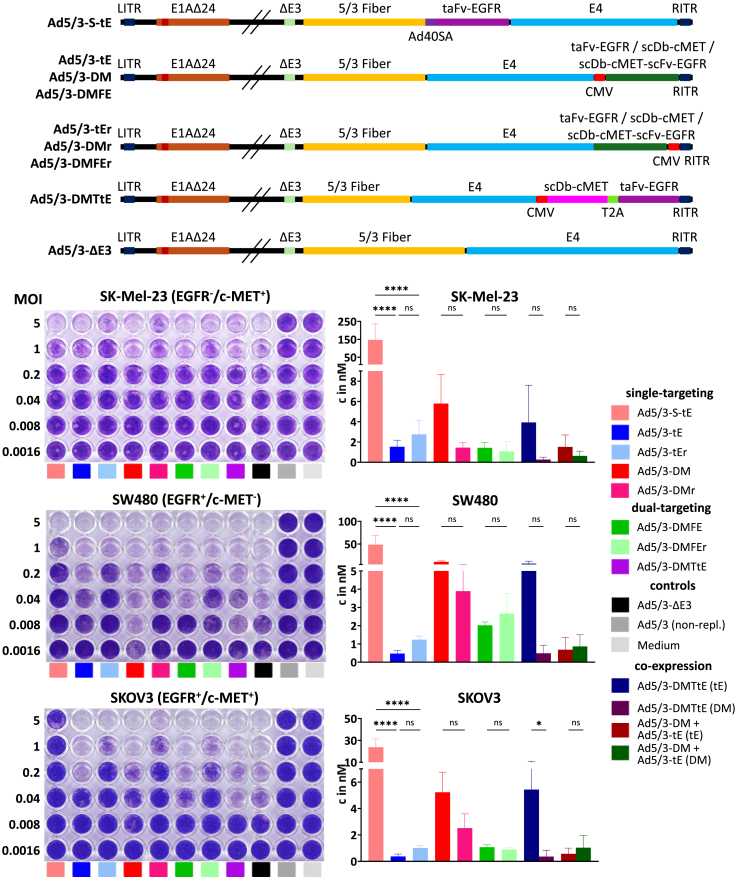 Figure 5
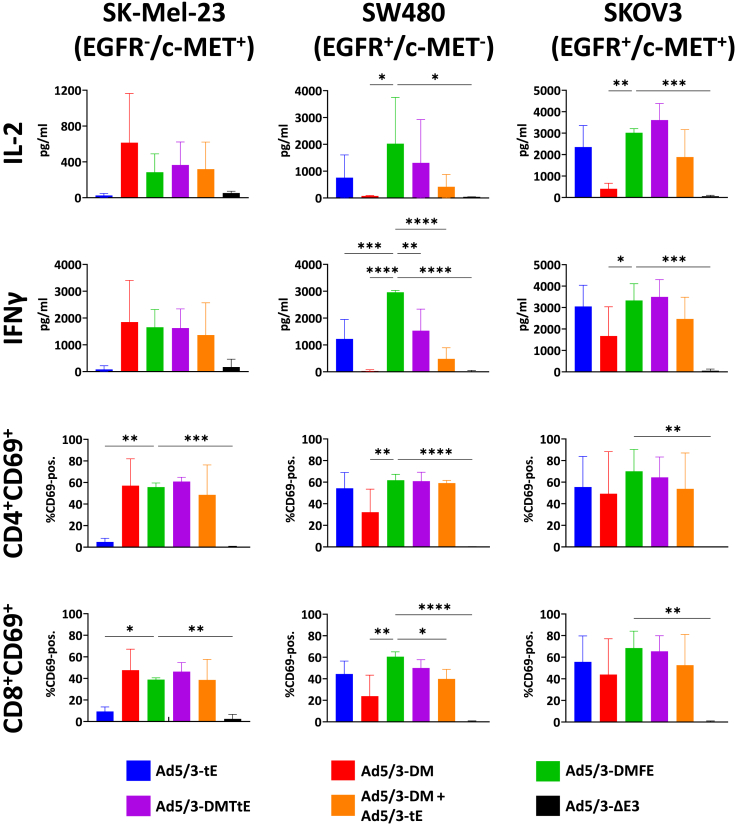 Figure 6
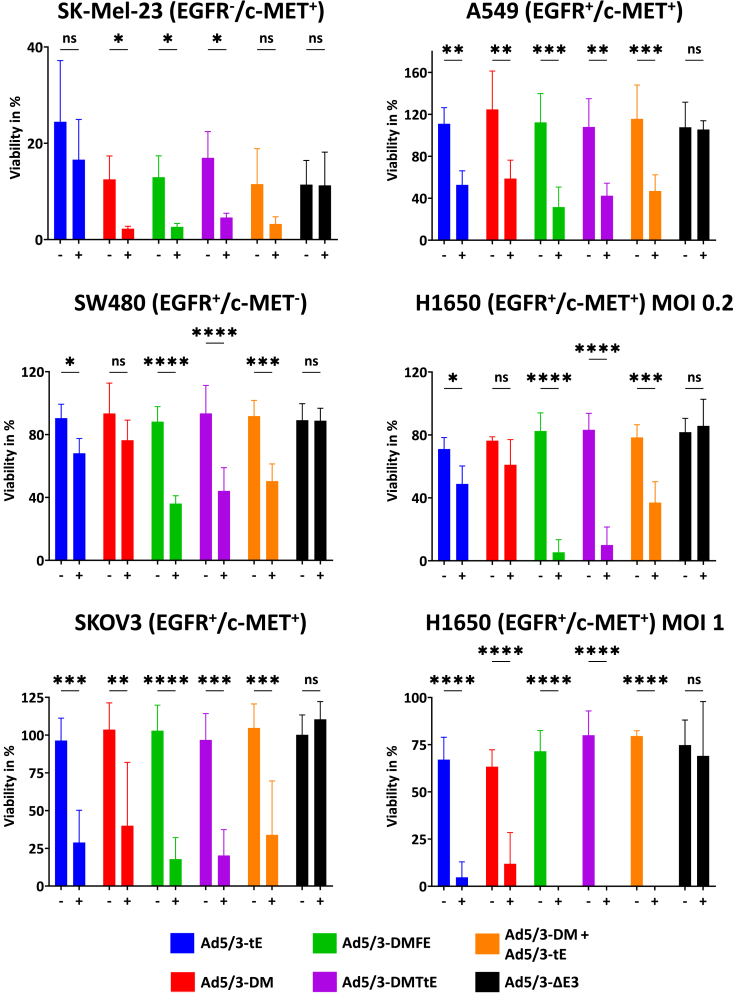 Figure 7
Peer Reviews
No public reviews on file for this paper yet. If you reviewed it on a platform where reviews are public (OpenReview, ICLR, NeurIPS, ICML), you can paste yours below so the community can read it here.
Videos
No videos yet. Explain this paper in a talk, walkthrough, or lecture? Add one.
Taxonomy
TopicsVirus-based gene therapy research · Monoclonal and Polyclonal Antibodies Research · CAR-T cell therapy research