Long-term outcomes of hemiarthroplasty for complex proximal humerus fractures: a systematic review of clinical studies with minimum 10-year follow-up
Logan D. Moews, Lord J. Hyeamang, Alexander L. Hornung, Tomas F. Vega, Jacob T. Morgan, Amelia Hummel, Matthew E. Henriques, Andrew S. Bi, Nikhil N. Verma

TL;DR
This study reviews long-term results of hemiarthroplasty for complex shoulder fractures and finds variable outcomes with high failure rates, mainly due to healing issues.
Contribution
The study provides the first systematic review of hemiarthroplasty outcomes with a minimum 10-year follow-up for complex proximal humerus fractures.
Findings
Failure rates ranged from 0% to 29%, primarily due to greater tuberosity malunion or nonunion.
Anatomic healing of the greater tuberosity was linked to better clinical outcomes and lower failure risk.
Glenoid erosion occurred in up to 72.7% of patients after 20.3 years of follow-up.
Abstract
While hemiarthroplasty (HA) has decreased in use as a surgical treatment for complex proximal humerus fractures, its long-term performance remains poorly defined. This systematic review evaluates clinical and functional outcomes and complication rates following HA with minimum 10-year follow-up. A systematic search of PubMed, Embase, and Scopus was conducted in accordance with the Preferred Reporting Items for Systematic Reviews and Meta-Analyses guidelines to identify clinical studies reporting ≥10-year outcomes of HA for acute complex (3- or 4-part, fracture dislocations, or head split) proximal humerus fractures. Included studies reported functional or patient-reported outcomes and had a minimum average follow-up of 10 years. Study quality was assessed using the Methodological Index for Non-Randomized Studies criteria. Five studies encompassing 198 patients met the inclusion…
Genes, proteins, chemicals, diseases, species, mutations and cell lines named across the full text — each resolved to its canonical identifier and authoritative record.
Click any figure to enlarge with its caption.
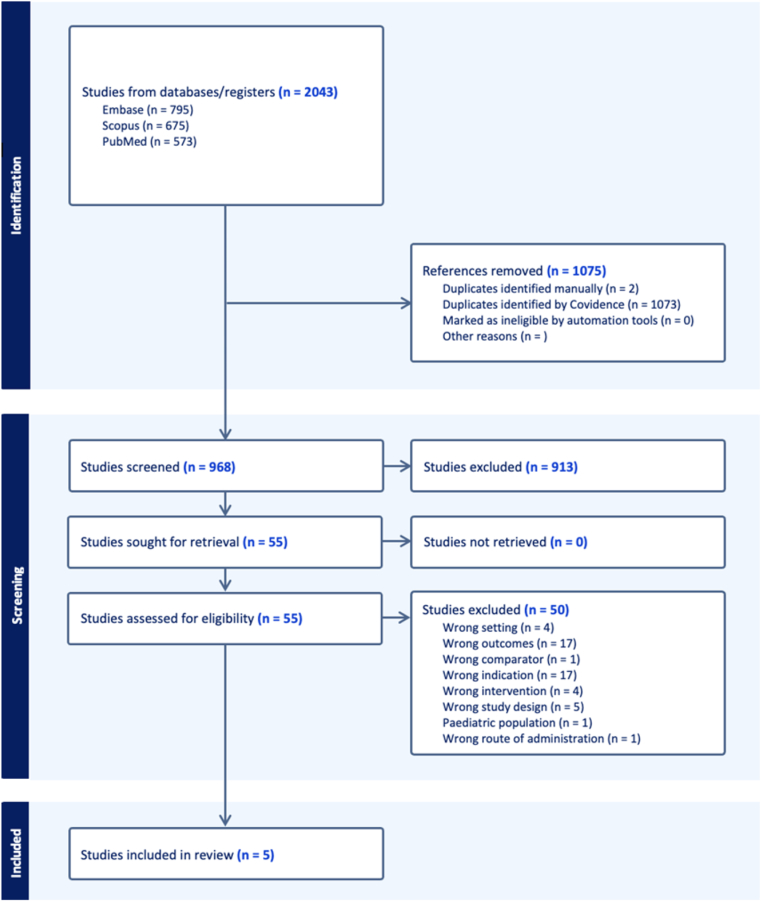 Figure 1
 Figure 2
 Figure 3
Peer Reviews
No public reviews on file for this paper yet. If you reviewed it on a platform where reviews are public (OpenReview, ICLR, NeurIPS, ICML), you can paste yours below so the community can read it here.
Videos
No videos yet. Explain this paper in a talk, walkthrough, or lecture? Add one.
Taxonomy
TopicsShoulder Injury and Treatment · Nerve Injury and Rehabilitation · Trauma Management and Diagnosis