The hidden mechanism of vacuum bell therapy: Local fat hypertrophy drives cosmetic outcome in adolescents with pectus excavatum
Xiaoyan Feng, Peter Zimmermann, Martin Lacher, Oliver Johannes Deffaa, Nicole Burger, Johanna Pape, Franz Wolfgang Hirsch, Sebastian Krämer, Daniel Gräfe

TL;DR
Vacuum bell therapy improves the appearance of chest deformity in older teens mainly by increasing local fat, not bone changes.
Contribution
Identifies localized fat hypertrophy as the primary driver of cosmetic improvement in vacuum bell therapy for pectus excavatum in adolescents.
Findings
Subcutaneous adipose tissue at the deformity site increased by 6.5 mm after therapy.
Pectus excavation depth decreased significantly, but skeletal parameters like Haller Index and Correction Index did not.
Localized fat growth, not bone remodeling, was the main factor in improved cosmetic appearance.
Abstract
Vacuum bell (VB) therapy is a non-invasive treatment option for pectus excavatum (PE), traditionally considered most effective in children under 12 due to greater skeletal remodeling potential. However, the extent and mechanisms of cosmetic improvement in older adolescents remain poorly understood. We retrospectively analyzed 19 male patients (median age 14.8 years) who underwent VB therapy for at least 1 year. Real-time MRI was performed before and after therapy to assess morphological changes. Key parameters included the Haller Index (HI), Correction Index (CI), and pectus excavation depth (PED). Additionally subcutaneous soft tissue thickness was measured at the deformity site and at the lateral thoracic wall. After a median treatment duration of 1.8 years, HI and CI did not show significant reductions (HI: 5.4 to 5.3, p = 0.40; CI: constant 32 %, p = 0.96), while PED decreased…
Genes, proteins, chemicals, diseases, species, mutations and cell lines named across the full text — each resolved to its canonical identifier and authoritative record.
Click any figure to enlarge with its caption.
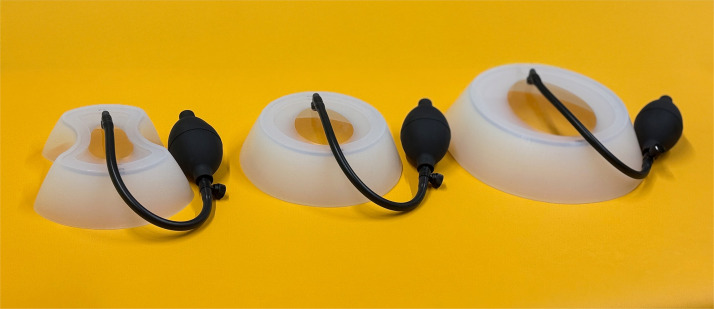 Figure 1
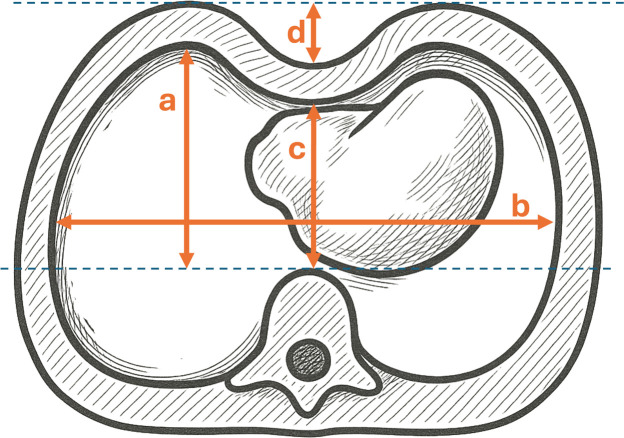 Figure 2
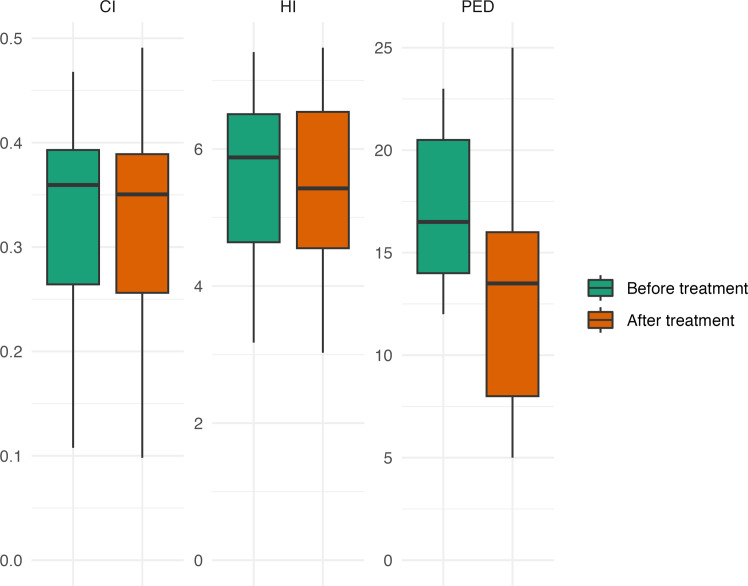 Figure 3
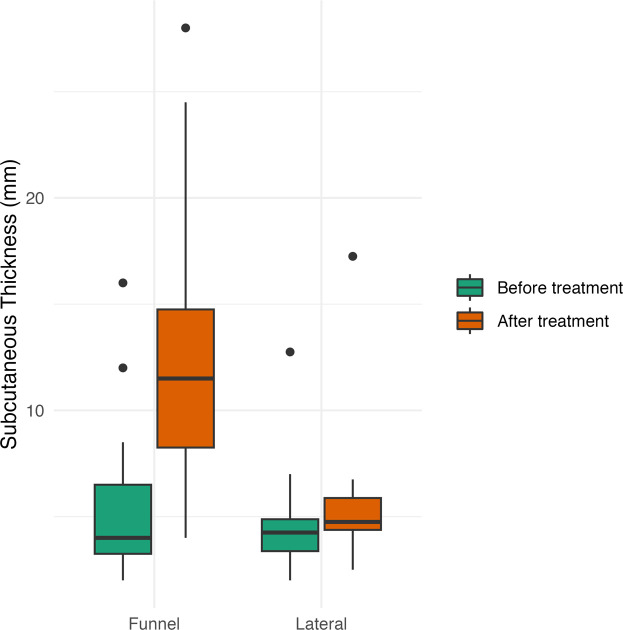 Figure 4
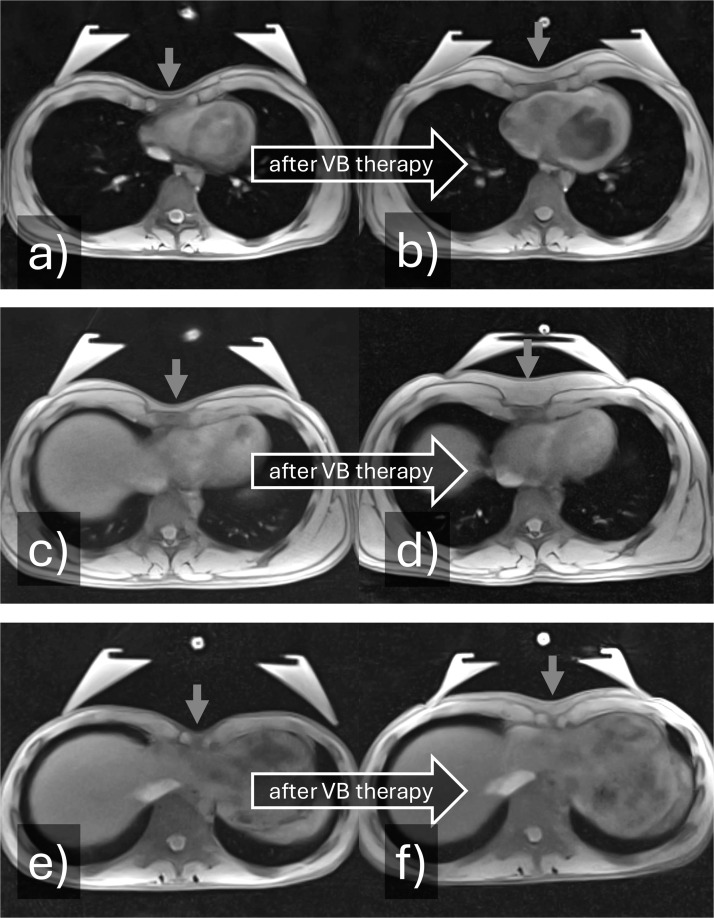 Figure 5
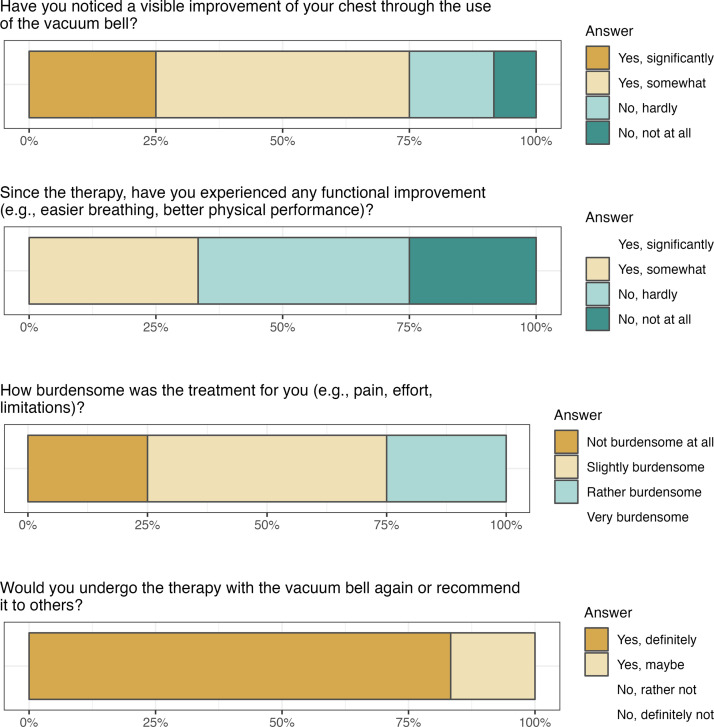 Figure 6
Peer Reviews
No public reviews on file for this paper yet. If you reviewed it on a platform where reviews are public (OpenReview, ICLR, NeurIPS, ICML), you can paste yours below so the community can read it here.
Videos
No videos yet. Explain this paper in a talk, walkthrough, or lecture? Add one.
Taxonomy
TopicsPectus Deformity Diagnosis and Treatment · Scoliosis diagnosis and treatment · Breast Implant and Reconstruction