Inhibition of de novo fatty acid synthesis in Mycobacterium tuberculosis
Emma K. Roszkowski, Sarita Charap, Christine R. Montague, Paridhi Sukheja, Case W. McNamara, Paul S. Soma, M Nurul Islam, Barbara Graham, Anna E. Grzegorzewicz, Mary Jackson, Baiyuan Yang, Anthony G. Hay, David G. Russell, John T. Belisle, Brian C. VanderVen

TL;DR
This study identifies a new compound that inhibits fatty acid synthesis in tuberculosis bacteria, revealing a potential new drug target and resistance mechanism.
Contribution
A novel compound targeting de novo fatty acid synthesis in Mtb is identified, along with a compensatory resistance mechanism involving TAGs and mycolic acids.
Findings
sALT629 inhibits de novo lipid synthesis and disrupts the Mtb lipidome.
TAG depletion occurs as a metabolic compensation when fatty acid synthesis is inhibited.
Resistance to sALT629 is linked to HadC mutations, causing cell wall defects and reduced bacterial fitness.
Abstract
De novo fatty acid synthesis produces the acyl units needed to generate phospholipids, lipoproteins, enzyme prosthetic factors, polyketides, and mycolic acids in mycobacterium tuberculosis (Mtb). Here, we identified sALT629, a butoxyphenyl-tetrazole-acetamide compound that inhibits de novo lipid synthesis in Mtb. This compound disrupts the Mtb lipidome and prevents incorporation of metabolic tracers into acyl chains of Mtb lipids. Unexpectedly, we also found that sALT629 treatment significantly depleted triacylglycerol (TAG) pools as a metabolic compensation mechanism when de novo fatty acid synthesis was inhibited. Resistance to sALT629 was mediated by loss of function mutations in HadC, the non-essential hydroxyacyl- acyl carrier protein -dehydratase subunit involved in the synthesis of long-chain oxygenated mycolic acids. Inactivating HadC rescued sALT629-mediated inhibition by…
Genes, proteins, chemicals, diseases, species, mutations and cell lines named across the full text — each resolved to its canonical identifier and authoritative record.
Click any figure to enlarge with its caption.
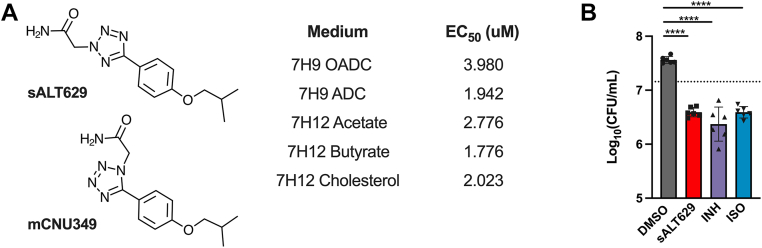 Figure 1
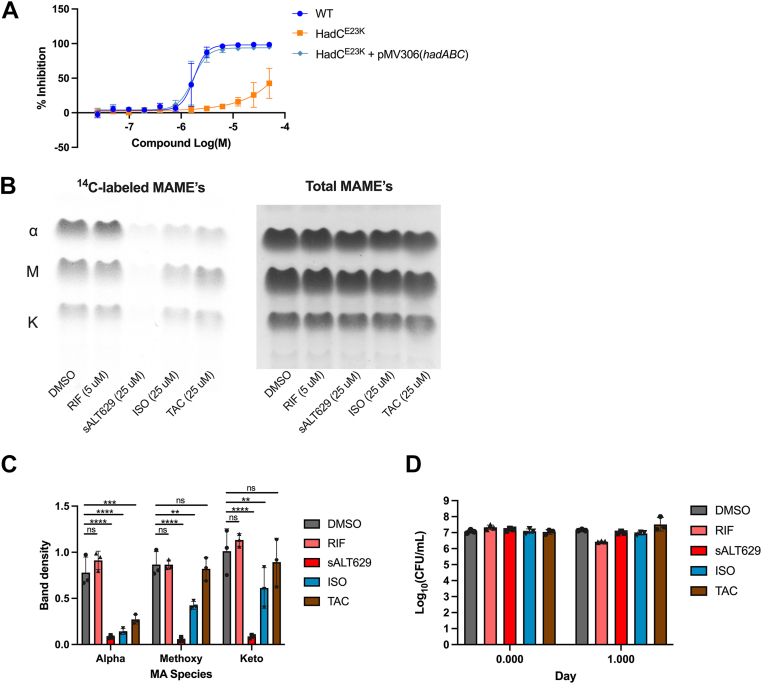 Figure 2
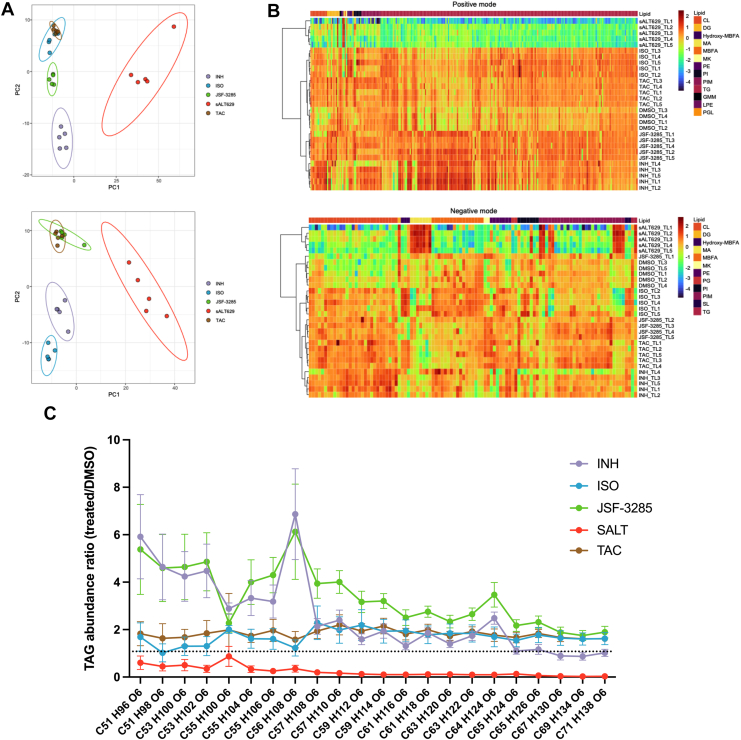 Figure 3
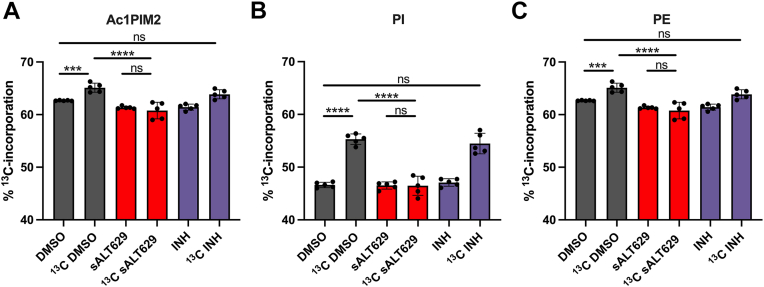 Figure 4
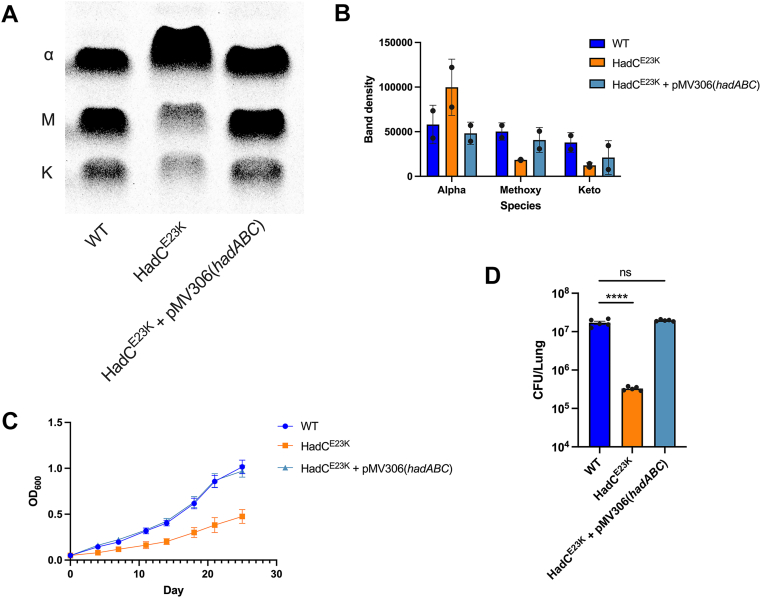 Figure 5
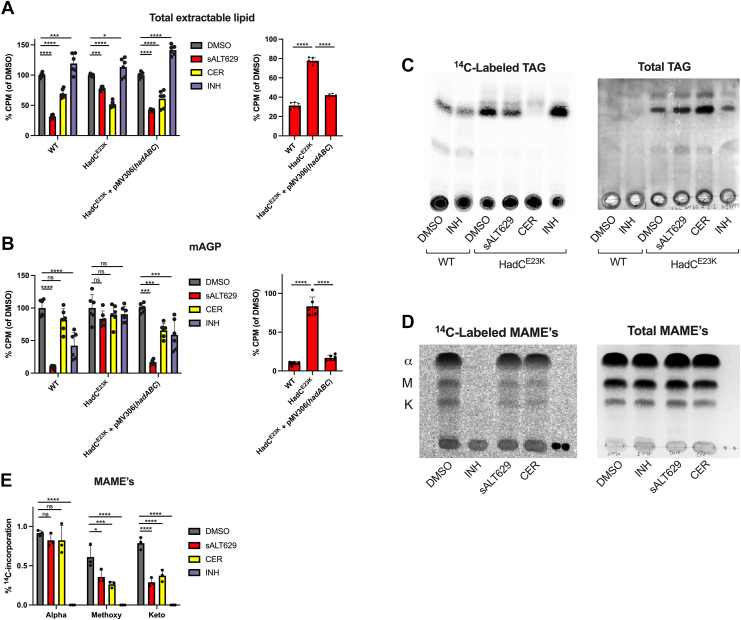 Figure 6
Peer Reviews
No public reviews on file for this paper yet. If you reviewed it on a platform where reviews are public (OpenReview, ICLR, NeurIPS, ICML), you can paste yours below so the community can read it here.
Videos
No videos yet. Explain this paper in a talk, walkthrough, or lecture? Add one.
Taxonomy
TopicsTuberculosis Research and Epidemiology · Infectious Diseases and Tuberculosis · Pneumonia and Respiratory Infections