The myokine musclin in metabolic syndrome: Pathological links and exercise interventions
Ruiming Wen, Yuan Yang, Haixia Wang, Yikun Teng, Bing Zhao, Hanxiao Zhu, Songtao Wang

TL;DR
Musclin, a muscle-secreted protein, can both help with exercise endurance and worsen metabolic diseases like diabetes, depending on the context.
Contribution
The paper introduces Musclin as a 'bidirectional hub' linking exercise and metabolic health, highlighting its dual physiological and pathological roles.
Findings
Musclin promotes mitochondrial biogenesis and exercise endurance under normal conditions.
Overexpression of Musclin worsens metabolic disorders by disrupting insulin signaling and inducing stress.
Musclin's effects are context-dependent, acting as a driver of metabolic syndrome components like obesity and diabetes.
Abstract
Since its identification in 2004, the myokine Musclin, a skeletal muscle-specific secretory factor, has garnered increasing attention in the fields of metabolism and exercise medicine due to its pleiotropic regulatory functions. This review proposes and substantiates the central thesis that Musclin acts as a “bidirectional hub” connecting exercise and metabolic homeostasis. Under physiological conditions, the pulsatile secretion of Musclin promotes mitochondrial biogenesis and enhances exercise endurance. In contrast, during pathological states, its overexpression exacerbates metabolic disorders by interfering with insulin signaling, inducing endoplasmic reticulum stress (ERS), and suppressing adipose thermogenesis. A body of evidence indicates that the expression and function of Musclin are precisely regulated by genetic, nutritional, and exercise-related factors, underscoring its…
Genes, proteins, chemicals, diseases, species, mutations and cell lines named across the full text — each resolved to its canonical identifier and authoritative record.
Click any figure to enlarge with its caption.
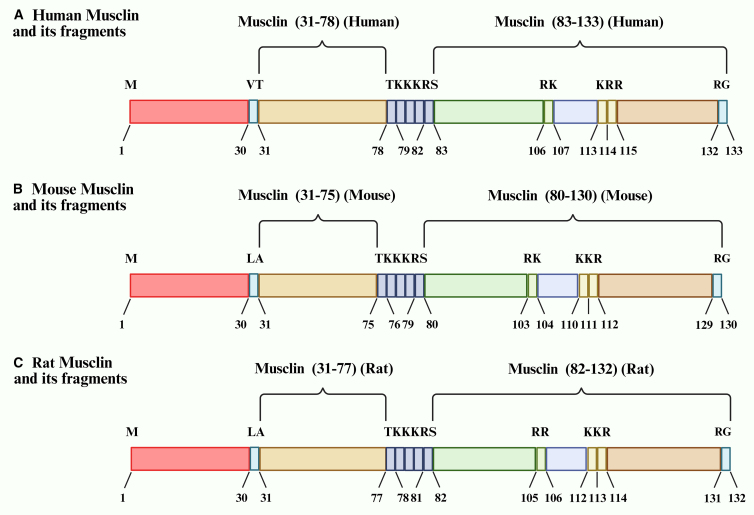 Figure 1
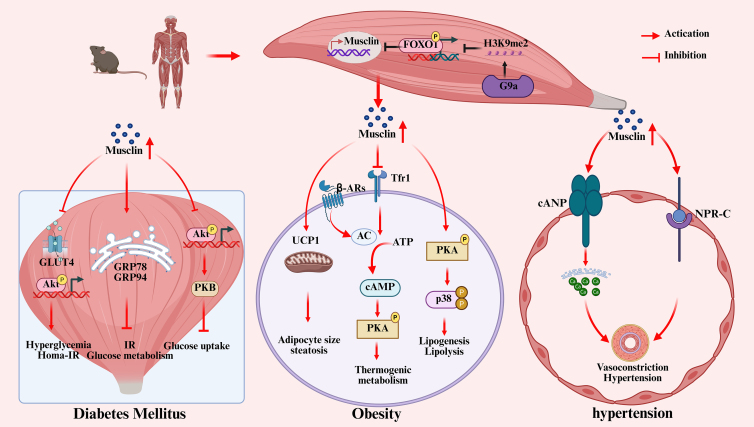 Figure 2
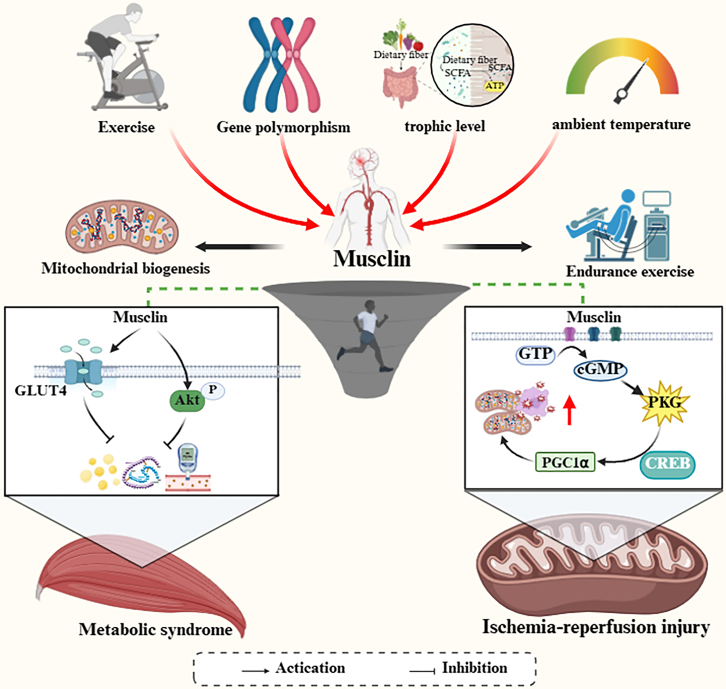 Figure 3
Peer Reviews
No public reviews on file for this paper yet. If you reviewed it on a platform where reviews are public (OpenReview, ICLR, NeurIPS, ICML), you can paste yours below so the community can read it here.
Videos
No videos yet. Explain this paper in a talk, walkthrough, or lecture? Add one.
Taxonomy
TopicsAdipose Tissue and Metabolism · Muscle Physiology and Disorders · Exercise and Physiological Responses