Revisiting the impact of BRCA1 pathogenic variants on the aggressiveness of prostate cancer
Hajime Sasagawa, Shintaro Narita, Koichi Matsuda, Takeo Kosaka, Yukihide Momozawa

TL;DR
BRCA1 gene mutations may lead to more aggressive prostate cancer, suggesting the need for earlier screening for carriers.
Contribution
This study provides new evidence that BRCA1 carriers have a higher risk of aggressive prostate cancer compared to noncarriers.
Findings
BRCA1 carriers had a higher proportion of aggressive prostate cancer (86.7%) compared to noncarriers (61.1%).
BRCA1 carriers showed worse T classification and higher Gleason scores, indicating more aggressive disease.
A case of BRCA1-related aggressive prostate cancer with long-term survival was observed through early detection and treatment.
Abstract
BRCA1 pathogenic variants are associated with a lower risk of developing prostate cancer than BRCA2, but aggressiveness remains unclear. Therefore, screening criteria are insufficiently established. Here, we reanalyzed the impact of BRCA1 pathogenic variants on aggressiveness using 11 300 prostate cancer patients, adjusting for age and area. The proportion of aggressive prostate cancer was higher in BRCA1 carriers (86.7%) than in noncarriers (61.1%) (odds ratio = 4.87; 95% confidence interval = 1.05 to 22.60). The proportion of high prostate-specific antigen levels was higher in BRCA1 carriers (66.7%) than in noncarriers (27.9%) (P = 7.61 × 10⁻³). BRCA1 carriers had a worse tendency than noncarriers for T classification (T3–4: BRCA1, 36.4%; noncarriers, 23.2%) and Gleason score (GS8–10: BRCA1, 53.3%; noncarriers, 31.0%). Moreover, we observed the first case of BRCA1-related aggressive…
Genes, proteins, chemicals, diseases, species, mutations and cell lines named across the full text — each resolved to its canonical identifier and authoritative record.
Click any figure to enlarge with its caption.
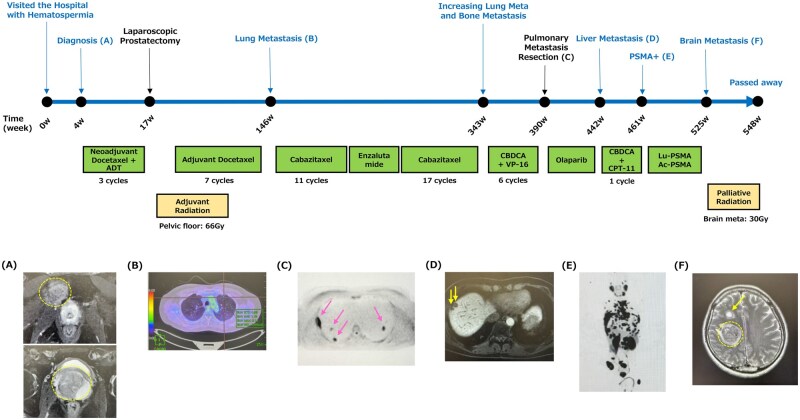 Figure 1
Peer Reviews
No public reviews on file for this paper yet. If you reviewed it on a platform where reviews are public (OpenReview, ICLR, NeurIPS, ICML), you can paste yours below so the community can read it here.
Videos
No videos yet. Explain this paper in a talk, walkthrough, or lecture? Add one.
Taxonomy
TopicsProstate Cancer Diagnosis and Treatment · BRCA gene mutations in cancer · Prostate Cancer Treatment and Research