The Role of Vimentin 3 in Ameloblastomas: A Novel Tumor Biomarker
Sibel Elif Gultekin, Melanie von Brandenstein, Emre Baris, Ipek Atak Secen, Leyla Arslan Bozdag, Heike Goebel

TL;DR
This study shows that Vimentin 3 is more active in a specific type of tooth-related tumor, suggesting it could be a new biomarker for diagnosis.
Contribution
The first investigation of Vimentin 3 expression in ameloblastomas, revealing its potential as a novel tumor biomarker.
Findings
Vimentin 3 levels were significantly higher in conventional ameloblastomas compared to other groups.
Mitochondrial dysfunction may contribute to the development of ameloblastomas.
Vimentin Full Length was not detected in epithelial components of any samples.
Abstract
Ameloblastoma (ABL), a common odontogenic tumor in the maxillofacial region, presents primarily as unicystic (U‐ABL) and conventional (C‐ABL) variants. Despite shared epithelial features, their distinct biological behaviors may stem from interactions between connective tissue and epithelial cells. Vimentin 3 (VIM3), a truncated variant of Vimentin‐Full Length (VIMFL), exhibits unique biological properties. This study is the first to investigate VIM3 expression in ABLs. Formalin‐fixed paraffin‐embedded (FFPE) samples of C‐ABL (n = 30), U‐ABL (n = 30), and dental follicles (DF, n = 30) were analyzed. Immunohistochemical evaluation of VIM3, VIMFL, WNT5a, and MTCO1 was performed, alongside qRT‐PCR for VIM3, VIMFL, WNT5a, ROR2, and miR‐498. VIM3 expression was significantly higher in C‐ABL (p < 0.0001) compared to U‐ABL and DFs. VIMFL was absent in the epithelial components of all cases.…
Genes, proteins, chemicals, diseases, species, mutations and cell lines named across the full text — each resolved to its canonical identifier and authoritative record.
Click any figure to enlarge with its caption.
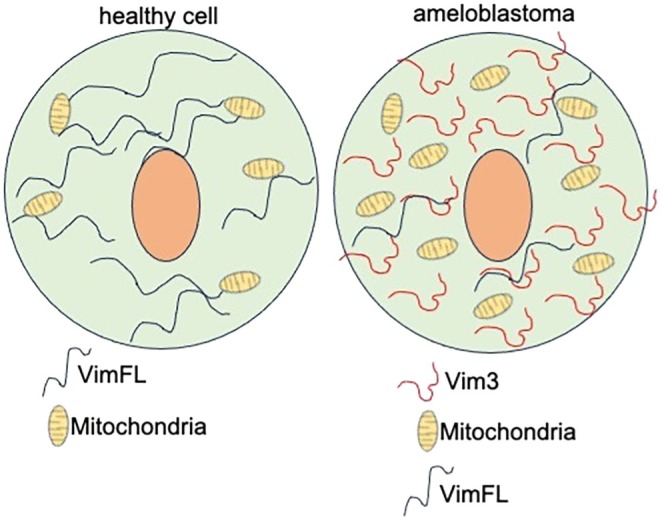 Figure 1
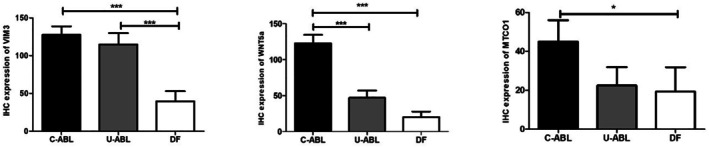 Figure 2
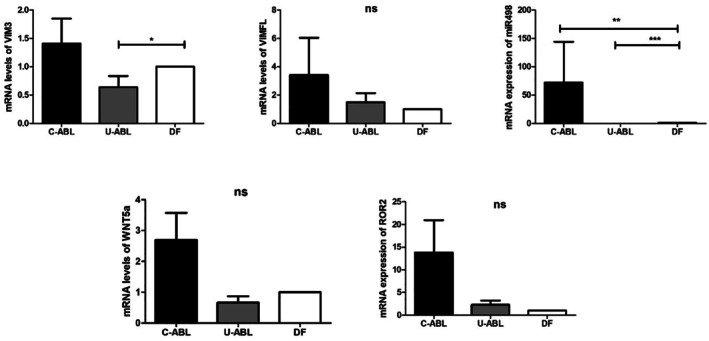 Figure 3
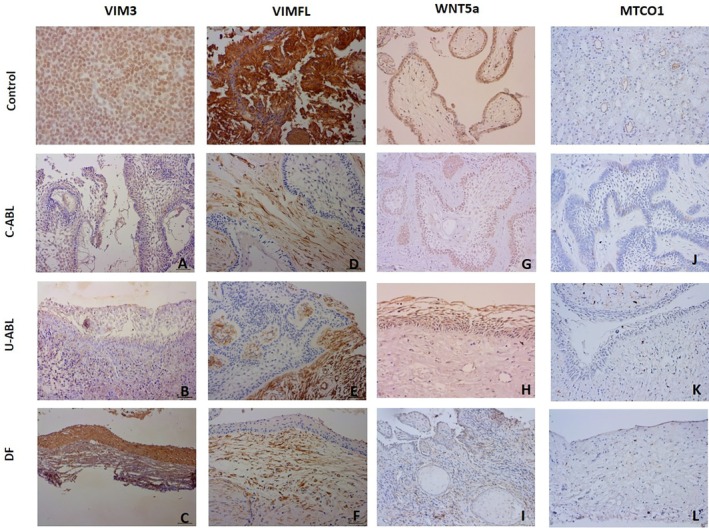 Figure 4
Peer Reviews
No public reviews on file for this paper yet. If you reviewed it on a platform where reviews are public (OpenReview, ICLR, NeurIPS, ICML), you can paste yours below so the community can read it here.
Videos
No videos yet. Explain this paper in a talk, walkthrough, or lecture? Add one.
Taxonomy
TopicsOral and Maxillofacial Pathology · Bone and Dental Protein Studies · dental development and anomalies