Clustering in dilated cardiomyopathy at initial evaluation: An effective tool for clinical stratification
Ilaria Gandin, Maria Perotto, Alessia Paldino, Giovanni Baj, Denise Zaffalon, Andrea Pezzato, Cinzia Crescenzi, Fabiana Romeo, Annamaria Martino, Francesca Fanisio, Federica Toto, Maddalena Rossi, Marta Gigli, Matteo Dal Ferro, Leonardo Calò, Gianfranco Sinagra, Marco Merlo

TL;DR
This study uses machine learning to identify two subgroups of dilated cardiomyopathy patients based on ECG features, which differ in genetic causes and risk of serious outcomes.
Contribution
A novel machine learning-based clustering approach for clinical stratification of DCM patients using baseline ECG data.
Findings
Two DCM subgroups were identified based on ECG features and genetic profiles.
CL2 subgroup had lower genetic variant yield and reduced risk of sudden cardiac death.
Simplified clustering using three ECG variables was validated in an external cohort.
Abstract
Dilated cardiomyopathy (DCM) has a highly variable presentation and disease course. Current stratification strategies are complex and require multimodality evaluation. Using machine learning (ML) on a large dataset obtained at first cardiological evaluation, this study aims to identify specific DCM subgroups. In a retrospective cohort of DCM patients, baseline clinical, genetic, and outcome data were collected. Unsupervised clustering was performed and then simplified to identify patient subgroups. The subgroups were characterized based on outcomes, including all‐cause mortality/heart transplantation (HT)/left ventricular assist device implantation (LVAD), sudden cardiac death/major ventricular arrhythmias (SCD/MVA) and heart failure‐related death/HT/LVAD. These findings were then validated in an external population. In the derivation cohort of 409 patients (mean age 46 ± 14 years, 71%…
Genes, proteins, chemicals, diseases, species, mutations and cell lines named across the full text — each resolved to its canonical identifier and authoritative record.
Click any figure to enlarge with its caption.
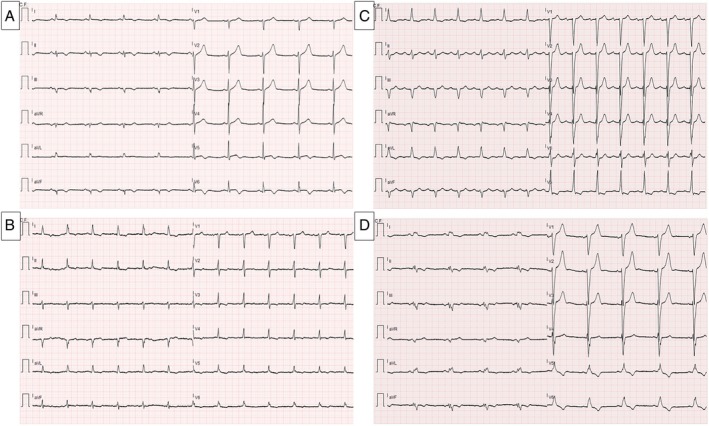 Figure 1
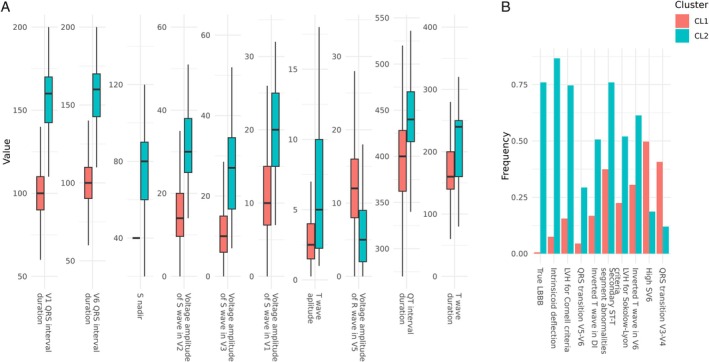 Figure 2
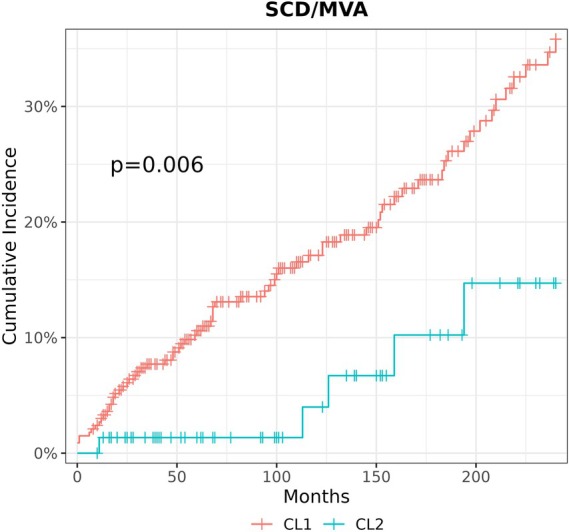 Figure 3
Peer Reviews
No public reviews on file for this paper yet. If you reviewed it on a platform where reviews are public (OpenReview, ICLR, NeurIPS, ICML), you can paste yours below so the community can read it here.
Videos
No videos yet. Explain this paper in a talk, walkthrough, or lecture? Add one.
Taxonomy
TopicsCardiomyopathy and Myosin Studies · Cardiac Structural Anomalies and Repair · Viral Infections and Immunology Research