A metabolic comparison of GIPR agonism versus GIPR antagonism in male mice
Iona Davies, Alexandra Turland, Hanh Duyen Tran, Carissa Wong, Olivier Cahn, Cecilia Dunsterville, Yichang Sun, Yilin Xiao, Kevin G. Murphy, Stephen R. Bloom, Ben Jones, Tricia M. M. Tan

TL;DR
This study compares the metabolic effects of activating versus blocking the GIPR receptor in male mice, revealing distinct impacts on glucose tolerance, appetite suppression, and fat metabolism.
Contribution
The study provides a direct metabolic comparison of GIPR agonism and antagonism in mice, revealing their differential effects on glucose tolerance and appetite suppression.
Findings
GIPR agonism improved glucose tolerance in lean mice independently of weight loss.
GIPR antagonism caused more sustained appetite suppression in obese mice but reduced insulin sensitivity.
Both treatments increased liver triglyceride content compared to pair-fed controls.
Abstract
Targeting the glucose dependent insulinotropic polypeptide receptor (GIPR) is of growing interest for treating type 2 diabetes and obesity, though the optimal approach remains unclear. Both GIPR agonism and antagonism, respectively, incorporated into drugs like tirzepatide and maridebart cafraglutide, have paradoxically both shown significant weight loss effects in humans. In this study, the metabolic impacts of a GIPR agonist (GIP108) and antagonist (NN‐GIPR‐Ant) were evaluated in lean and high‐fat diet (HFD)–induced obese male mice. We assessed the impacts on food intake, body weight, glucose and insulin tolerance, liver triglyceride levels, bone markers and adipose tissue lipolytic gene expression. In lean mice, neither peptide affected food intake or body weight, but GIP108 improved glucose tolerance. In obese mice, both agents reduced food intake and body weight, with NN‐GIPR‐Ant…
Genes, proteins, chemicals, diseases, species, mutations and cell lines named across the full text — each resolved to its canonical identifier and authoritative record.
Click any figure to enlarge with its caption.
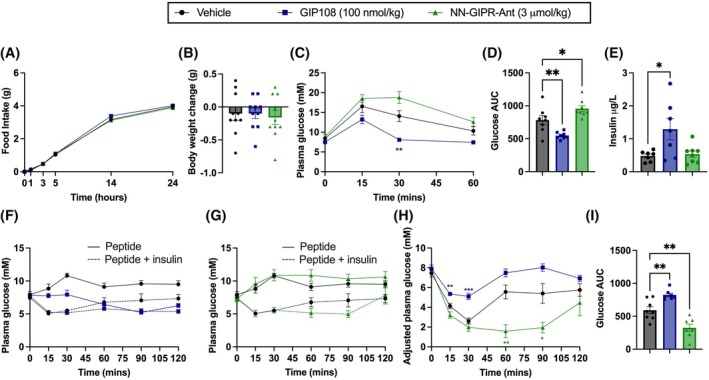 Figure 1
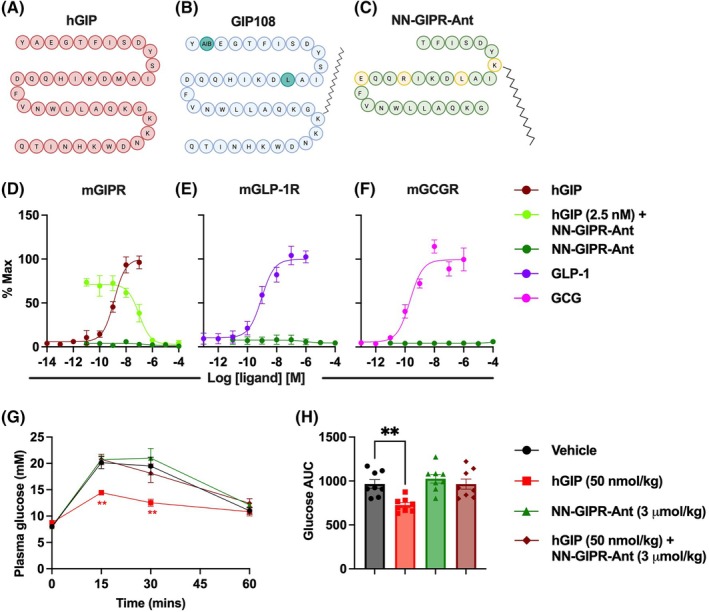 Figure 2
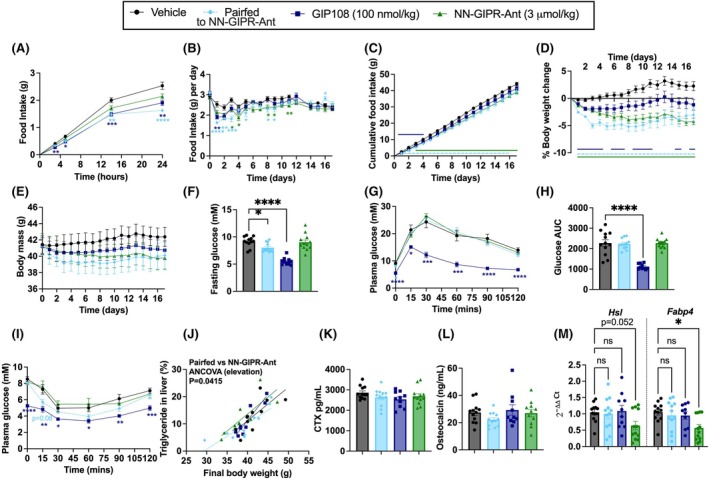 Figure 3
Peer Reviews
No public reviews on file for this paper yet. If you reviewed it on a platform where reviews are public (OpenReview, ICLR, NeurIPS, ICML), you can paste yours below so the community can read it here.
Videos
No videos yet. Explain this paper in a talk, walkthrough, or lecture? Add one.
Taxonomy
TopicsPharmacogenetics and Drug Metabolism · Receptor Mechanisms and Signaling · Growth Hormone and Insulin-like Growth Factors