Exploring tear fluid biomarkers and the ocular surface in thyroid eye disease
Mikael Thomassen Neset, Roy Miodini Nilsen, Kristian Løvås, Kathrine Halsøy, Håkon Reikvam, Ann‐Elin Meling Stokland, Grethe Åstrøm Ueland, Anette S. B. Wolff, Hans Christian D. Aass, Sjur Reppe, Eystein Sverre Husebye, Eyvind Rødahl, Tor Paaske Utheim, Hans Olav Ueland

TL;DR
This study found that tear fluid biomarkers CCL2 and CD40L are elevated in thyroid eye disease patients, suggesting their potential for diagnosis and linking to ocular discomfort.
Contribution
The study identifies CD40L and CCL2 as novel tear fluid biomarkers for diagnosing thyroid eye disease and links meibum quality to ocular discomfort.
Findings
Tear fluid levels of CCL2 and CD40L are significantly higher in thyroid eye disease patients compared to those without the disease.
OSDI scores and tear biomarkers CCL2 and CD40L together can distinguish thyroid eye disease patients with 80% area under the ROC curve.
Impaired meibum quality is associated with increased ocular discomfort in moderate-to-severe thyroid eye disease.
Abstract
To examine ocular surface changes and inflammatory tear fluid biomarkers in patients with thyroid eye disease (TED). We included 106 Graves' disease (GD) patients (36 without TED, 32 with active and 38 with inactive TED) and 106 age‐ and sex‐matched healthy subjects for ophthalmological evaluation, including ocular surface status and Meibomian gland function. Tear fluid was analysed for 40 inflammatory biomarkers by a Luminex multiplex bead assay. The parameters were compared across subgroups. GD patients with TED had significantly higher median (min–max) Ocular Surface Disease Index (OSDI) score than GD patients without TED, with a median score of 31.4 (0–86.4) compared to 7.3 (0–45.8) (p < 0.01). Eleven of 50 patients with moderate‐to‐severe and sight‐threatening TED had a meibum quality score above seven, compared to none of the 20 patients with mild TED (p = 0.027). Tear fluid…
Genes, proteins, chemicals, diseases, species, mutations and cell lines named across the full text — each resolved to its canonical identifier and authoritative record.
Click any figure to enlarge with its caption.
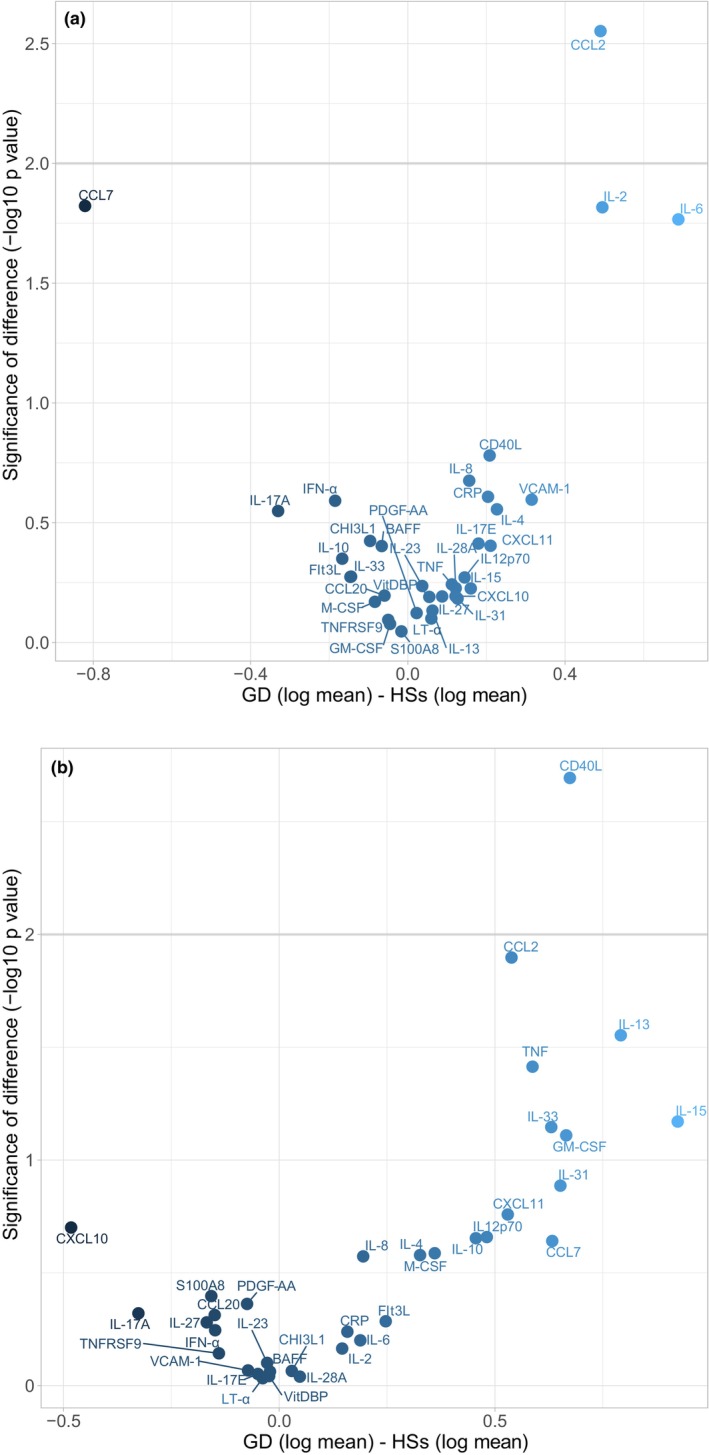 Figure 1
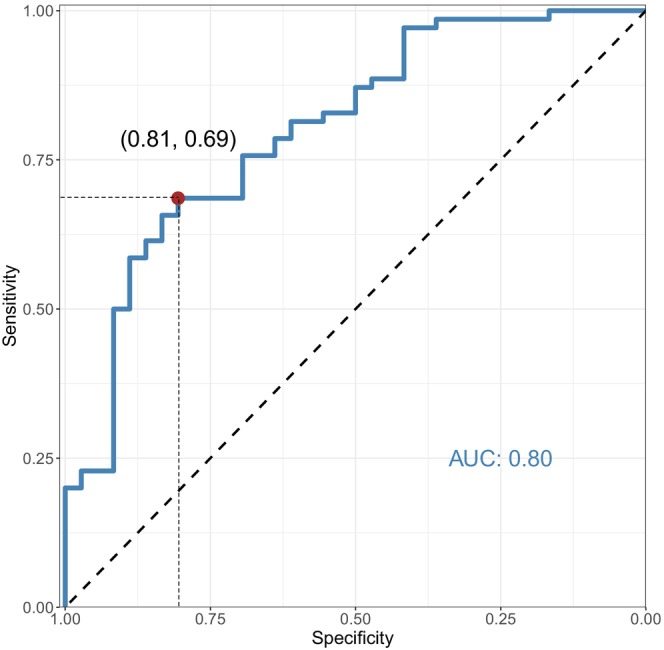 Figure 2
Peer Reviews
No public reviews on file for this paper yet. If you reviewed it on a platform where reviews are public (OpenReview, ICLR, NeurIPS, ICML), you can paste yours below so the community can read it here.
Videos
No videos yet. Explain this paper in a talk, walkthrough, or lecture? Add one.
Taxonomy
TopicsOcular Surface and Contact Lens · Ophthalmology and Eye Disorders · Glaucoma and retinal disorders