Commodity risk assessment of Petunia spp. and Calibrachoa spp. unrooted cuttings from Uganda
Antonio Vicent Civera, Paula Baptista, Anna Berlin, Elisavet Chatzivassiliou, Jaime Cubero, Nik Cunniffe, Eduardo de la Peña, Nicolas Desneux, Francesco Di Serio, Anna Filipiak, Paolo Gonthier, Beata Hasiów‐Jaroszewska, Hervé Jactel, Blanca B. Landa, Lara Maistrello

TL;DR
This paper assesses the risk of pests in unrooted cuttings of Petunia and Calibrachoa from Uganda entering the EU.
Contribution
It evaluates both regulated and non-regulated pests using a tailored risk assessment methodology.
Findings
Twelve EU-regulated pests and one non-regulated pest were evaluated for risk.
PSTVd and PVX are most likely to be present in imported cuttings.
Expert judgment suggests high pest freedom with 95% certainty.
Abstract
The European Commission requested the EFSA Panel on Plant Health to evaluate the likelihood of pest freedom at entry in the EU, including both regulated and non‐regulated pests, potentially associated with unrooted cuttings of the genera Petunia and Calibrachoa produced under physical isolation in Uganda. The relevance of any pest for this opinion was based on evidence collected according to specific criteria, following the methodology used for high‐risk plants adapted for the specificity of this assessment. Twelve EU‐regulated pests [Bemisia tabaci (non‐European populations), cowpea mild mottle virus (CpMMV, Carlavirus vignae), potato leaf roll virus (PLRV, Polerovirus PLRV), potato spindle tuber viroid (PSTVd, Pospiviroid fusituberis), potato virus S (PVS, Carlavirus sigmasolani, non‐EU isolates), potato virus × (PVX, Potexvirus ecspotati, non‐EU isolates), Ralstonia solanacearum,…
Click any figure to enlarge with its caption.
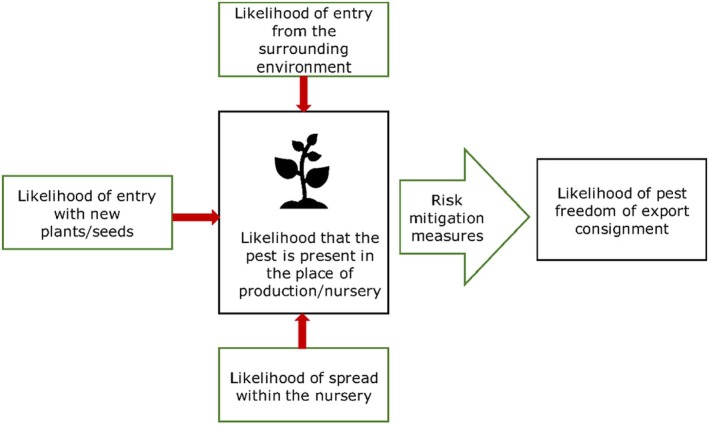 FIGURE 1
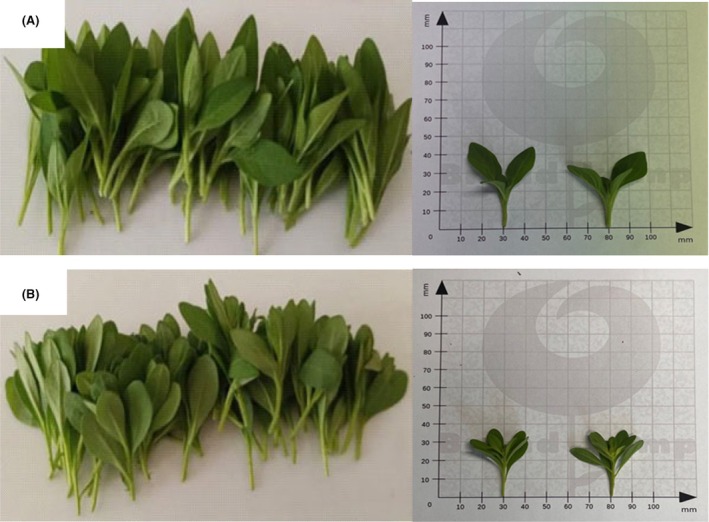 FIGURE 2
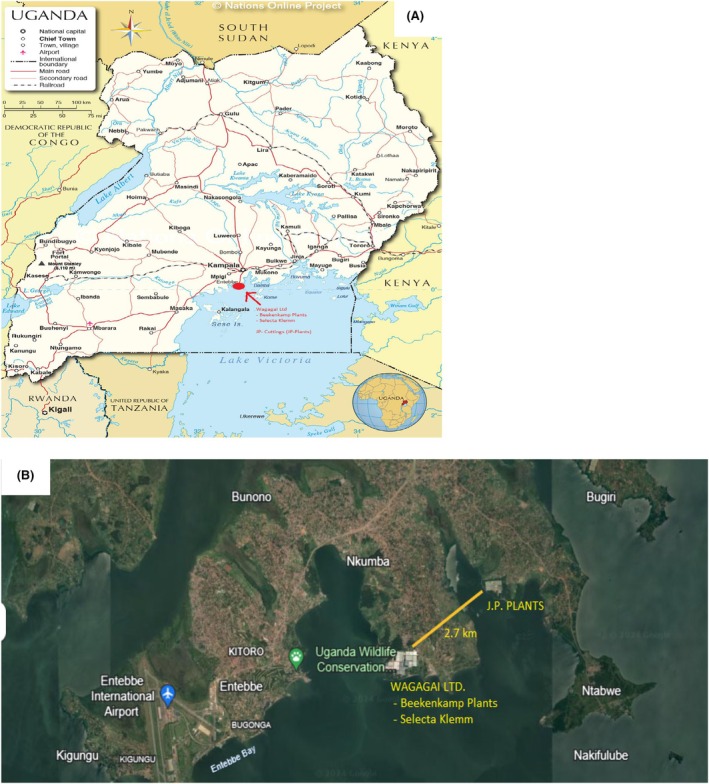 FIGURE 3
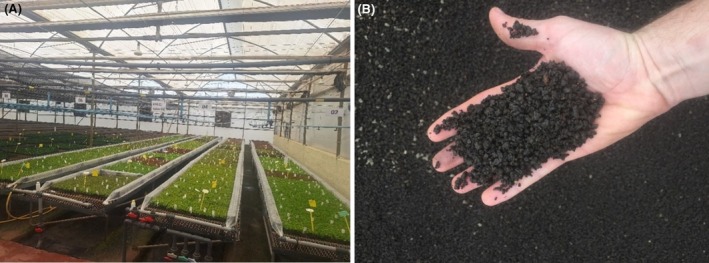 FIGURE 4
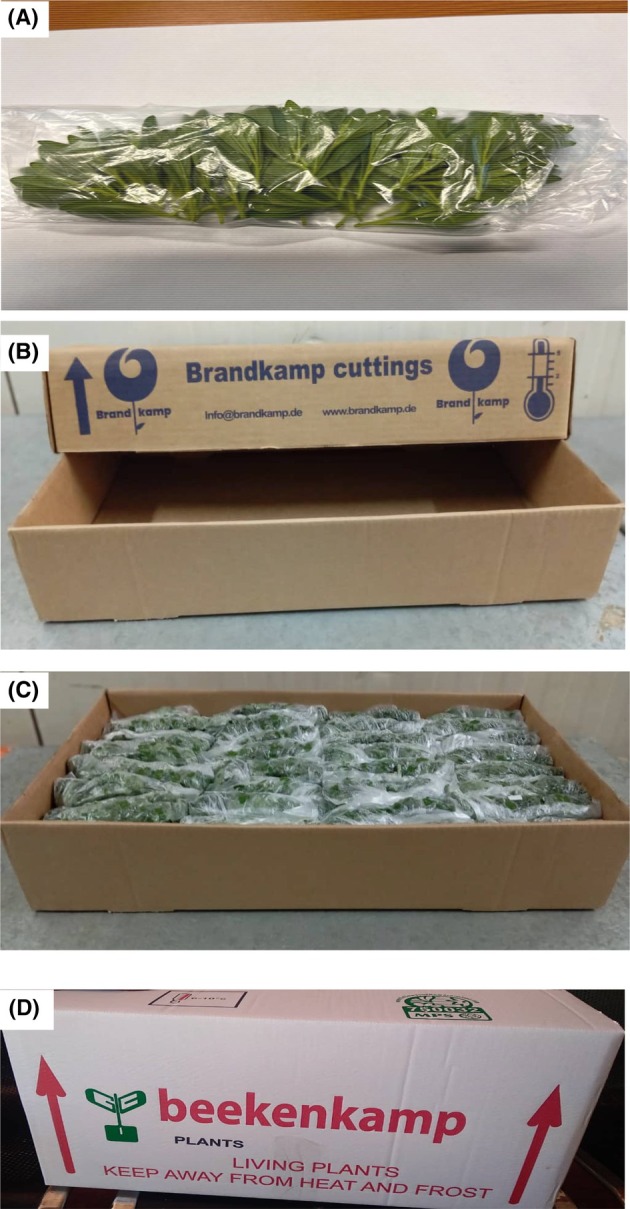 FIGURE 5
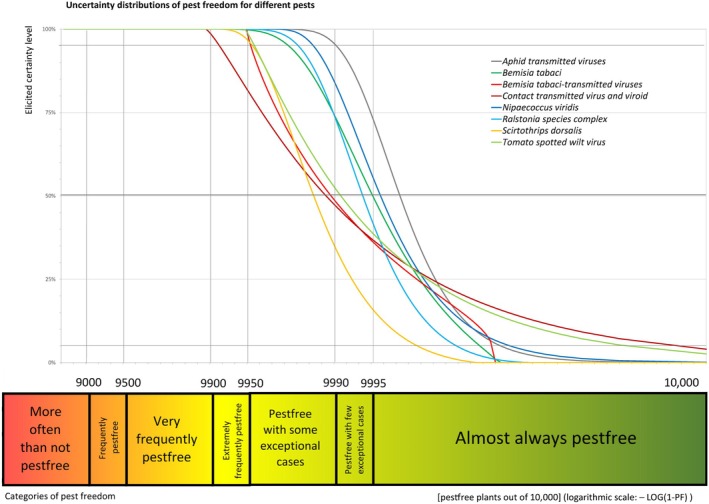 FIGURE 6
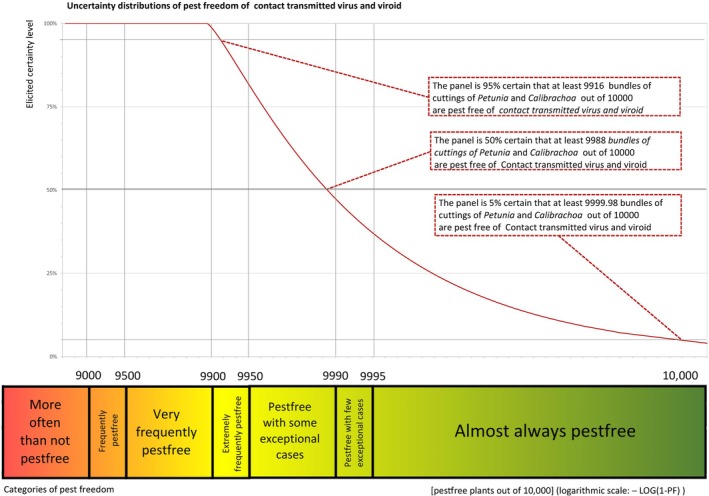 FIGURE 7
| Dossier section | Overview of contents | Filename |
| 1 | Technical dossier | Draft Technical Dossier for Petunia and Calichabroa Working Document.dox |
| 2.1 | Additional information: answers | Uganda additional information submitted to responses to the questions related to the content EFSA‐q‐2022‐00773 |
| 2.2 | Additional information: answers regarding sampling and collection for the detection of specific pests | Uganda additional information ‐ Submitted Annex 1.dox |
| 2.3 | Additional information: answers regarding status of specific pests | Uganda additional information ‐ Submitted Annex 2 ‐ pest status specific requests.xlsx |
| Acronym | Database name and service provider | URL of database |
|---|---|---|
| CABI | CABI Crop Protection Compendium |
|
| EUROPHYT | Interceptions of harmful organisms in imported plants and other objects. |
|
| EPPO GD | EPPO Global Database |
|
| ScaleNet | USDA |
|
| Spider Mites Web: A comprehensive database for the Tetranychidae | INRAE CBGP |
|
| Database | Platform/link |
|---|---|
| Aphids on World Plants |
|
| BIOTA of New Zealand |
|
| CABI Crop Protection Compendium |
|
| Database of Insects and their Food Plants |
|
| Database of the World's Lepidopteran Hostplants |
|
| EPPO Global Database |
|
| EUROPHYT |
|
| Gallformers |
|
| Leaf‐miners |
|
| GBIF |
|
| MyCoPortal |
|
| Nemaplex |
|
| PESI portal |
|
| Plant Parasites of Europe |
|
| Plant Pest Information Network |
|
| Scalenet |
|
| Scolytinae hosts and distribution database |
|
| Spider Mites Web |
|
| USDA ARS Fungal Database |
|
| Web of Science: All Databases (Web of Science Core Collection, CABI: CAB Abstracts, BIOSIS Citation Index, Chinese Science Citation Database, Current Contents Connect, Data Citation Index, FSTA, KCI‐Korean Journal Database, Russian Science Citation Index, MEDLINE, SciELO Citation Index, Zoological Record) | Web of Science |
| World Agroforestry |
|
|
|
|
| Type of plant | Exported commodity | Stem lenght | Age |
|---|---|---|---|
|
| One pair of leaves and a pith located at the growing tip | 3–4 cm | Various, depending on the growing period for the commodity |
|
| Two pairs of leaves and a pith located at the growing tip | 3–4 cm | Various, depending on the growing period for the commodity |
| Weather indicator | Recorded values |
|---|---|
| Highest temperature | 29.1°C |
| Lowest temperature | 15.8°C |
| Average temperature | 21.9°C |
| Average rainfall per year | 1268 mm |
| Wind speed | 15 km/h |
| Stage | Description | Production time frame |
|---|---|---|
| Quarantine | Transplanting URCs forbuild up | Weeks 14 to 20–22 |
| Foundation | Transplanting for mother plants | Weeks 20–22 to 30 |
| Export | Harvesting for export | Weeks 30 to 8 (the following year) |
| No. | Pest name according to EU legislation | EPPO code | Group | EU regulatory status | Plant genera with RNQP requirements |
| Conclusion |
|---|---|---|---|---|---|---|---|
| 1 |
| ALECWO | Insects | Quarantine pest (Annex II A) | Not relevant | Host unlikely | |
| 2 |
| APLOBE | Nematoda | RNQP (Annex IV) |
| Not relevant | RNQP (Not for Solanaceae) |
| 3 |
| DACUCU | Insects | Quarantine pest (Annex II A) | Not relevant | No pathway | |
| 4 |
| DACUDO | Insects | Quarantine pest (Annex II A: Non‐EU Tephritidae) | Not relevant | No pathway | |
| 5 |
| BEMITA | Insects | Quarantine pest (Annex II A) | Yes | Selected for further evaluation | |
| 6 |
| CERTAN | Insects | Quarantine pest (Annex II A: Non‐EU Tephritidae) | Not relevant | No pathway | |
| 7 |
| CERTCO | Insects | Quarantine pest (Annex II A: Non‐EU Tephritidae) | Not relevant | No pathway | |
| 8 |
| CERTFA | Insects | Quarantine pest (Annex II A: Non‐EU Tephritidae) | Not relevant | No pathway | |
| 9 |
| GLOMGO | Fungi | Protected Zone pest (Annex III) | Unlikely | Host unlikely | |
| 10 | Cowpea mild mottle virus ( | CPMMV0 | Viruses | Quarantine pest (Annex II A) | Likely | Selected for further evaluation | |
| 11 | Cucumber mosaic virus ( | CMV000 | Viruses | RNQP (Annex IV) |
| Yes | RNQP (Not for Solanaceae) |
| 12 |
| DACUBI | Insects | Quarantine pest (Annex II A: Non‐EU Tephritidae) | Not relevant | No pathway | |
| 13 |
| DACUCI | Insects | Quarantine pest (Annex II A) | Not relevant | No pathway | |
| 14 |
| HETDRO | Nematoda | Quarantine pest (Annex II B) | Not relevant | No pathway | |
| 15 | Impatiens necrotic spot virus | INSV00 | Viruses | RNQP (Annex IV) | Yes | RNQP (Not for Solanaceae) | |
| 16 |
| MELGAR | Nematoda | RNQP (Annex IV) | Yes | No pathway | |
| 17 |
| MELGIN | Nematoda | RNQP (Annex IV) |
| Yes | No pathway |
| 18 |
| MELGJA | Nematoda | RNQP (Annex IV) |
| Yes | No pathway |
| 19 |
| PHYTCN | Oomycetes | RNQP (Annex IV) |
| Yes | RNQP (Not for Solanaceae) |
| 20 | Potato leafroll virus | PLRV00 | Viruses | Quarantine pest (Annex II A) | Likely | Selected for further evaluation | |
| 21 | Potato spindle tuber viroid | PSTVD0 | Viroids | RNQP (Annex IV) |
| Yes | Selected for further evaluation |
| 22 | Potato virus S | PVS000 | Viruses | Quarantine pest (Annex II A) | Likely | Selected for further evaluation | |
| 23 | Potato virus × ( | PVX000 | Viruses | Quarantine pest (Annex II A) | Yes | Selected for further evaluation | |
| 24 |
| RALSPS | Bacteria | Quarantine pest (Annex II A) | Likely | Selected for further evaluation | |
| 25 |
| RALSSL | Bacteria | Quarantine pest (Annex II B) | Likely | Selected for further evaluation | |
| 26 |
| SCITAU | Insects | Quarantine pest (Annex II A) | No | Host unlikely | |
| 27 |
| SCITDO | Insects | Quarantine pest (Annex II A) | Likely | Selected for further evaluation | |
| 28 |
| LAPHFR | Insects | Quarantine pest (Annex II A) | No | Reserve list (expanding host range) | |
| 29 |
| TETRUR | Insects | RNQP (Annex IV) |
| Yes | RNQP (Not for Solanaceae) |
| 30 |
| RHIZSO | Fungi | RNQP (Annex IV) |
| Yes | No pathway |
| 31 |
| ARGPLE | Insects | Quarantine pest (Annex II A) | No | Reserve list (expanding host range) | |
| 32 | Tomato spotted wilt virus | TSWV00 | Viruses | RNQP (Annex IV) |
| Yes | Selected for further evaluation |
| 33 | Tomato leaf curl Uganda virus | TLCUV | Viruses | Quarantine pest (Annex IIA: Non‐EU Begomovirus) | Likely | Selected for further evaluation | |
| 34 | Tomato yellow leaf curl virus | TYLCV0 | Viruses | RNQP (Annex IV) |
| Yes | Selected for further evaluation |
| 35 |
| TOXOCI | Insects | Quarantine pest (Annex II B) | No |
| |
| 36 |
| VERTDA | Fungi | RNQP (Annex IV) |
| Yes | RNQP (Not for Solanaceae) |
| 37 |
| XANTPH | Bacteria | RNQP (Annex IV) |
| No | RNQP (Not for Solanaceae) |
| No. | Current scientific name | EPPO code | Taxonomic information | Group | Cluster | Regulatory status |
|---|---|---|---|---|---|---|
|
|
| BEMITA | Order: Hemiptera; Family: Aleyrodidae | Insects | – | Quarantine pest (Annex II A) |
|
|
| TYLCV0 |
Order: Geplafuvirales; Family: Geminiviridae | Viruses |
| RNQP for Solanum lycopersicum |
|
|
| PSV000 |
Order: Tymovirales; Family: Betaflexiviridae | Viruses | Aphid‐trasmitted viruses | Quarantine pest (Annex II A) |
|
|
| CPMMV0 |
Order: Tymovirales; Family: Betaflexiviridae | Viruses |
| Quarantine pest (Annex II A) |
|
|
| NIPAVI |
Order: Hemiptera; Family: Pseudococcidae | Insects | – | Not regulated in the EU |
|
|
| PLRV00 |
Order: Sobelivirales; Family: Solemoviridae | Viruses | Aphid‐trasmitted viruses | Quarantine pest (Annex II A) |
|
|
| TSWV00 |
Order: Elliovirales; Family: Tospoviridae | Viruses | – | RNQP for |
|
|
| PSTVD0 | Family: Pospiviroidae | Viroids | Contact‐transmitted viroid and virus | RNQP for |
|
|
| PVX000 |
Order: Tymovirales; Family: Alphaflexiviridae | Viruses | Contact‐transmitted viroid and virus | Quarantine pest (Annex II A) |
|
|
| RALSPS |
Order: Burkholderiales; Family: Burkholderiaceae | Bacteria |
| Quarantine pest (Annex II A) |
|
|
| RALSSL |
Order: Burkholderiales; Family: Burkholderiaceae | Bacteria |
| Quarantine pest (Annex II B) |
|
|
| SCITDO |
Order: Thysanoptera; Family: Thripidae | Insects | ‐ | Quarantine pest (Annex II A) |
|
| Tomato leaf curl Uganda virus | TOLCUG |
Order: Geplafuvirales; Family: Geminiviridae | Viruses |
| Quarantine pest (Annex II A: Non‐EU Begomovirus) |
| No. | Risk mitigation measure | Implementation in Uganda |
|---|---|---|
|
| Growing plants in isolation | The unrooted cuttings to be exported from Uganda will be grown and harvested from greenhouse production facilities approved by the NPPO. The cuttings are grown in closed greenhouses (closed production). A double‐door entry system is used to control temperatures in the greenhouse as well as mitigate entry of pests. |
|
| Dedicated hygiene measures | For accessing the greenhouse there is a double door system. Changing rooms and disinfection facility allow the personnel to wear dedicated boots and clothes before entering the greenhouse. There are dedicated tools used for each greenhouse unit. Each unit has a specific set of clothes including a disinfection area. |
|
| Treatment of growing media |
The plants for planting from which the cuttings are harvested are grown in a soilless medium (100% pumice in hydroponic greenhouses). The growing media used in production and at the moment of export is according to ISPM 40 (FAO, |
|
| Quality of source plant material | All the intended planting materials are to be imported from mother companies in the Netherlands and Germany (Dossier Section 1). These are Elite‐certified materials in the form of TC plantlets or URCs for further multiplication in Uganda. Upon arrival in Uganda, the NPPO conducts documentary and identity checks at entry before dispatch to post quarantine in contained facilities at the production farms. |
|
| Crop rotation | No crop rotation takes place. Specific greenhouses units are used for producing |
|
| Disinfection of irrigation water | The irrigation water is treated with sodium chloride and UV irradiation (Dossier Section 1). |
|
| Pest monitoring and inspections | The presence of pests and symptoms in plants is monitored, including yellow sticky traps, on a daily basis by nurseries staff. A compiled weekly report is produced by the scouting team, which is used to decide the weekly pest control measures in the greenhouses (Dossier Section 1). |
|
| Treatment of crop during production | Fungicides, insecticides, acaricides and biological control agents are applied on weekly basis, following scouting inspections and are reported in Dossier Section 4 (Table E1.1–6). Rotation among active substances (a.s.) is adopted to prevent the development of insecticide resistance. Details on the a.s. are reported in Dossier Section 4. |
|
| Sampling and testing |
A detailed protocol for sampling and testing plants is described in Dossier Section 4. The sampling Protocol is implemented according to Risk‐Based Estimator for Surveillance Systems (RiBESS+) ( A subsample per variety, per batch is sent to the accredited laboratory for further pest analyses. The testing procedures follow the PM7 diagnostic standards of EPPO ( |
|
| Official supervision by NPPO |
NPPO Uganda conducts a 3‐week to monthly pest surveillance frequency to monitor pest incidence and prevalence on each plant variety and species guided by the pests relevant for the EU. NPPO Uganda enforces compliance with phytosanitary measures as provided for in the EU Directive 2016/2031. |
|
| Surveillance of surrounding environment | No details are given for the surveillance on the surrounding environment. |
| Pest(s) | Sometimes pest free | More often than not pest free | Frequently pest free | Very frequently pest free | Extremely frequently pest free | Pest free with some exceptional cases | Pest free with few exceptional cases | Almost always pest free | |
|---|---|---|---|---|---|---|---|---|---|
| 1 | Aphid‐transmitted viruses (potato leafroll virus, potato virus S) |
|
| ||||||
| 2 |
|
|
| ||||||
| 3 |
|
|
| ||||||
| 4 | Contact‐transmitted virus and viroid (potato virus X, potato spindle tuber viroid) |
|
| ||||||
| 5 |
|
|
| ||||||
| 6 |
|
|
|
| |||||
| 7 |
|
|
| ||||||
| 8 | Tomato spotted wilt virus |
|
|
|
Peer Reviews
No public reviews on file for this paper yet. If you reviewed it on a platform where reviews are public (OpenReview, ICLR, NeurIPS, ICML), you can paste yours below so the community can read it here.
Videos
No videos yet. Explain this paper in a talk, walkthrough, or lecture? Add one.
Taxonomy
TopicsPlant Virus Research Studies · Insect-Plant Interactions and Control · Insect Pest Control Strategies
INTRODUCTION
1
Background and Terms of Reference as provided by European Commission
1.1
Background
1.1.1
The introduction of plants for planting of Solanaceae other than seeds into the European Union (EU) is prohibited from certain origins, including the countries that have requested this derogation, as they are listed in point 18 of Annex VI to Regulation (EU) 2019/2072. In August 2021, Germany sent a request for derogation to import unrooted cuttings of the genera Petunia and Calibrachoa produced under physical isolation in Costa Rica, Kenya, and Uganda, accompanied by an application describing the production methods and the pests associated with the plants in the different third countries. A similar request has also been received from Guatemala, accompanied by a technical dossier.
In support of the request, the dossier prepared by Uganda, with the identified pests and the details of the growing conditions is submitted with this request.
Terms of Reference
1.1.2
European Food Safety Authority (EFSA) is requested, pursuant to Article 29 of Regulation (EC) No 178/2002, to provide scientific opinion(s) on the field of plant health. In particular, EFSA is requested to assess the probability of entry of pests (likelihood of pest freedom at entry), including both, regulated Union quarantine pests, protected zone pests, and regulated non‐quarantine pests (RNQPs) and non‐regulated pests, associated with unrooted cuttings of the genera Petunia and Calibrachoa produced under physical isolation in Costa Rica, Guatemala, Kenya and Uganda.
The assessment shall include all pests present in Costa Rica, Guatemala, Kenya and Uganda that could be associated with the unrooted cuttings of the genera Petunia and Calibrachoa produced under physical isolation and could have an impact if they are introduced into the EU.
In this assessment, EFSA shall take into account the available scientific information, and in particular the scientific and technical information provided in the dossiers by Germany and Guatemala. If necessary to complete its assessment, EFSA may ask additional scientific and technical information or clarifications (e.g. regarding pests status, pests control, production sites and systems, processing and shipping) on unrooted cuttings of the genera Petunia and Calibrachoa produced under physical isolation in Costa Rica, Guatemala, Kenya and Uganda. Such information can be requested by EFSA to the National Plant Protection Organisations (NPPO's) of Costa Rica, Guatemala, Kenya, Uganda or Germany as appropriate. Following the provision of such information, EFSA shall proceed with the assessment.
Interpretation of the Terms of Reference
1.2
This opinion refers only to the Uganda dossier. The EFSA Panel on Plant Health (hereafter referred to as ‘the Panel') conducted a commodity risk assessment of Petunia spp. and Calibrachoa spp. unrooted cuttings from Uganda following the Guidance on commodity risk assessment for the evaluation of high‐risk plant dossiers (EFSA PLH Panel, 2019), taking into account the available scientific information, including the technical information provided by Uganda.
Following an exchange with EC, the Panel was requested to broaden the scope of the assessment to Solanaceae host plants and to include RNQP species if they are relevant.
The EU quarantine pests that are regulated as a group in the Commission Implementing Regulation (EU) 2019/2072 were considered and evaluated separately at species level.
In its evaluation the Panel:
- checked whether the information in the technical dossier (hereafter referred to as ‘the Dossier’) provided by the applicant (Ministry of Agriculture, Animal Industry and Fisheries (MAAIF): Department of Crop inspection and Certification (NPPO of Uganda)) was sufficient to conduct a commodity risk assessment. When necessary, additional information was requested from the applicant;
- considered the host status of Petunia spp. and Calibrachoa spp. as identical because they are very closely related genera;
- selected the relevant Union quarantine pests (as specified in Commission Implementing Regulation (EU) 2019/2072,^1^ hereafter referred to as ‘EU quarantine pests’), and the RNQPs regulated for Petunia spp., Calibrachoa spp. or for solanaceous crops, as specifically listed in Annex IV of Regulation (EU) 2019/2072, and potentially associated with unrooted cuttings of Petunia spp. and Calibrachoa spp., or to major solanaceous crops (tomato, pepper, potato and cultivated tobacco);
- included in the assessment, other pests with host plant records for Petunia spp. and/or Calibrachoa spp., as well as polyphagous pests with major solanaceous crops (tomato, pepper, potato and cultivated tobacco) and that were considered based, on expert judgement, likely to use Petunia spp. and/or Calibrachoa spp. as a host plant;
- assessed the effectiveness of the measures described in the dossier for the selected relevant pests;
- considered that the risk assessment and its conclusions are based on the information provided in the submitted technical dossier (specific place and procedure of production) and refer to the production sites described in the same document;
Risk management decisions are not within EFSA's remit. Therefore, the Panel provided a rating based on expert judgement regarding the likelihood of pest freedom for each relevant pest given the risk mitigation measures proposed by the NPPO of Uganda.
DATA AND METHODOLOGIES
2
Data provided by NPPO of Uganda
2.1
The Panel considered all the data and information in the Dossiers provided by the NPPO of Uganda in December 2024. The Dossier is managed by EFSA. Further additional information was submitted by the NPPO of Uganda in response to EFSA's request on 4 April, 12 May, 26 August. The Dossier is managed by EFSA.
The structure and overview of the Dossier is shown in Table 1. The number of the relevant section is indicated in the Opinion when referring to a specific part of the Dossier.
Literature searches performed by the NPPO of Uganda
2.2
The data and supporting information provided by the NPPO of Uganda formed the basis of the commodity risk assessment. Table 2 shows the main data sources used by the NPPO of Uganda to compile the Dossier.
Other resources used by the NPPO of Uganda
Agindotan, B., and Perry, K. L. (2008). Macroarray detection of eleven potato‐infecting viruses and Potato spindle tuber viroid. Plant Disease, 92(5), 730–740. https://doi.org/10.1094/PDIS‐92‐5‐0730
Byarugaba, A. A., Mukasa, S. B., Barekye, A., and Rubaihayo, P. R. (2020). Interactive effects of Potato virus Y and Potato leafroll virus infection on potato yields in Uganda. Open Agriculture, 5(1), 726–739. https://doi.org/10.1515/opag‐2020‐0073
CABI (Centre for Agriculture and Bioscience International). (online). Tetranychus neocaledonicus. https://www.cabidigitallibrary.org/doi/full/10.1079/cabicompendium.53356.
Commission Implementing Regulation (EU) 2019/2072 of 28 November 2019 establishing uniform conditions for the implementation of Regulation (EU) 2016/2031 of the European Parliament and the Council, as regards protective measures against pests of plants, and repealing Commission Regulation (EC) No 690/2008 and amending Commission Implementing Regulation (EU) 2018/2019 (OJ L 319, 10.12.2019, p. 1, ELI: http://data.europa.eu/eli/reg_impl/2019/2072/oj).
EFSA PLH Panel (EFSA Panel on Plant Health), Bragard, C., Chatzivassiliou, E., Di Serio, F., Baptista, P., Gonthier, P., and Potting, R. (2022). Commodity risk assessment of Jasminum polyanthum unrooted cuttings from Uganda. EFSA Journal, 20(5), 7300. https://doi.org/10.2903/j.efsa.2022.7300
EFSA PLH Panel (EFSA Panel on Plant Health), Bragard, C., Baptista, P., Chatzivassiliou, E., Di Serio, F., Gonthier, P., and Potting, R. (2024). Commodity risk assessment of Petunia spp. and Calibrachoa spp. unrooted cuttings from Kenya. EFSA Journal, 22(4), 8742. https://doi.org/10.2903/j.efsa.2024.8742
EFSA PLH Panel (EFSA Panel on Plant Health), Civera, A. V., Baptista, P., Berlin, A., Chatzivassiliou, E., Cubero, J., and Potting, R. (2024). Commodity risk assessment of Petunia spp. and Calibrachoa spp. unrooted cuttings from Costa Rica. EFSA Journal, 22(11), 9064. https://doi.org/10.2903/j.efsa.2024.9064
EFSA PLH Panel (EFSA Panel on Plant Health), Civera, A. V., Baptista, P., Berlin, A., Chatzivassiliou, E., Cubero, J., and Potting, R. (2024). Commodity risk assessment of Petunia spp. and Calibrachoa spp. unrooted cuttings from Guatemala. EFSA Journal, 22(11), 9064. https://doi.org/10.2903/j.efsa.2024.8544
Grégoire, J. C., Miret, J. A. J., González‐Cabrera, J., Heimbach, U., Lucchi, A., Gardi, C., and Koufakis, I. (2017). Protocol for the evaluation of data concerning the necessity of the application of insecticide active substances to control a serious danger to plant health which cannot be contained by other available means, including non‐chemical methods. EFSA Supporting Publications, 14(4).
EPPO (European and Mediterranean Plant Protection Organization). (online). EPPO Global Database. https://gd.eppo.int/
EUROPHYT. (online). Interceptions of harmful organisms in imported plants and other objects. https://food.ec.europa.eu/plants/plant‐health‐andbiosecurity/europhyt/interceptions_en
García Morales, M., Denno, B. D., Miller, D. R., Miller, G. L., Ben‐Dov, Y., and Hardy, N. B. (2016). ScaleNet: A literature‐based model of scale insect biology and systematics. Database, 2016, bav118. http://scalenet.info (accessed 29/10/2024).
ISPM 1. (1993). Principles of plant quarantine as related to international trade. Rome, IPPC, FAO. 2010‐07 IPPC Secretariat amended ISPM 1.
ISPM 10. (1999). Requirements for the establishment of pest‐free places of production and pest‐free production sites. Rome, IPPC, FAO. 2010‐07 IPPC Secretariat amended ISPM 10.
ISPM 12. (2001). Phytosanitary certificates. Rome, IPPC, FAO. 2010‐07 IPPC Secretariat amended ISPM 12.
ISPM 19. (2003). Guidelines on lists of regulated pests. Rome, IPPC, FAO. 2010‐07 IPPC Secretariat amended ISPM 19.
ISPM 2. (1995). Framework for pest risk analysis. Rome, IPPC, FAO. 2010‐07 IPPC Secretariat amended ISPM 2.
ISPM 20. (2004). Guidelines for a phytosanitary import regulatory system. Rome, IPPC, FAO. 2010‐07 IPPC Secretariat amended ISPM 20.
ISPM 23. (2005). Guidelines for inspection. Rome, IPPC, FAO. 2010‐07 IPPC Secretariat amended ISPM 23.
ISPM 25. (2006). Consignments in transit. Rome, IPPC, FAO. 2010‐07 IPPC Secretariat amended ISPM 25.
ISPM 3. (1996). Guidelines for the export, shipment, import, and release of biological control agents and other beneficial organisms. Rome, IPPC, FAO. 2010‐07 IPPC Secretariat amended ISPM 3.
ISPM 31. (2008). Methodologies for sampling of consignments. Rome, IPPC, FAO. 2010‐07 IPPC Secretariat amended ISPM 31.
ISPM 34. (2010). Design and operation of post‐entry quarantine stations for plants. Rome, IPPC, FAO. 2010‐07 IPPC Secretariat amended ISPM 34.
ISPM 36. (2012). Integrated measures for plants for planting. Rome, IPPC, FAO. 2010–07 IPPC Secretariat amended ISPM 36.
ISPM 4. (1995). Requirements for the establishment of pest‐free areas. Rome, IPPC, FAO. 2010‐07 IPPC Secretariat amended ISPM 4.
ISPM 40. (2017). International movement of growing media in association with plants for planting. Rome, IPPC, FAO. 2010‐07 IPPC Secretariat amended.
ISPM 6. (1997). Guidelines for surveillance. Rome, IPPC, FAO. 2010‐07 IPPC Secretariat amended ISPM 6.
ISPM 7. (1997). Export certification system. Rome, IPPC, FAO. 2010‐07 IPPC Secretariat amended ISPM 7.
ISPM 8. (1998). Determination of pest status in an area. Rome, IPPC, FAO. 2010‐07 IPPC Secretariat amended ISPM 8.
Migeon, A., and Dorkeld, F. (2022). Spider Mites Web: A comprehensive database for the Tetranychidae. https://www.montpellier.inra.fr/CBGP/spmweb/.
Regulation (EU) 2016/2031 of the European Parliament of the Council of 26 October 2016 on protective measures against pests of plants, amending Regulations (EU) No 228/2013, (EU) No 652/2014 and (EU) No 1143/2014 of the European Parliament and of the Council and repealing Council Directives 69/464/EEC, 74/647/EEC, 93/85/EEC, 98/57/EC, 2000/29/EC, 2006/91/EC and 2007/33/EC. OJ L 317, 23.11.2016, p. 4–104.
The Plant Protection and Health Act 2016.
The Plant Protection and Health Regulations (Import and Export) 20.
Literature searches performed by EFSA
2.3
Literature searches were undertaken by EFSA to complete a list of pests potentially associated with the genera Petunia, Calibrachoa and other relevant solanaceous host plants (tomato, pepper, potato and cultivated tobacco). The following searches were combined: (i) a general search to identify pests of Petunia spp. and Calibrachoa spp. in different databases and (ii) a tailored search to identify whether these pests are present or not in Uganda and the EU. The searches were run between 30 May 2022 and 11 June 2022, and updated on 19 August 2024. No language, date or document type restrictions were applied in the search strategy. The Panel used the databases indicated in Table 3 to compile the list of pests associated with Petunia and Calibrachoa genera. As for Web of Science, the literature search was performed using a specific, ad hoc established search string (Appendix B). The string was run in ‘All Databases’ with no range limits for time or language filters. This is further explained in Section 2.3.2.
Additional documents were retrieved when developing the Opinion. The available scientific information, including previous EFSA opinions on the relevant pests and diseases and the relevant literature and legislation (e.g. Regulation (EU) 2016/2031; Commission Implementing Regulations (EU) 2018/2019; (EU) 2018/2018 and (EU) 2019/2072) were taken into account.
Methodology
2.4
When developing the opinion, the Panel followed the EFSA Guidance on commodity risk assessment for the evaluation of high‐risk plant dossiers (EFSA PLH Panel, 2019).
In the first step, pests potentially associated with the commodity in the country of origin (EU‐regulated pests and other pests) that may require risk mitigation measures were identified. Pests with no regulatory status in the EU and not known to occur in the EU were selected based on evidence of their potential impact in the EU. After the first step, all the relevant pests that may need risk mitigation measures were identified.
In the second step, the proposed risk mitigation measures for each relevant pest were evaluated in terms of efficacy or compliance with EU requirements, as explained in Section 1.2.
A conclusion on the likelihood of the commodity being free from each of the relevant pest was determined, and uncertainties were identified using expert judgements.
Pest freedom was assessed by estimating the number of bags containing infested/infected unrooted cuttings out of 10,000 exported bags. The information provided in some sections of the Opinion is the result of the Panel interpretation of the text of the applicant, Dossier.
Commodity data
2.4.1
Based on the information provided by the NPPO of Uganda, the characteristics of the commodity are summarised in Section 3 of this Opinion.
Identification of pests potentially associated with the commodity
2.4.2
To evaluate the pest risk associated with the importation of the commodity from Uganda, a pest list was compiled. The pest list is a compilation of all identified pests reported to be associated with all species of the genera Petunia and Calibrachoa, and the polyphagous pests associated with major Solanaceae plants reported to be present in Uganda based on information provided in the submitted Dossier and additional information (see Section 2.1) and on searches performed by the Panel. All viruses and viroids infecting major solanaceous crops (tomato, pepper, potato and cultivated tobacco) retrieved from CABI and European and Mediterranean Plant Protection Organization (EPPO) databases (CABI, 2024; EPPO, 2024) and recent review articles on the subject were included.
The search strategy and search syntax were adapted to each of the databases listed in Table 3, according to the options and functionalities of the different databases and CABI keyword thesaurus.
Plants of Petunia spp. are widely used in plant virology as experimental hosts. Therefore, many, if not most, available data concerning host status for plant viruses refer to laboratory tests in which Petunia spp. are reported either as a local host, where the virus is restricted to the inoculated leaf via cell‐to‐cell movement, or as a systemic host, where the virus spreads from the inoculated leaf to other parts of the plant via systemic/phloem movement. In this assessment, viruses known to infect Petunia spp. or Calibrachoa spp. were included for further evaluation. Viruses that are reported to infect Petunia spp. orCalibrachoa spp. experimentally were included for further evaluation if (i) they infect Petunia spp. or Calibrachoa spp. systemically or (ii) they infect Petunia spp. or Calibrachoa spp. locally, and their biology (e.g. highly contagious viruses) or transmission mode/epidemiology (e.g. spread via mechanical spread in the field) would allow Petunia spp. or Calibrachoa spp. to act as a virus source for further spread in the field.
The notifications of interceptions of EU member states were consulted for the Years 2009–2025 (EUROPHYT, 2024, from 2009 to 2020 and TRACES‐NT, 2024, from May 2020 to October 2025, Accessed: October 28, 2025). To check whether Petunia spp. and Calibrachoa spp. can act as a pathway, all notifications (all origins) for Petunia spp. and Calibrachoa spp. were evaluated. It should be noted that the import of Petunia spp. and Calibrachoa spp. from Uganda is prohibited. For each selected pest, it was also checked if there were notification records for Uganda (all commodities).
The evaluation of the compiled pest list was done in two steps: first, the relevance of the EU‐regulated pests was evaluated (Section 4.1); second, the relevance of any other pest was evaluated (Section 4.2).
Pests for which limited information was available on one or more criteria used to identify them as relevant for this Opinion, for example on potential impact, are listed in Appendix C (list of pests that can potentially cause an effect, not further assessed).
The methodology used to establish pest presence depends in part on published literature. The limited number of publications from Uganda can lead to an underestimation of the number of pests present, particularly for viruses. A limited number of pest‐specific surveys may increase the uncertainty of the pest status.
Listing and evaluation of risk mitigation measures
2.4.3
All proposed risk mitigation measures were listed and evaluated. When evaluating the likelihood of pest freedom at origin, the following types of potential infestation/infection sources for Petunia spp. and Calibrachoa spp. in nurseries were considered (Figure 1):
- Pest entry from surrounding areas,
- Pest entry with new plants/seeds,
- Pest spread within the nursery.
Conceptual framework to assess likelihood that plants are exported free from relevant pests (EFSA PLH Panel, 2019).
Information on the biology, estimates of likelihood of entry of the pest into the nursery and spread within the nursery, and the effect of the measures on a specific pest is summarised in pest data sheets compiled for each pest selected for further evaluation (Appendix A).
Expert knowledge elicitation
2.4.4
To estimate the pest freedom of the commodities an Expert knowledge elicitation (EKE) was performed following EFSA guidance (Annex B.8 of EFSA Scientific Committee, 2018).
The specific question for EKE was defined as follows: ‘taking into account (i) the risk mitigation measures listed in the Dossier and (ii) other relevant information (reported in the specific pest datasheets), how many of 10,000 bags of Petunia spp. and Calibrachoa spp. unrooted cuttings will be infested with the relevant pest/pathogen when arriving in the EU?’. The risk assessment considers bags containing 50/52 unrooted cuttings each as unit (Dossier Section 1).
Before the elicitation, the list of pests was screened to identify pests with similar characteristics, risks, host‐pest interactions, management practices in the production system. Pests with similar characteristics were grouped for a common assessment.
For the assessment of certain pests/cluster of pests, the results of the previous commodity risk assessment of Petunia spp. and Calibrachoa spp. unrooted cuttings were used (EFSA PLH Panel, 2024a, 2024b, 2024c). In the case of similar pest species associated with the commodity in the different countries, a comparison was made of the: (1) production conditions, including applied risk mitigation measures; (2) climatic and environmental conditions; (3) pest status. When no major differences were identified, the exact values of the previous risk assessment were adopted. When differences were identified, an EKE was performed that was based on the previous elicited values considering the necessary adaptations.
The uncertainties associated with the EKE were taken into account and quantified in the probability distribution applying the semi‐formal method described in section 3.5.2 of the EFSA‐PLH Guidance on quantitative pest risk assessment (EFSA PLH Panel, 2018). Finally, the results were reported in terms of the likelihood of pest freedom. The lower 5% percentile of the uncertainty distribution reflects the opinion that pest freedom is with 95% certainty above this limit.
COMMODITY DATA
3
Description of the commodity
3.1
The commodity to be imported from Uganda consists of unrooted cuttings (stems with leaves) of Petunia Juss. (common name: petunia; family: Solanaceae; EPPO code: 1PEUG) and Calibrachoa Cerv. (common name: calibrachoa/mini petunia; family: Solanaceae; EPPO code: 1KBCG) (Table 4).
The cuttings of Petunia spp. have one pair of apical leaves developed, 3–4 cm length stem (Figure 2A), while the cuttings of Calibrachoa spp. have two pair of apical leaves developed, 3–4 cm length stem (Figure 2B) (Dossier Section 1: 3.2.1).
(A) Petunia sp. and (B) Calibrachoa sp. unrooted cuttings (Source: Dossier Section 3.13).
According to ISPM 36 (FAO, 2019) the commodity can be classified as ‘unrooted cuttings’.
Description of the production areas
3.2
Three different companies based in Uganda are involved in the production of Petunia spp. Calibrachoa spp. unrooted cuttings: JP cuttings, Beekenkamp Plants and Selecta Klemm. Beekenkamp and Selecta are both situated at Wagagai Ltd. (flower propagation companies of cuttings), while JP cuttings is nearby (approximately 2.7 km in a straight line). All locations are directly on the shores of Lake Victoria, both within 15 km from the town of Entebbe (Figure 3A,B) (Dossier Section 1).
(A) Production areas of Petunia spp. and Calibrachoa spp. in Uganda for export to the EU; (B) location of the production facilities within vicinity of each other (Dossier Section 1: 3.10).
Based on the global Köppen–Geiger climate zone classification (Kottek et al., 2006), the climate of the production areas of Petunia spp. and Calibrachoa spp. in the production area is classified as tropical (A), specifically tropical rainforest climate (Af). The average weather indicators throughout the year in the production area are reported in Table 5 (Dossier Section 1: 3.2.2).
Production and handling processes
3.3
Growing conditions
3.3.1
The unrooted cuttings to be exported from Uganda will be grown and harvested from greenhouse production facilities approved by the National Plant Protection Organisation (NPPO). The cuttings are grown in closed greenhouses with insect‐proof netting (Dossier Section 1: 3.2).
Source of planting material
Farms approved to receive and propagate such materials to be exported from Uganda are registered by the Department of Crop Inspection and Certification (DCIC) in the Ministry of Agriculture Animal Industry and Fisheries (MAAIF), which is the Uganda NPPO (www.agriculture.go.ug). All the intended planting materials will be imported from mother companies in The Netherlands and Germany. These are Elite‐certified materials in the form of tissue culture (TC) plantlets or unrooted cuttings (URCs) for further multiplication in Uganda. Upon arrival in Uganda, the NPPO will conduct documentary and identity checks at entry before dispatch to post quarantine in contained facilities at the production farms. The plants to be used as motherstock for propagation in Uganda originate from mother plants that are grown with Elite status in approved certified nursery production facilities in The Netherlands and Germany (Dossier Section 1: 3.2 – 3.3). The motherstock material will be imported under quarantine and allowed entry into Uganda for production upon proof of compliance with the plant health requirements as to be indicated in the accompanying phytosanitary certificates for each consignment, issued by the NPPOs of The Netherlands and Germany. The mother plants will be grown in a medium of pumice (lava stones of 3–8 mm) in pots, which stand on tables (Figure 4A). Pumice is steamed for 40 minutes to a temperature of 80°C before use for every production round (Figure 4B) (Dossier Section 1: 3.2.2–3.3).
(A) Propagation unit for plants for planting; (B) Pumice particles measuring 3–8 mm in which mother plants are grown (Dossier Section 1).
Production cycle
The production of Petunia and Calibrachoa spp. has not yet started in the facilities of the applicant. Upon initiation, the following provisions will be implemented in accordance with their respective descriptions in the submitted Dossier.
Specifically, upon arrival, all the Elite‐certified material will be maintained quarantined in a specific area for 7–8 weeks. During this period the TC plants will further develop by transplanting into paper pots for root development for about 2 weeks (Dossier Section 1). The rooted TCs will then plant in pots separated from each other. The developing plants will not allow to come into contact with each other as long as they remain in the quarantined area. In the case of the URCs, they are first rooted in this quarantine area and later subjected to the same process as the TC plants. During the quarantine period, pest monitoring will be carried out by farms on a daily while official inspections will be conducted every 3 weeks, throughout the production cycle. Laboratory functions will be performed by accredited laboratories known to the NPPO.
During the quarantine stage, samples of plants will be sent to the laboratory to analyse if there is any presence of viroids and viruses (TSWV, AMV, CMV, ToMV, TMV, etc.). When the NPPO of Uganda is convinced (after numerous tests) that the product is free from viroids and viruses, the plants are multiplied. This is done in a separate area called the foundation unit. In these areas, URCs from the Quarantine Unit are rooted and planted more densely. This should take about 8 weeks upon which URCs for the production unit are then harvested and rooted (Dossier Section 1).
After the rooting of the URCs from the foundation unit, the young plants are then planted in the production areas hereby referred to as greenhouses. The propagated plants are grown in separately marked batches (with planting date, variety, species, quantity) within protected and marked labelled greenhouse structures, to enable the application of required phytosanitary measures, ensure pest exclusion and to enforce traceability.
The greenhouses are covered on top by polythene, and the sidewalls are fitted with insect‐proof netting. Plants are grown on tables which are raised up to a height ranging from 0.8 to 1.2 m above the ground.
The farms use a hydroponic system of production with volcanic pumice as a growing media. The pumice is first sterilised by steaming up to 80°C and above for a duration of 40 min. New growing media will be used every season, and the plants are planted in new polythene bags or sterilised pots every season. Being a lake region the humidity ranges from 60% to 100%. There is only one production season per year.
Materials propagated from cuttings will spend 3–4 weeks in the propagation and quarantine unit to grow roots and further observance for phytosanitary concerns. Thereafter, they will be transferred to the production unit in the greenhouse structure, where they take about 4 weeks to grow before harvest begins during week 40 in the month of May or July.
Harvest dates depend on the export season and motherstock. Export week normally starts at week 30 for those from unrooted cuttings, from the date of propagation. Cuttings from TC motherstock are exported from week 42 till week 20 in the next year.
The commodity production stages (Dossier Section 1: 3.7) are summarised in Table 6.
The plants for planting from which the cuttings are harvested are grown in a soilless medium. At export stage, the age of the unrooted cuttings will vary depending on the growing period for the commodity. The unrooted cuttings will be officially certified to be entirely free from soil, debris and roots (Dossier Section 1: 3.2).
NPPO Uganda requires farms growing plants for planting to implement phytosanitary requirements for growing medium as per ISPM 40 to mitigate potential risks that may be associated with the growing medium. Examples of NPPO Uganda requirements to be included in additional declarations accompanying phytosanitary certificates for coco peat or pumice read as follows:
- the consignment must have been sterilised and the conditions (temperature & pressure) used must be indicated on the Phytosanitary Certificate;
- the consignment must be inspected and certified officially from the country of export or before use, for freedom from other plant debris of phytosanitary significance, pests, weed seeds, soil and animal matter;
- it should be entirely coco peat;
- it should not have been previously used for growing plants or for any other agricultural purpose;
- NPPO requires documentation proof that the producer of the growing medium is certified in the country of origin;
- the farm, produce of plants for planting is required to show and use a manual for transportation, storage and use of the growing medium to mitigate contamination;
- the growing farms also may further subject the planting beds to heat and high‐temperature treatment;
- all consignments must be well packaged to prevent possible in‐transit contamination by regulated pests or other contaminants.
Post‐harvest processes and export procedure
3.3.2
The unrooted cuttings are harvested with a harvesting knife, after which 50/52 cuttings are placed into individual plastic bag (Figure 5A). An average of 3000 unrooted cuttings will be packed in a box (Figure 5B) in the production area. The plastic bags are placed inside a carton box (Figure 5C). All these steps are done inside the greenhouse.
The boxes with plastic bags are taken into the cold room every 15 min. The cold room temperature is set at 7°C before further packaging for export. A sample of the harvested bags is taken into the quality and control area, where the cuttings are inspected first by the farm for pests and diseases, and product specifications (size, weight, colour, etc.). After 12 h (overnight) the cuttings are then ready for official exit phytosanitary inspection. The unrooted cuttings will be officially certified to be entirely free from soil, debris and roots. From there on they will remain in the bags until they arrive at the final destination, where they will be planted. After a document and quantity check, a phytosanitary inspection is done. Each box checked and approved for export receives an additional plastic sheet to protect the plastic bags with the cuttings, and finally, the box is closed (Figure 5D). The box then receives a bar code sticker indicating the greenhouse, variety, date harvested, contents, quantity and client number. The NPPO requires labelled boxes for traceability purposes.
(A) Unrooted cutting placed inside of plastic bags (B) Empty box used for packing unrooted cuttings; (B) Box filled with unrooted cutting placed inside of plastic bags; (D) closed box destinated to delivery (Dossier Section 1: 5.5).
Completely sealed refrigerated trucks are used to transport the plants for planting (unrooted cuttings) to the Entebbe International Airport. The temperature in the refrigerated truck is maintained at 7°C degrees. Care is taken to maintain the cold chain by ensuring that the truck docks tightly to the cargo terminal. The boxes containing unrooted cuttings are further scanned for security detail and then loaded on the pallets ready for exit inspection by the NPPO Inspectors. Documentation is checked again at this point, but the cuttings are not opened to minimise temperature changes or being infected by unwanted pests or contaminants. Once the pallet is built up, the unrooted cuttings are transferred to the waiting aeroplane as per the company's booking.
Bags go either directly from Uganda to the final destination or will be shipped to the mother company in Europe, and then shipped to a customer. Either way, the cuttings will not be taken from the bag until they arrive at the final destination.
Consignments normally arrive at Schiphol Airport, the Netherlands (sometimes via Liege in Belgium), where the consignment is inspected by the relevant authorities (NVWA The Netherlands), before it is distributed to the client in the Netherlands and Germany.
The expected trade volume per year (number of items per year) and seasonal timing planned for export to the EU for Petunia spp. and Calibrachoa spp. unrooted cuttings may vary among the three production companies (Dossier Section 1). For JP Cuttings, trade is indicated to take place from week 30 to week 52, with a production volume ranging from 80,000 to 250,000 cuttings. For the two companies that are part of Wagagai Ltd. (see Section 3.2), the trade volume will entirely depend on potential orders and sales (Dossier Section 1).
IDENTIFICATION OF PESTS POTENTIALLY ASSOCIATED WITH THE COMMODITY
4
The search for potential pests associated with unrooted cuttings of Petunia spp. and Calibrachoa spp. retrieved 485 pest species (for search string see Appendix B, for pest list see Appendix D). The list contains all the pests that were reported to infect/infest Petunia spp. or Calibrachoa spp. based on thematic databases and systematic literature searches. Additional relevant pests, with a broad host range, including solanaceous host plants, were included in the list, if there was evidence of presence in the country of export.
Selection of relevant EU‐quarantine pests associated with the commodity
4.1
Thirty‐seven EU regulated (QPs, RNQPs, emergency measures and PZ) species that are present in Uganda and reported to use Petunia spp. or Calibrachoa spp. were evaluated for their relevance of being included in this opinion (Table 7, Appendix D).
The relevance of an EU quarantine pest for this opinion was based on evidence that:
- Petunia spp. or Calibrachoa spp. are a potential host of the pest;
- the pest is present in Uganda;
- one or more life stages of the pest can be associated with the specified commodity.
For pests regulated as RNQPs, only the ones regulated for solanaceous crops were selected for further evaluation. Of the 37 EU‐regulated pest species evaluated, 12 were selected for further evaluation (Table 7). Potato virus M (PVM000, Carlavirus misolani) and potato virus Y (PVY000, Potyvirus yituberosi) are present in Uganda and listed in Annex V of (EU) 2019/2072 but not specifically listed as RNQP in Annex IV. Therefore, these viruses were not selected for further evaluation.
Selection of other relevant pests (non‐quarantine in the EU) associated with the commodity
4.2
The information provided by the NPPO of Uganda, integrated with the search EFSA performed, was evaluated in order to assess whether there are other relevant pests potentially associated with unrooted cuttings of Petunia spp. or Calibrachoa spp., present in the country of export.
For these potential pests that are non‐regulated in the EU, pest risk assessment information on the probability of entry, establishment, spread and impact is usually lacking. Therefore, these pests were also evaluated to determine their relevance for this Opinion based on evidence that:
- the pest is present in Uganda;
- the pest is (i) absent or (ii) has a limited distribution in the EU;
- Petunia spp. or Calibrachoa spp. are hosts of the pest;
- one or more life stages of the pest can be associated with the traded commodity of Petunia spp. and Calibrachoa spp.;
- the pest may have an impact in the EU.
For non‐regulated species with a limited distribution in the EU (i.e. present in one or a few EU member states) they should also satisfy at least one of the following conditions for the pest to be selected for further evaluation:
- official phytosanitary measures have been adopted in at least one EU member state;
- any other reason justified by the working group (e.g. recent evidence of presence).
Based on the information collected, 369 potential pests (non‐EU quarantine) known to be associated with solanaceous host plants or potentially associated with Petunia spp. and Calibrachoa spp. were evaluated for their relevance to this Opinion.
Species were excluded from further evaluation when at least one of the conditions listed above (a‐e) was not met. Details can be found in the pest list (Appendix D). Of the evaluated pests not regulated in the EU, one pest (Nipaecoccus viridis) was selected for further evaluation because it met all the selection criteria. More information on this species can be found in the pest datasheets (Appendix A).
List of potential pests not further assessed (reserve list)
4.3
For pests for which there was uncertainty at least in one of the selection criteria, the Panel identified 11 pests that could be of potential concern for this Opinion. A specific justification for their selection is included in Appendix C.
Summary of pests selected for further evaluation
4.4
Thirteen pests that were identified to be present in Uganda and having potential for association with Petunia spp. and Calibrachoa spp. plants designated for export to the EU, were selected for further evaluation (Table 8). The efficacy of the risk mitigation measures applied to the commodity were evaluated for these selected pests (Appendix A).
RISK MITIGATION MEASURES
5
For each selected pest for further evaluation, the Panel assessed the possibility that it could be present in nurseries producing Petunia spp. and Calibrachoa spp. The information used in the evaluation of the efficacy of the risk mitigation measures is summarised in the pest data sheets (Appendix A).
Risk mitigation measures applied in Uganda
5.1
With the information provided by Uganda (Dossier Sections 1, 2.1, 2.2, 2.3), the Panel summarised the risk mitigation measures (Table 9) that are implemented in the production nursery.
Evaluation of the current measures for the selected pests including uncertainties
5.2
The relevant risk mitigation measures acting on the selected pests were identified. Factors reducing the efficacy of the measures were documented. All the relevant information including the related uncertainties deriving from the limiting factors used in the evaluation are summarised in the pest datasheets provided in Appendix A. Based on this information, an expert judgement has been given for the likelihood of pest freedom of the commodity taking into consideration the risk mitigation measures acting on the pest and their combination. An overview of the evaluation of the selected pests is given in the sections below (Sections 5.2.1–5.2.8). The outcome of EKE on pest freedom after the evaluation of the proposed risk mitigation measures is summarised in the Section 5.2.9.
Overview of the evaluation of aphid‐transmitted viruses (potato leafroll virus, potato virus S)
5.2.1
Overview of evaluation of aphid‐transmitted viruses for unrooted cuttings
Rating of the likelihood of pest freedom
Almost always pest free (based on the median) Percentile of the distribution 5%25%Median75%95% Proportion of pest‐free plants 9990 out of 10,000 plants9995 out of 10,000 plants9997 out of 10,000 plants9999 out of 10,000 plants10,000 out of 10,000 plants Proportion of infected plants 0 out of 10,000 plants1 out of 10,000 plants3 out of 10,000 plants5 out of 10,000 plants10 out of 10,000 plants Summary of the formation used for the evaluation
Possibility that the pest could become associated with the commodity
The aphid‐transmitted potato leafroll virus (PLRV) and potato virus S (PVS) are present in Uganda. There are no records that Petunia spp. or Calibrachoa spp. are hosts of PLRV and PVS. However, given the broad host range of PLRV and PVS among solanaceous plants, they are likely to be hosts as well. The main pathway of entrance of these viruses from the surrounding environment in the nursery is through viruliferous aphids.
Pest control measures applied during production
Plant material (unrooted cuttings without soil or tissue culture material) for Petunia sp. and Calibrachoa sp. mother plants used for the production of unrooted cuttings originate from the Netherlands and Germany. These are Elite‐certified materials in the form of TC plantlets or URCs for further multiplication in Uganda. The cuttings are grown in closed greenhouses, entirely confined with controlled and regulated environmental growing conditions. A double‐door entry system is used to control temperatures in the greenhouse as well as mitigate entry of aphid vectors. Petunia spp. and Calibrachoa spp. are produced in separate units. The certification scheme in place for Petunia spp. and Calibrachoa spp. does not include PLRV and PVS.
Evaluation of control measures
The insect‐proof netting prevents the introduction of insects from the surrounding environment. However, aphids may be introduced through defects in the greenhouse or as hitchhiking on workers. PLRV and PVS are not included in the testing scheme, hence there is no testing of these viruses in mother plants and during production.
Main uncertainties
- The host status of Petunia/Calibrachoa spp.
- The efficiency of detecting early aphid infestations and virus presence, especially in low infection levels.
- The efficiency of the sampling method and testing intensity to detect virus infections (if any).
- Infection (PLRV and PVS) and infestation (aphids) pressure in the environment of the nursery (presence and distribution of host plants in the surroundings).
Overview of the evaluation of Bemisia tabaci (non‐European populations)
5.2.2
Overview of evaluation of Bemisia tabaci for unrooted cuttings
Rating of the likelihood of pest freedom
Almost always pest free (based on the median) Percentile of the distribution 5%25%Median75%95% Proportion of pest‐free plants 9977 out of 10,000 plants9990 out of 10,000 plants9995 out of 10,000 plants9998 out of 10,000 plants9999 out of 10,000 plants Proportion of infested plants 1 out of 10,000 plants2 out of 10,000 plants5 out of 10,000 plants10 out of 10,000 plants23 out of 10,000 plants Summary of the information used for the evaluation
Possibility that the pest could become associated with the commodity
Bemisia tabaci is a polyphagous whitefly (Aleyrodidae) present in Uganda. Certain Petunia spp. (P. axillaris, P. grandiflora, P. integrifolia, P. hybrida) and Calibrachoa spp. are reported as host plants for B. tabaci. The pest can be present on host plant species in the neighbouring environment of the nursery producing Petunia spp. and Calibrachoa spp. cuttings for export to the EU. The pest is very small and can enter the production greenhouse through defects in the greenhouse structure or through hitchhiking on nursery workers. Eggs and first instar larvae are difficult to detect and may be present on the harvested cuttings.
Pest control measures applied during production
Unrooted cuttings are produced in dedicated units in officially registered greenhouses protected with thrips‐proof netting. The starting material originates from the EU and is Elite‐certified (i.e. tested for several viruses and bacteria). All greenhouses have double doors. There are hygienic measures in place for nursery workers entering the production unit. Daily scouting is conducted by nursery staff.
Evaluation of control measures
The mother plants used for the production of unrooted cuttings are derived from imported certified material and considered pest free. Bemisia tabaci could enter the nursery through unnoticed holes in the insect‐proof netting or through hitchhiking on nursery staff. If hygiene measures, inspections and pesticide applications during the growing period and prior to export are implemented correctly, it is unlikely that the pest is present on the harvested and exported Petunia spp. and Calibrachoa spp. unrooted cuttings.
Main uncertainties
- Bemisia tabaci population pressure in the surrounding environment of the nursery.
- The level of resistance of B. tabaci populations in Uganda against the listed insecticides.
- Presence of unnoticed defects in the greenhouse structure.
Overview of the evaluation of Bemisia tabaci‐transmitted viruses (cowpea mild mottle virus, tomato leaf curl Uganda virus, tomato yellow leaf curl virus)
5.2.3
**Overview of evaluation of Bemisia tabaci‐transmitted viruses for unrooted cuttings
Rating of the likelihood of pest freedom
Pest free with few exceptional cases (based on the Median) Percentile of the distribution 5%25%Median75%95% Proportion of pest‐free plants 9953 out of 10,000 plants9970 out of 10,000 plants9992 out of 10,000 plants9997 out of 10,000 plants9999 out of 10,000 plants Proportion of infected plants 1 out of 10,000 plants3 out of 10,000 plants8 out of 10,000 plants30 out of 10,000 plants47 out of 10,000 plants Summary of the information used for the evaluation
Possibility that the pest could become associated with the commodity
Cowpea mild mottle virus (CPMMV), tomato leaf curl Uganda virus (TLCUV) and tomato yellow leaf curl virus (TYLCV) are clustered as *B. tabaci‐*transmitted viruses (Appendix A). These viruses are present in Uganda, and they have a broad host range including solanaceous plants. Petunia sp. is a natural host of TYLCV. The main pathway of entrance of these viruses from the surrounding environment in the nursery is through viruliferous B. tabaci adults.
Pest control measures applied during production
The imported plant material (in vitro tissue cultures and unrooted cuttings) from the Netherlands and Germany is reported to be Elite‐certified. The mother plants used for the producing of cuttings to be exported are then grown in dedicated greenhouses, enclosed with thrips‐proof nets (vector control). There are hygienic measures in place for nursery workers entering the production unit. Daily scouting is conducted by nursery staff. Mother plants for the production of cuttings are reported to be sampled according to RiBESS+ and tested for virus presence following the respective PM7 diagnostic standards of EPPO.
Evaluation of control measures
CPMMV, TLCUV and TYLCV are not included in the certification scheme applied. Although there is no testing of mother plants against these viruses, the probability that these viruses which are causing distinct symptoms are present on the certified starting material is very low/negligible. The vector B. tabaci could enter the nursery through unnoticed holes in the insect‐proof netting or through hitchhiking on nursery staff and introduce or spread these viruses. During production, plants are reported to be tested following the PM7 diagnostic standards of EPPO which include begomoviruses. However, no details are given for the specific methods used for virus detection and identification and the specific virus targeted.
Main uncertainties
- The efficiency of detecting early B. tabaci infestations and virus presence, especially at low pest incidence.
- The efficiency of the sampling method and testing intensity to detect virus infections (if any).
- Infection (CPMMV, TLCUV and TYLCV) and infestation (B. tabaci) pressure in the environment of the nursery (presence and distribution of host plants in the surroundings).
Overview of the evaluation of contact‐transmitted viroid and virus (potato spindle tuber viroid, potato virus X)
5.2.4
Overview of evaluation of contact‐transmitted viruses for unrooted cuttings
Rating of the likelihood of pest freedom
Pest free with few exceptional cases (based on the median) Percentile of the distribution 5%25%Median75%95% Proportion of pest‐free plants 9916 out of 10,000 plants9960 out of 10,000 plants9990 out of 10,000 plants9998 out of 10,000 plants9999 out of 10,000 plants Proportion of infected plants 1 out of 10,000 plants2 out of 10,000 plants10 out of 10,000 plants40 out of 10,000 plants84 out of 10,000 plants Summary of the information used for the evaluation
Possibility that the pest could become associated with the commodity
Potato spindle tuber viroid (PSTVd) and Potato virus × (PVX) are present in Uganda. Petunia spp. and Calibrachoa spp. including numerous solanaceous species are reported to be hosts of PSTVd and PVX. PSTVd can be experimentally transmitted by contact and cutting tools. In addition, PSTVd can spread by vegetative propagation and transmission via seeds. Furthermore, horizontal transmission through infected pollen has been documented for PSTVd. PSTVd spread via contact can be also facilitated by insects. PVX can be transmitted by vegetative propagation (via tubers) and mechanically. PVX is not known to be transmitted by pollen or true seeds.
Pest control measures applied during production
The imported plant material (in vitro tissue cultures and unrooted cuttings) from the Netherlands and Germany is reported to be Elite‐certified. Molecular tests are used for Pospiviroids (including PSTVd) and serological tests for PVX. The certification scheme in place for Petunia spp. and Calibrachoa spp. includes PSTVd and PVX and therefore it can be assumed that the starting material is pathogen‐free. PSTVd is included in the PM7 diagnostic standards of EPPO, while PVX is not included, therefore Petunia spp. and Calibrachoa spp. are not expected to be tested for PVX during production.
Evaluation of control measures
Because mother plants are tested for PSTVd and PVX as part of the certification scheme, it is assumed that the starting material is PSTVd‐ and PVX‐free. No major shortcomings were identified in the evaluation. If all the measures described are implemented correctly it is unlikely that the pest is present on the harvested and exported Petunia spp. and Calibrachoa spp. unrooted cuttings.
Main uncertainties
- The efficiency of detecting early or low infection levels.
- The efficiency of the sampling method and testing intensity to detect virus infections (if any).
- Infection pressure in the environment of the nursery (presence and distribution of host plants in the surroundings).
Overview of the evaluation of Nipaecoccus viridis
5.2.5
Overview of evaluation of Nipaecoccus viridis for unrooted cuttings
Rating of the likelihood of pest freedom
Almost always pest free (based on the median) Percentile of the distribution 5%25%Median75%95% Proportion of pest‐free plants 9985 out of 10,000 plants9992 out of 10,000 plants9996 out of 10,000 plants9998 out of 10,000 plants9999 out of 10,000 plants Proportion of infected plants 1 out of 10,000 plants2 out of 10,000 plants4 out of 10,000 plants8 out of 10,000 plants15 out of 10,000 plants Summary of the information used for the evaluation
Possibility that the pest could become associated with the commodity
The mealybug N. viridis (Newstead) (Hemiptera: Pseudococcidae) is a polyphagous pest present in Uganda. N. viridis has a broad host range including solanaceous plants, therefore Petunia spp. or Calibrachoa spp. are likely to be suitable host plants for N. viridis. Local populations of N. viridis may be present in the neighbouring environment. The crawlers can enter the nursery through holes in the thrips‐proof netting or by hitchhiking on nursery staff. During the crawler stage, infestation is difficult to detect and N. viridis may be present on the harvested cuttings.
Pest control measures applied during production
Unrooted cuttings are produced in dedicated units in officially registered greenhouses protected with thrips‐proof netting. The starting material originates from the EU and is Elite certified (i.e. tested for several viruses and bacteria). All greenhouses have double doors. There are hygienic measures in place for nursery workers entering the production unit. Daily scouting is conducted by facilities.
Evaluation of control measures
If all the measures described (clean starting material, hygienic measures, insecticides) are implemented correctly, it is unlikely that the pest is present on the harvested and exported Petunia spp. and Calibrachoa spp. unrooted cuttings.
Main uncertainties
- Presence of unnoticed defects in the greenhouse structure.
- The population pressure in the surrounding environment of the nursery (presence and distribution of host plants in the surroundings).
- The efficacy of the plant protection products specifically against these mealybugs are not known.
Overview of the evaluation of Ralstonia solanacearum species complex (R. solanacearum and R. pseudosolanacearum)
5.2.6
Overview of evaluation of Ralstonia solanacearum species complex for unrooted cuttings Rating of the likelihood of pest freedom Pest free with some exceptional cases (based on the median) Percentile of the distribution 5%25%Median75%95% Proportion of pest‐free plants 9981 out of 10,000 plants9990 out of 10,000 plants9994out of 10,000 plants9997 out of 10,000 plants9999 out of 10,000 plants Proportion of infected plants 1 out of 10,000 plants3 out of 10,000 plants6 out of 10,000 plants10 out of 10,000 plants19 out of 10,000 plants Summary of the information used for the evaluation
Possibility that the pest could become associated with the commodity
Ralstonia solanacearum and R. pseudosolanacearum have a wide host range including solanaceous host plants (including potato, tomato, pepper and eggplant), and therefore the Panel assumes that Petunia/Calibrachoa could also be a natural host for R. pseudosolanacearum. It is probable that isolates of R. pseudosolanacearum were identified as R. solanacearum before 2017. R. solanacearum and R. pseudosolanacearum are soil‐borne bacteria present and widespread in Uganda. They are transmitted by contaminated soil, irrigation water, tools and infected plant materials. Bacteria enter the plants usually by root and stem injuries and colonise the xylem vessels. Unrooted cuttings of Petunia and Calibrachoa can be systemically infected.
Pest control measures applied during production
The propagation material used for establishing mother plants originates from the Netherlands and Germany. Propagation material is not reported to be tested for bacterial infection; however, it is unlikely that the imported Elite‐certified material from the EU is infected with Ralstonia spp. The greenhouses with polythene roof and sidewalls fitted with insect‐proof nets as well as double door prevent passive introduction of Ralstonia spp. by air movements. There are hygienic measures in place for nursery workers entering the production unit. Daily scouting is conducted by nursery staff. Hygienic procedures described prevent the introduction of bacteria from the surrounding environment via contaminated clothes and tools. Disinfection of pruning tools prevents the spread of bacteria within the greenhouse in case of the introduction of Ralstonia spp. Sterilisation by steam is reported to be efficient to reduce bacterial populations in volcanic pumice. The disinfection of irrigation water is effective in eliminating the presence of Ralstonia spp. in the irrigation water. Furthermore, once every 3 weeks, NPPO does an official inspection in the greenhouses.
Evaluation of control measures
Plants for planting are regularly tested during production. When production of Petunia and Calibrachoa begins, plants will be routinely tested, including for the R. solanacearum species complex. Visual inspection of the crop could detect symptoms of Ralstonia spp., however, due to the long latent period some infections may go undetected.
Main uncertainties
- Efficiency of the hot treatments for disinfection.
- Efficiency of monitoring and inspection and the lenght of latent period necessary to the expression of symptoms.
- Presence and distribution of infected host plants or soil as such in the surroundings.
Overview of the evaluation of Scirtothrips dorsalis
5.2.7
Overview of evaluation of Scirtothrips dorsalis for unrooted cuttings
Rating of the likelihood of pest freedom
Pest free with some exceptional cases (based on the median) Percentile of the distribution 5%25%Median75%95% Proportion of pest‐free plants 9955 out of 10,000 plants9975 out of 10,000 plants9985 out of 10,000 plants9993 out of 10,000 plants9998 out of 10,000 plants Proportion of infected plants 2 out of 10,000 plants7 out of 10,000 plants15 out of 10,000 plants25 out of 10,000 plants45 out of 10,000 plants Summary of the information used for the evaluation
Possibility that the pest could become associated with the commodity
Scirtothrips dorsalis (Hood) (Thysanoptera: Thripidae) is a polyphagous pest present in Uganda and reported to occur on Petunia × hybrida. Adults fly actively for short distances, but they are transported passively by wind currents, which enables long‐distance spread. The pest can be present on host plant species in the surrounding environment of the nursery producing Petunia spp. and Calibrachoa spp. cuttings for export to the EU. The pest is very small and can enter the production greenhouse through defects in the greenhouse structure or through hitchhiking on nursery workers. Eggs and early stages are difficult to detect and may be present on the harvested cuttings. All life stages of S. dorsalis (eggs, larvae and adults) besides pupae, could be present on the leaves of Petunia spp. and Calibrachoa spp. unrooted cuttings.
Pest control measures applied during production
Unrooted cuttings are produced in dedicated units in officially registered greenhouses protected with thrips‐proof netting. The starting material originates from the EU and is Elite certified (i.e. tested for several viruses and bacteria). All greenhouses have double doors. There are hygienic measures in place for nursery workers entering the production unit. Daily scouting is conducted by facilities.
Evaluation of control measures
If all the measures described (clean starting material, hygienic measures, insecticides) are implemented correctly, it is unlikely that the pest is present on the harvested and exported Petunia spp. and Calibrachoa spp. unrooted cuttings.
Main uncertainties
- Presence of unnoticed defects in the greenhouse structure.
- The S. dorsalis population pressure in the surrounding environment of the nursery (presence and distribution of host plants in the surroundings).
- Inclusion of S. dorsalis in the surveillance programme.
Overview of the evaluation of tomato spotted wilt virus
5.2.8
Overview of evaluation of tomato spotted wilt virus for unrooted cuttings
Rating of the likelihood of pest freedom
Pest free with some exceptional cases (based on the median) Percentile of the distribution 5%25%Median75%95% Proportion of pest‐free plants 9956 out of 10,000 plants9975 out of 10,000 plants9994 out of 10,000 plants9997 out of 10,000 plants9999 out of 10,000 plants Proportion of infected plants 1 out of 10,000 plants3 out of 10,000 plants6 out of 10,000 plants25 out of 10,000 plants44 out of 10,000 plants Summary of the information used for the evaluation
Possibility that the pest could become associated with the commodity
The thrips‐transmitted tomato spotted wilt virus (TSWV) is present in Uganda. TSWV infects Petunia spp., tomato, pepper and potato in nature, but there are no records that Calibrachoa spp. are hosts. Frankliniella occidentalis, the most efficient vector of TSWV is present in Kenya. The virus can also be very efficiently transmitted by Thrips tabaci populations, which are also present in Uganda. Unrooted cuttings of Petunia spp. and Calibrachoa spp. can be infected by TSWV and/or infested by viruliferous thrips. The main pathway of entrance of TSWV from the surrounding environment in the nursery is through viruliferous thrips.
Pest control measures applied during production
The imported plant material (in vitro tissue cultures and unrooted cuttings) from the Netherlands and Germany is reported to be Elite certified and TSWV is included in the certification scheme. The mother plants used for the producing of cuttings to be exported are then grown in dedicated greenhouses, enclosed with thrips‐proof nets (vector control). There are hygienic measures in place for nursery workers entering the production unit. Daily scouting is conducted by nursery staff. Mother plants for the production of cuttings are reported to be sampled according to RiBESS+ and tested for virus presence following the respective PM7 diagnostic standards of EPPO.
Evaluation of control measures
Imported mother plants (Elite‐certified material) are tested for TSWV to be certified and propagated plants are expected to be tested for TSWV as there is a PM7 diagnostic standards of EPPO. However, no details are given for the specific methods used for virus detection and identification and the specific virus targeted. Viruliferous thrips could enter the nursery through unnoticed holes in the insect‐proof netting or through hitchhiking on nursery staff and introduce or spread TSWV. Thrips and especially their larvae are minute insects while TSWV infections are local on Petunia sp. therefore both are very difficult to be detected, especially in low infection/infection levels.
Main uncertainties
- The efficiency of detecting early thrips infestations and TSWV presence, especially in low infection levels.
- The efficiency of the sampling method and testing intensity to detect virus infections (if any).
- Infection (TSWV) and infestation (thrips) pressure in the environment of the nursery (presence and distribution of host plants in the surroundings).
Outcome of expert knowledge elicitation
5.2.9
Table 10 and Figure 6 show the outcome of the EKE regarding pest freedom after the evaluation of the currently proposed risk mitigation measures for the selected pests. Specifically, Figure 6 provides the descending distribution function that describes the likelihood of pest freedom after evaluating the proposed risk mitigation measures for unrooted cuttings of Petunia and Calibrachoa spp., designated for export to the EU, with respect to aphid‐transmitted viruses (potato leafroll virus, potato virus S), B. tabaci, B. tabaci‐transmitted viruses (cowpea mild mottle virus, tomato yellow leaf curl virus, tomato leaf curl Uganda virus), contact‐transmitted viroid and virus (potato spindle tuber viroid, potato virus X), N. viridis, R. solanacearum species complex (R. solanacearum and R. pseudosolanacearum), S. dorsalis, tomato spotted wilt virus (Figure 7).
Panel APest freedom categoryPest fee plants out of 10,000Sometimes pest free≤ 5000More often than not pest free5000–≤ 9000Frequently pest free9000–≤ 9500Very frequently pest free9500–≤ 9900Extremely frequently pest free9900–≤ 9950Pest free with some exceptional cases9950–≤ 9990Pest free with few exceptional cases9990–≤ 9995Almost always pest free9995–≤ 10,000
Panel BLegend of pest freedom categories L Pest freedom category includes the elicited lower bound of the 90% uncertainty range M Pest freedom category includes the elicited median U Pest freedom category includes the elicited upper bound of the 90% uncertainty range
The elicited certainty (y‐axis) of the number of pest‐free Petunia spp. and Calibrachoa spp., unrooted cuttings (x‐axis; log‐scaled) out of 10,000 plants designated for export to the EU introduced from Uganda for all evaluated pests visualised as descending distribution function. Horizontal lines indicate the percentiles (starting from the bottom 5%, 25%, 50%, 75%, 95%).
The explanation of the descending distribution function describing the likelihood of pest freedom for Petunia spp. and Calibrachoa spp. unrooted cuttings designated for export to the EU based on the example of contact‐transmitted virus and viroid.
CONCLUSIONS
6
Thirteen pests were identified to be present in Uganda and considered to be potentially associated with Petunia spp. and Calibrachoa spp. unrooted cuttings from Uganda and relevant for the EU. The likelihood of the pest freedom after the evaluation of the implemented risk mitigation measures for unrooted cuttings of Petunia spp. and Calibrachoa spp. designated for export to the EU was estimated.
For aphid‐transmitted viruses (potato leafroll virus and potato virus S), the likelihood of pest freedom following evaluation of current risk mitigation measures was estimated as ‘almost always pest free’ with the 90% uncertainty range reaching from ‘pest free with few exceptional cases’ to ‘almost always pest free’. The EKE indicated, with 95% certainty, that between 9990 and 9999 plants per 10,000 will be free from aphid‐transmitted viruses.
For B. tabaci (non‐European populations), the likelihood of pest freedom following evaluation of current risk mitigation measures was estimated as ‘almost always pest free’ with the 90% uncertainty range reaching from ‘pest free with few exceptional cases’ to ‘almost always pest free’. The EKE indicated, with 95% certainty, that between 9977 and 9999 plants per 10,000 will be free from B. tabaci.
For *B. tabaci‐*transmitted viruses (cowpea mild mottle virus, tomato yellow leaf curl virus, tomato leaf curl Uganda virus), the likelihood of pest freedom following evaluation of current risk mitigation measures was estimated as ‘pest free with few exceptional cases’ with the 90% uncertainty range reaching from ‘pest free with few exceptional cases’ to ‘almost always pest free’. The EKE indicated, with 95% certainty, that between 9953 and 9999 plants per 10,000 will be free from B. tabaci‐transmitted viruses.
For contact‐transmitted viroid and virus (potato virus X, potato spindle tuber viroid), the likelihood of pest freedom following evaluation of current risk mitigation measures was estimated as ‘pest free with few exceptional cases’ with the 90% uncertainty range reaching from ‘extremely frequently pest free’ to ‘almost always pest free’. The EKE indicated, with 95% certainty, that between 9916 and 9999 plants per 10,000 will be free from contact‐transmitted viruses.
For N. viridis, the likelihood of pest freedom following evaluation of current risk mitigation measures was estimated as ‘almost always pest free’ with the 90% uncertainty range reaching from ‘pest free with few exceptional cases’ to ‘almost always pest free’. The EKE indicated, with 95% certainty, that between 9985 and 9997 plants per 10,000 will be free from N. viridis.
For R. solanacearum species complex (R. solanacearum and R. pseudosolanacearum), the likelihood of pest freedom following evaluation of current risk mitigation measures was estimated as ‘pest free with few exceptional cases’ with the 90% uncertainty range reaching from ‘pest free with few exceptional cases’ to ‘almost always pest free’. The EKE indicated, with 95% certainty, that between 9981 and 9999 plants per 10,000 will be free from R. solanacearum species complex.
For S. dorsalis, the likelihood of pest freedom following evaluation of current risk mitigation measures was estimated as ‘pest free with few exceptional cases’ with the 90% uncertainty range reaching from ‘pest free with few exceptional cases’ to ‘almost always pest free’. The EKE indicated, with 95% certainty, that between 9955 and 9997 plants per 10,000 will be free from S. dorsalis.
For tomato spotted wilt virus, the likelihood of pest freedom following evaluation of current risk mitigation measures was estimated as ‘pest free with few exceptional cases’ with the 90% uncertainty range reaching from ‘pest free with few exceptional cases’ to ‘almost always pest free’. The EKE indicated, with 95% certainty, that between 9956 and 9997 plants per 10,000 will be free from tomato spotted wilt virus.
GLOSSARY
Control (of a pest)Suppression, containment or eradication of a pest population (FAO, 2024a, 2024b)Entry (of a pest)Movement of a pest into an area where it is not yet present, or present but not widely distributed and being officially controlled (FAO, 2024b)Establishment (of a pest)Perpetuation, for the foreseeable future, of a pest within an area after entry (FAO, 2024b)Impact (of a pest)The impact of the pest on the crop output and quality and on the environment in the occupied spatial unitsIntroduction (of a pest)The entry of a pest resulting in its establishment (FAO, 2024b)MeasuresControl (of a pest) is defined in ISPM 5 (FAO, 2024b) as ‘Suppression, containment or eradication of a pest population’ (FAO, 2024a). Control measures are measures that have a direct effect on pest abundance. Supporting measures are organisational measures or procedures supporting the choice of appropriate risk mitigation measures that do not directly affect pest abundance.PathwayAny means that allows the entry or spread of a pest (FAO, 2024b)Phytosanitary measuresAny legislation, regulation or official procedure having the purpose to prevent the introduction or spread of quarantine pests, or to limit the economic impact of regulated non‐quarantine pests (FAO, 2024b)Protected zoneA Protected zone is an area recognised at EU level to be free from a harmful organism, which is established in one or more other parts of the Union.Quarantine pestA pest of potential economic importance to the area endangered thereby and not yet present there, or present but not widely distributed and being officially controlled (FAO, 2024b)Regulated non‐quarantine pestA non‐quarantine pest whose presence in plants for planting affects the intended use of those plants with an economically unacceptable impact and which is therefore regulated within the territory of the importing contracting party (FAO, 2024b)Risk mitigation measureA measure acting on pest introduction and/or pest spread and/or the magnitude of the biological impact of the pest should the pest be present. A risk mitigation measure may become a phytosanitary measure, action or procedure according to the decision of the risk manager.Spread (of a pest)Expansion of the geographical distribution of a pest within an area (FAO, 2024b)
ABBREVIATIONSAAPacquisition access perioda.s.active substancesAPHAAnimal and Plant Health AgencyCABICentre for Agriculture and Bioscience InternationalCaCVcapsicum chlorosis virusCPMMVcowpea mild mottle virusDCICDepartment of Crop Inspection and CertificationEKEexpert knowledge elicitationEPPOEuropean and Mediterranean Plant Protection OrganizationFAOFood and Agriculture OrganizationGBNVgroundnut bud necrosis virusISPMInternational Standards for Phytosanitary MeasuresMAAIFMinistry of Agriculture Animal Industry and FisheriesMYSVmelon yellow spot virusNPPONational Plant Protection OrganisationPBNVpeanut necrosis virusPLHPlant HealthPLRVpotato leafroll virusPRAPest Risk AssessmentPSTVdpotato spindle tuber viroidPVSpotato virus SPVXpotato virus XPZQPsprotected zone quarantine pestsRiBESSRisk‐Based Estimator for Surveillance SystemsRNQPsRegulated Non‐Quarantine PestsTCtissue cultureTLCUVtomato leaf curl Uganda virusTSWVthrips‐transmitted tomato spotted wilt virusTYLCVtomato yellow leaf curl virusURCsunrooted cuttingsWsMoVwatermelon silver mottle virus
REQUESTOR
European Commission
QUESTION NUMBER
EFSA‐Q‐2022‐00773
COPYRIGHT FOR NON‐EFSA CONTENT
EFSA may include images or other content for which it does not hold copyright. In such cases, EFSA indicates the copyright holder and users should seek permission to reproduce the content from the original source.
PANEL MEMBERS
Antonio Vicent Civera, Paula Baptista, Anna Berlin, Elisavet Chatzivassiliou, Jaime Cubero, Nik Cunniffe, Eduardo de la Peña, Nicolas Desneux, Francesco Di Serio, Anna Filipiak, Paolo Gonthier, Beata Hasiów‐Jaroszewska, Hervé Jactel, Blanca B. Landa, Lara Maistrello, David Makowski, Panagiotis Milonas, Nikos T. Papadopulos, Roel Potting, Hanna Susi, and Dirk Jan van der Gaag.
Supporting information
APPENDIX D: Excel file with the pest list of Petunia and Calibrachoa species
The reference list from the paper itself. Each links out to its DOI / PubMed record.
- 1CABI (Centre for Agriculture and Bioscience International) . (2024). CABI Crop Protection Compendium. https://www.cabi.org/cpc/ (accessed 2024‐03‐21).
- 2EFSA PLH Panel (EFSA Panel on Plant Health) . (2018). Guidance on quantitative pest risk assessment. EFSA Journal, 16(8), 5350. 10.2903/j.efsa.2018.5350 PMC 700964632626011 · doi ↗ · pubmed ↗
- 3EFSA PLH Panel (EFSA Panel on Plant Health) . (2019). Guidance on commodity risk assessment for the evaluation of high‐risk plants dossiers. EFSA Journal, 17(4), 5668. 10.2903/j.efsa.2019.5668 PMC 700911532626289 · doi ↗ · pubmed ↗
- 4EFSA PLH Panel (EFSA Panel on Plant Health) , Bragard, C. , Baptista, P. , Chatzivassiliou, E. , Di Serio, F. , Gonthier, P. , Jaques Miret, J. A. , Justesen, A. F. , Mac Leod, A. , Magnusson, C. S. , Milonas, P. , Navas‐Cortes, J. A. , Parnell, S. , Reignault, P. L. , Stefani, E. , Thulke, H.‐. H. , der Van Werf, W. , Civera, A. V. , Yuen, J. , … Potting, R. (2024 a). Commodity risk assessment of petunia spp. and Calibrachoa spp. unrooted cuttings from Kenya. EFSA Journal, 22 · doi ↗ · pubmed ↗
- 5EFSA PLH Panel (EFSA Panel on Plant Health) , Civera, A. V. , Baptista, P. , Berlin, A. , Chatzivassiliou, E. , Cubero, J. , … Potting, R. (2024 b). Commodity risk assessment of petunia spp. and Calibrachoa spp. unrooted cuttings from Guatemala. EFSA Journal, 22(11), 9064. 10.2903/j.efsa.2024.8544 PMC 1080987838273989 · doi ↗ · pubmed ↗
- 6EFSA PLH Panel (EFSA Panel on Plant Health) , Civera, A. V. , Baptista, P. , Berlin, A. , Chatzivassiliou, E. , Cubero, J. , Cunniffe, N. , de la Peña, E. , Desneux, N. , Di Serio, F. , Filipiak, A. , Gonthier, P. , Hasiów‐Jaroszewska, B. , Jactel, H. , Landa, B. B. , Maistrello, L. , Makowski, D. , Milonas, P. , Papadopoulos, N. T. , … Potting, R. (2024 c). Commodity risk assessment of petunia spp. and Calibrachoa spp. unrooted cuttings from Costa Rica. EFSA Journal, 22(11), · doi ↗ · pubmed ↗
- 7EFSA Scientific Committee . (2018). Scientific opinion on the principles and methods behind EFSA's guidance on uncertainty analysis in scientific assessment. EFSA Journal, 16(1), 5122. 10.2903/j.efsa.2018.5122 PMC 700964532625670 · doi ↗ · pubmed ↗
- 8EPPO (European and Mediterranean Plant Protection Organization) . (2024). EPPO Global Database. https://www.eppo.int/ (accessed 2024‐03‐21).