GLP-1 agonist, semaglutide use in acute pulmonary embolism recovery: a four-week proof-of-concept study including proteomic profiling
Chinthaka B Samaranayake, Yen-Cheng Chen, Min Fang, Christopher J Rhodes, Shanshan Song, Farah Sabrin, Ali Ashek, Kathleen Bonnici, Bhashkar Mukherjee, Luke S Howard, Joy Pinguel, Bhavin Rawal, Tom Semple, Laura C Price, S John Wort, Timothy Rudd, Lan Zhao, Colm McCabe

TL;DR
A four-week study suggests that semaglutide, a GLP-1 agonist, may aid recovery in patients with acute pulmonary embolism by reducing inflammatory and metabolic stress proteins.
Contribution
This is the first study to explore GLP-1 agonists in acute pulmonary embolism recovery with proteomic profiling and imaging endpoints.
Findings
44 plasma proteins were downregulated with semaglutide, enriched for glycoproteins and linked to metabolic stress and complement pathways.
Glycopeptide analysis suggested protein deglycosylation as a mechanism for glycoprotein downregulation.
Radiological markers of right ventricular dysfunction improved only in semaglutide-treated patients.
Abstract
Vasorelaxant and anti-inflammatory properties of glucagon-like peptide-1 (GLP-1) agonists support their investigation in aiding the recovery of patients with acute pulmonary embolism (PE) at risk of worse outcomes. We undertook a four week non-randomized, controlled open-label study examining proteomic changes, markers of vascular inflammation and exploratory imaging endpoints in response to GLP-1 agonist, semaglutide (0.25 mg weekly) added to standard of care anticoagulation in patients with intermediate high-risk PE. 44 plasma proteins were downregulated in response to semaglutide that were significantly enriched for glycoproteins (false discovery rate q < 0.01). Glycopeptide analysis of highly abundant glycoproteins between diagnosis and follow-up demonstrated a reduction in glycopeptide abundance suggesting protein deglycosylation as a possible mechanism of glycoprotein…
Genes, proteins, chemicals, diseases, species, mutations and cell lines named across the full text — each resolved to its canonical identifier and authoritative record.
Click any figure to enlarge with its caption.
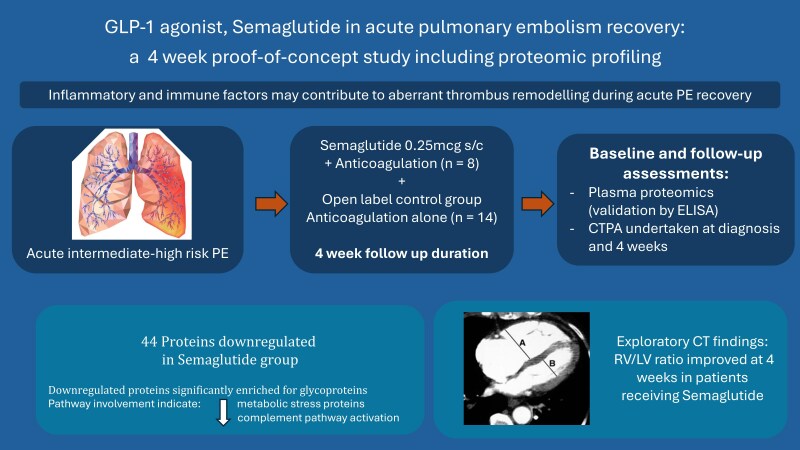 Figure 1
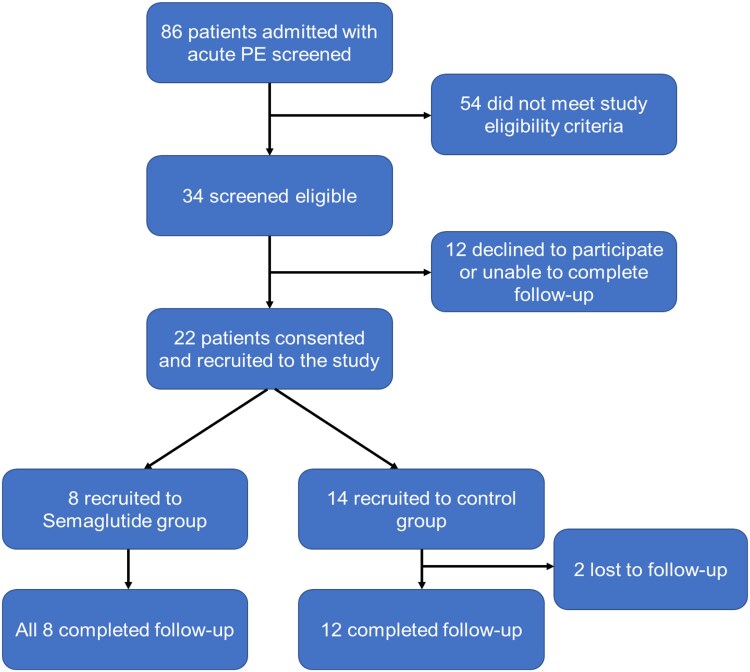 Figure 2
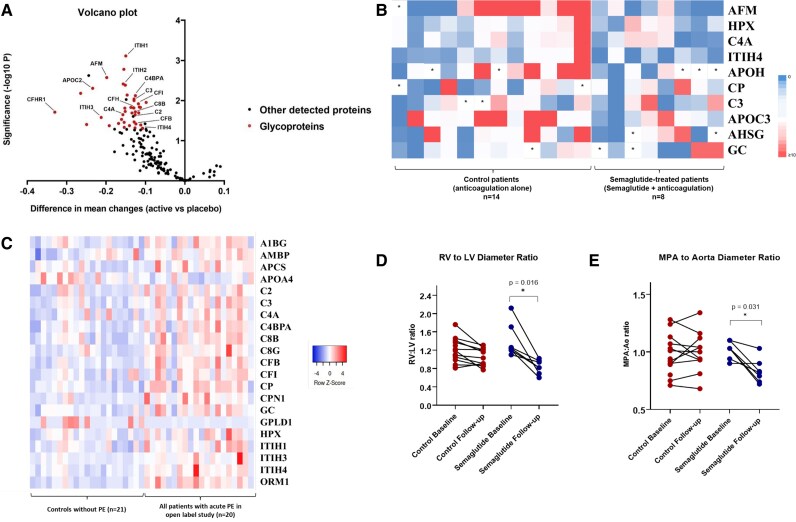 Figure 3
Peer Reviews
No public reviews on file for this paper yet. If you reviewed it on a platform where reviews are public (OpenReview, ICLR, NeurIPS, ICML), you can paste yours below so the community can read it here.
Videos
No videos yet. Explain this paper in a talk, walkthrough, or lecture? Add one.
Taxonomy
TopicsVenous Thromboembolism Diagnosis and Management · Atrial Fibrillation Management and Outcomes · Sepsis Diagnosis and Treatment