Do disempowered bodies risk anaemia? Evidence from married women in Assam’s Sixth Schedule areas of Northeast India
Abigail Lalnuneng, Zothanchhingi Khiangte, Thiyam Seityajit Singh, Madhurima Samanta, Roshni Tripathy

TL;DR
This study shows that anaemia in married women from Assam is linked to their lack of autonomy and social empowerment, not just diet or health factors.
Contribution
The study reveals that structural disempowerment, not just individual behaviors, drives anaemia risk in married women in Assam’s Sixth Schedule areas.
Findings
Anaemia rates varied widely, with women in Udalguri nearly five times more likely to be anaemic than those in Kokrajhar.
Low decision-making power and limited social independence significantly increased the risk of anaemia.
Women with medium levels of tolerance for wife-beating had lower anaemia risk, suggesting complex social dynamics at play.
Abstract
Anaemia remains widespread among Indian women and reflects persistent structural and gendered inequities. This study examines how socio-demographic-economic, autonomy, and empowerment indicators interact to influence anaemia risk among married women in the Sixth Schedule districts of Assam, Northeast India. This study analysed 5245 married women aged 18–49 years from Assam’s seven Sixth Schedule districts using the NFHS–5 (2019–2021) data. Anaemia was modelled against sociodemographic-economic, autonomy, and empowerment indicators derived from contextually adapted indices (WAI-M and SWPER-M) using logistic regression to estimate unadjusted and adjusted odds ratios. Anaemia affected 66.0% of women, ranging from 58.0% in Kokrajhar to 83.7% in Udalguri; women in Udalguri remained nearly five times more likely to be anaemic than those in Kokrajhar (AOR = 4.76; 95% CI = 2.46–9.24). Low…
Genes, proteins, chemicals, diseases, species, mutations and cell lines named across the full text — each resolved to its canonical identifier and authoritative record.
Click any figure to enlarge with its caption.
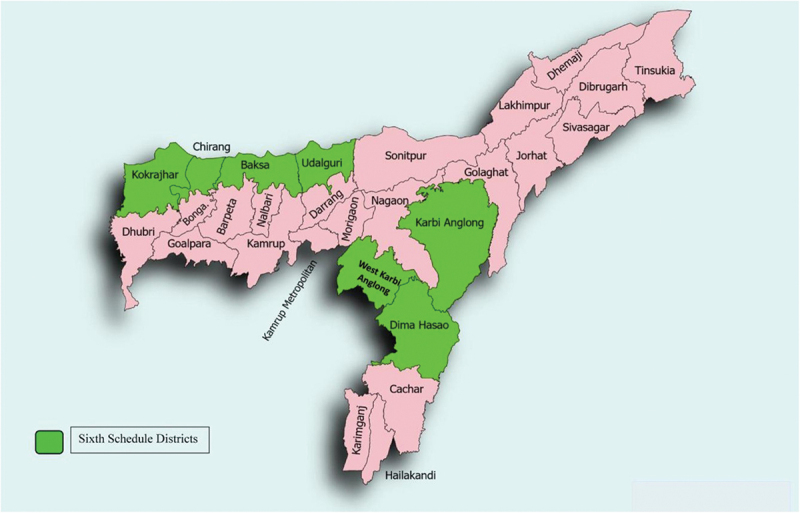 Figure 1
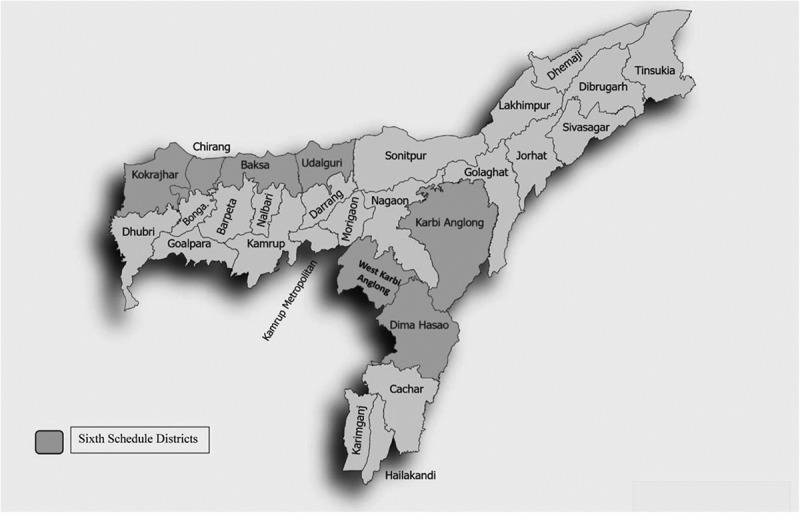 Figure 2
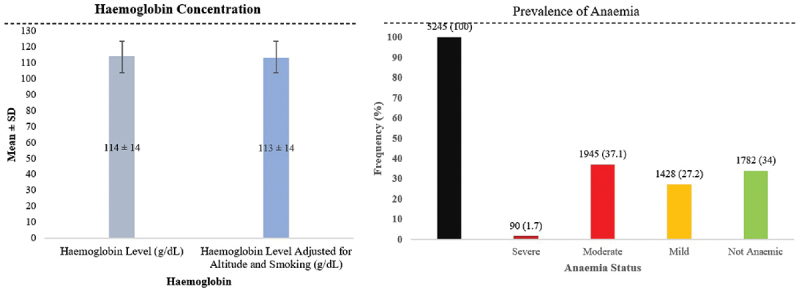 Figure 3
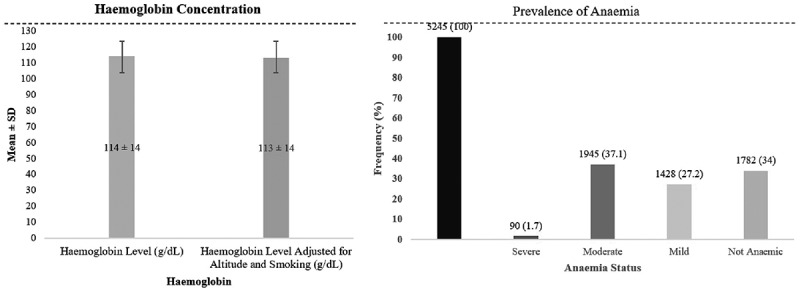 Figure 4
Peer Reviews
No public reviews on file for this paper yet. If you reviewed it on a platform where reviews are public (OpenReview, ICLR, NeurIPS, ICML), you can paste yours below so the community can read it here.
Videos
No videos yet. Explain this paper in a talk, walkthrough, or lecture? Add one.
Taxonomy
TopicsIron Metabolism and Disorders · Child Nutrition and Water Access · Global Maternal and Child Health