Medial Temporal Lobe Dynamic Network Flexibility is Reduced Among Autosomal Dominant Alzheimer's Disease Mutation Carriers
Wiktoria Piaszczynska, Miray Budak, Bryan Rowe, Soodeh Moallemian, Bernadette A. Fausto, John M Ringman, Mark A. Gluck

TL;DR
This study finds that people with Alzheimer's disease mutations show reduced brain network flexibility in the medial temporal lobe, which may signal early disease changes before visible brain shrinkage.
Contribution
The study identifies reduced medial temporal lobe network flexibility as an early functional biomarker in autosomal dominant Alzheimer's disease mutation carriers.
Findings
ADAD mutation carriers showed significantly reduced MTL network flexibility despite no structural volume differences.
Right entorhinal cortex volume was positively correlated with better cognitive performance in these individuals.
Abstract
Autosomal Dominant Alzheimer's disease (ADAD) due to mutations in PSEN1, APP, and PSEN2 offers a unique framework for elucidating the neuropathological mechanisms underlying early disease stages. Given the critical role of the MTL in memory and cognitive processing, the ADAD mutations have yet to be thoroughly investigated regarding its impact on medial temporal lobe (MTL) dynamics and subfield‐specific integrity in FAD. This study focuses on identifying biomarkers for early disease progression by examining ADAD mutations on MTL network flexibility, subfield volumetric integrity, and associated cognitive outcomes among autosomal dominant AD. The cohort comprised 36 participants (28 women) carrying ADAD mutations (Meanage=39.11, SDage=12.16) who underwent genotyping, cognitive assessment using the Cognitive Abilities Screening Instrument (CASI), and brain neuroimaging with a Siemens…
Genes, proteins, chemicals, diseases, species, mutations and cell lines named across the full text — each resolved to its canonical identifier and authoritative record.
Click any figure to enlarge with its caption.
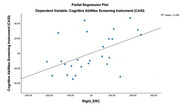 Figure 1
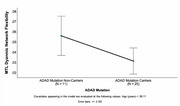 Figure 2
Peer Reviews
No public reviews on file for this paper yet. If you reviewed it on a platform where reviews are public (OpenReview, ICLR, NeurIPS, ICML), you can paste yours below so the community can read it here.
Videos
No videos yet. Explain this paper in a talk, walkthrough, or lecture? Add one.
Taxonomy
TopicsDementia and Cognitive Impairment Research · Alzheimer's disease research and treatments · Functional Brain Connectivity Studies