Lifestyle behaviors and mental health of health professional students during COVID-19, as measured by the CDC’s BRFSS, for the HOLISTIC cohort study
Atithi Patel, Jun Lu, Jyotsna Bitra, Sunil Dommaraju, Daniel Loizzo, Brenda Guillen, Niamh Kane, Danielle Westnedge, Jessica Lopez Guzman, Nancy Giang, Isabella Hartnett, Mary T. Keehn, Rashid Ahmed, Jerry A. Krishnan, Konadu Fokuo

TL;DR
This study explores how lifestyle behaviors affect the mental health of health professional students during the pandemic, finding that factors like exercise can help reduce poor mental health days.
Contribution
The study identifies specific lifestyle and demographic factors linked to mental health outcomes in health professional students during the pandemic.
Findings
Female sex, Asian race, adverse childhood events, and frequent cannabis use were associated with increased poor mental health.
Exercise was found to be a protective factor against poor mental health during the pandemic.
The study highlights the need for targeted mental health support for vulnerable student groups.
Abstract
The World Health Organization estimates a 25% increase in anxiety and depression prevalence during the COVID-19 pandemic. 50% of surveyed US healthcare workers reported increased anxiety, and 27% of Chinese health professional students reported psychological distress. The mental health of US health professional students and their coping mechanisms, especially during an adverse time such as the pandemic, is less well understood. This study examined the US health professional students’ lifestyle behaviors and their association with the prevalence of poor mental health days. 890 students across seven health sciences colleges in 2020 and/or 2021 were recruited using convenience sampling. Participants completed socio-demographic questions and items from the U.S. Centers for Disease Control and Prevention’s (CDC) Behavioral Risk Factor and Surveillance System (BRFSS) 2019 survey. The…
Genes, proteins, chemicals, diseases, species, mutations and cell lines named across the full text — each resolved to its canonical identifier and authoritative record.
Click any figure to enlarge with its caption.
 Figure 1
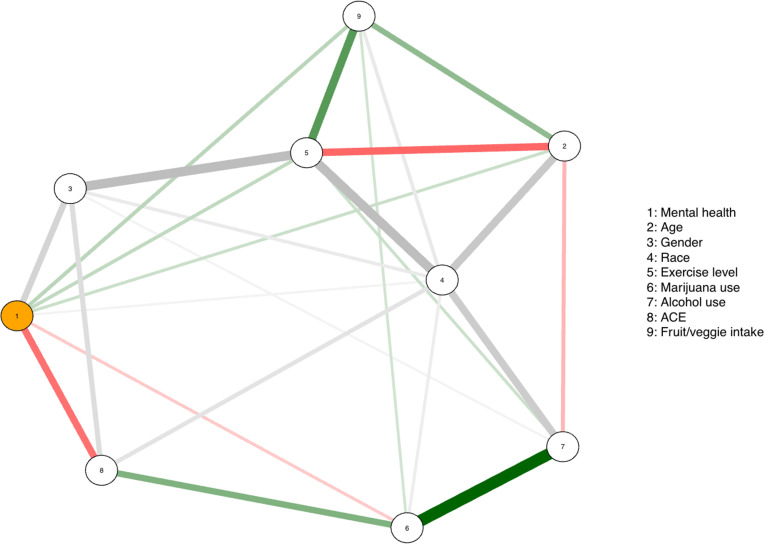 Figure 2
 Figure 3
 Figure 4
 Figure 5
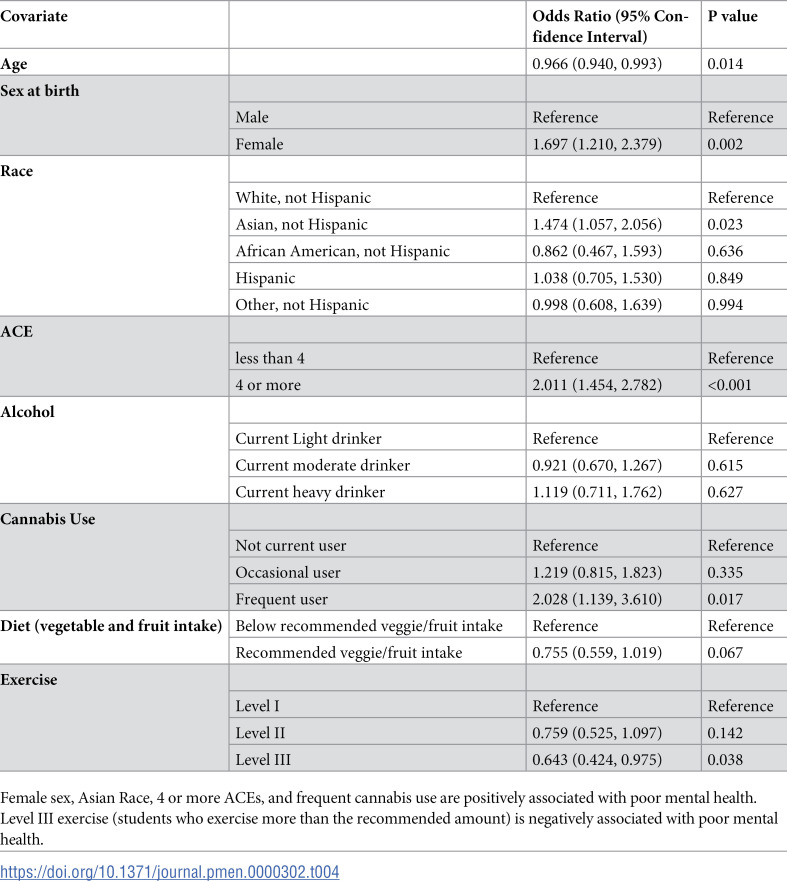 Figure 6
Peer Reviews
No public reviews on file for this paper yet. If you reviewed it on a platform where reviews are public (OpenReview, ICLR, NeurIPS, ICML), you can paste yours below so the community can read it here.
Videos
No videos yet. Explain this paper in a talk, walkthrough, or lecture? Add one.
Taxonomy
TopicsEmployment and Welfare Studies · Resilience and Mental Health · Health, psychology, and well-being