Association between parents’ country of birth and multicultural adolescents’ psychological well-being in South Korea: A study on depression, worries, life satisfaction, and social withdrawal
Abdullatif Ghafary, Jaeyong Shin, Sang Sook Beck, Jieun Jang, Rajaguru Vasuki, So Yoon Kim, Hanif Rahman, Hanif Rahman

TL;DR
This study explores how parents' country of birth affects the mental health of multicultural adolescents in South Korea, finding links to depression, worries, and life satisfaction.
Contribution
The study provides new insights into the psychological well-being of multicultural adolescents linked to their parents' birthplace and education levels.
Findings
Adolescents with foreign-born mothers, especially Chinese or Filipino, had higher odds of depression.
Female adolescents were more likely to experience depression, worries, and lower life satisfaction than males.
Higher maternal education levels were associated with lower depression rates in adolescents.
Abstract
The purpose of this study was to examine the association between parents’ country of birth and psychological well-being of multicultural adolescents in Korea, a country with a predominantly homogenous population. This study used data from the 8th wave of the Multicultural Adolescents Panel Study (MAPS) conducted by the National Youth Policy Institute (NYPI). The participants included 1,147 multicultural adolescents (561 males, 586 females, mean age = 16.96 years). Adolescents whose mothers were born abroad, particularly those whose mothers were Chinese or Filipino, exhibited higher odds of experiencing depression (OR=1.13; 95% CI, 0.50–2.56) compared to those with native Korean mothers. Compared with male adolescents, female respondents were more likely to experience depression (OR = 1.28; 95% CI, 0.99–1.66), worries (OR = 1.98; 95% CI, 1.51–2.59), and lower life satisfaction (OR =…
Genes, proteins, chemicals, diseases, species, mutations and cell lines named across the full text — each resolved to its canonical identifier and authoritative record.
Click any figure to enlarge with its caption.
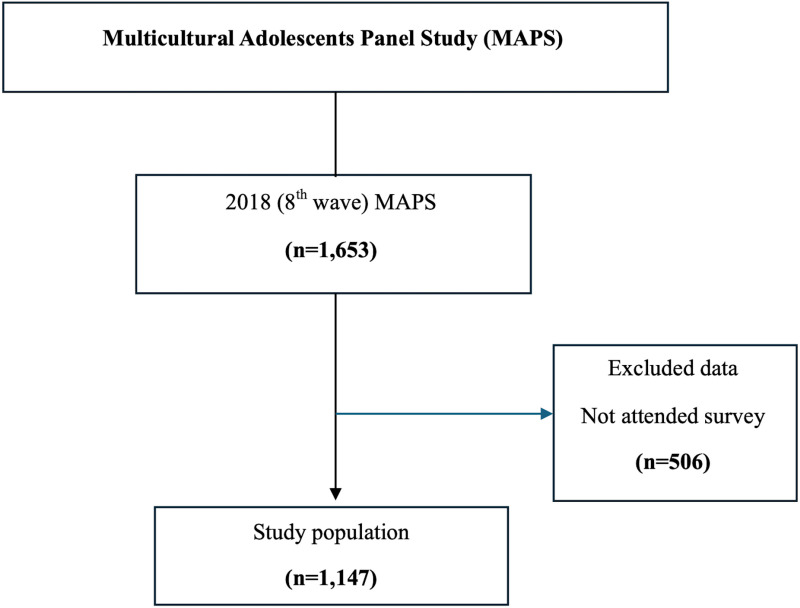 Figure 1
 Figure 2
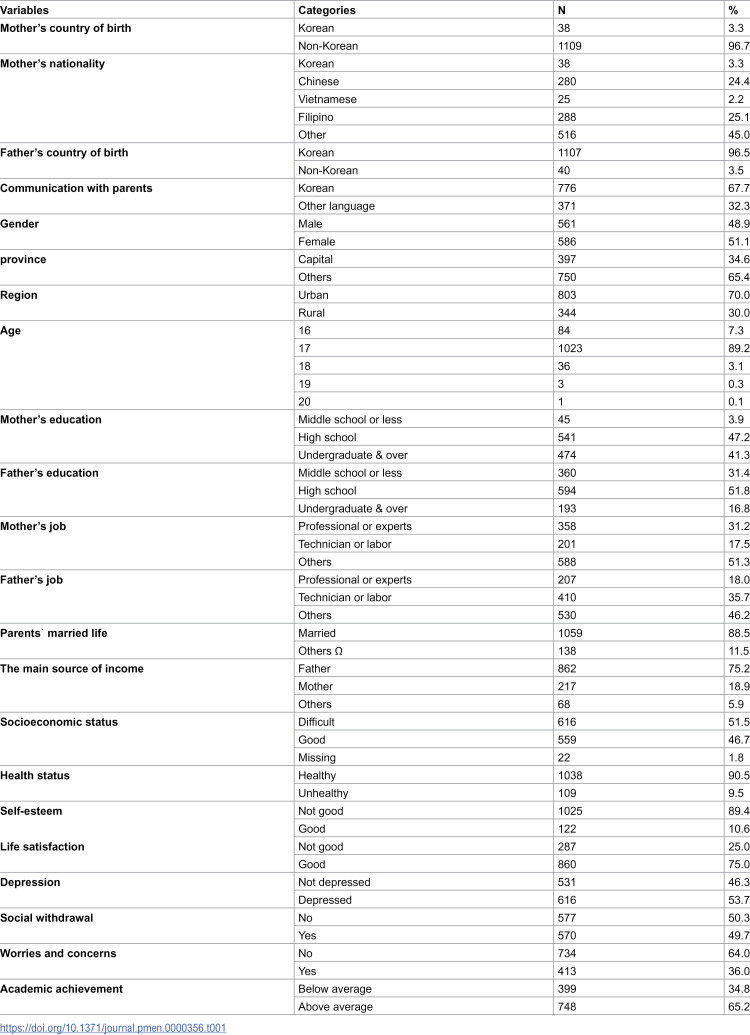 Figure 3
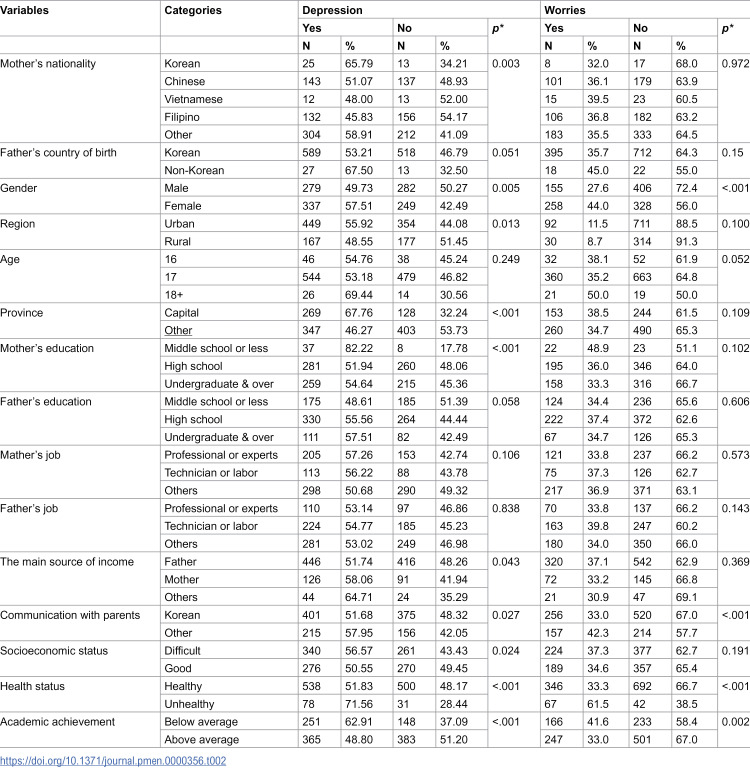 Figure 4
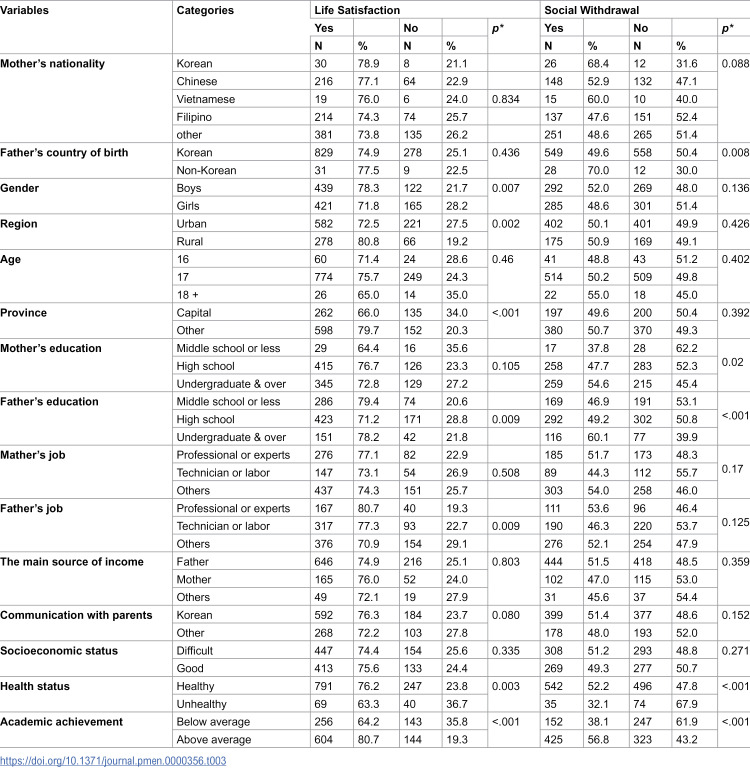 Figure 5
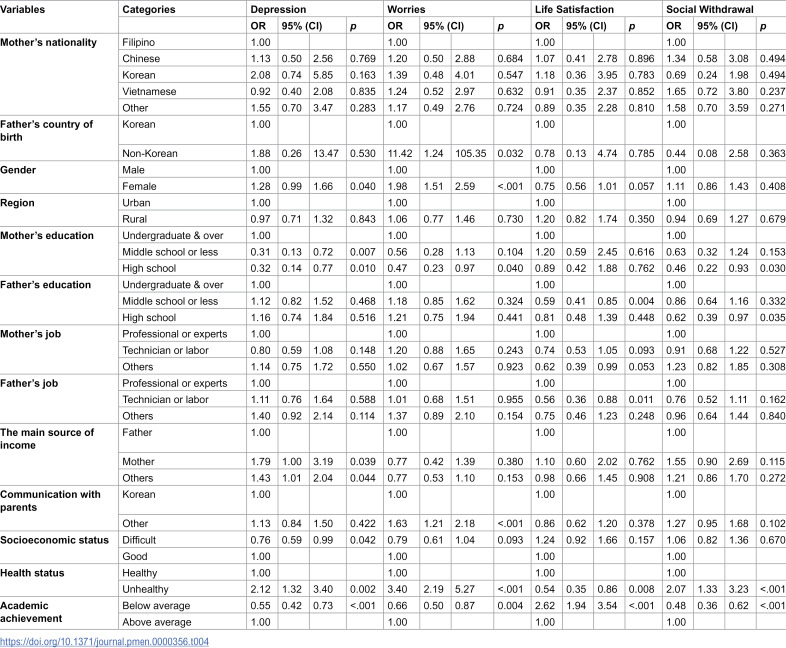 Figure 6
Peer Reviews
No public reviews on file for this paper yet. If you reviewed it on a platform where reviews are public (OpenReview, ICLR, NeurIPS, ICML), you can paste yours below so the community can read it here.
Videos
No videos yet. Explain this paper in a talk, walkthrough, or lecture? Add one.
Taxonomy
TopicsPsychosocial Factors Impacting Youth · Racial and Ethnic Identity Research · Child and Adolescent Psychosocial and Emotional Development