Determinants of gender disparities in psychological distress in the South African population aged 15 years and older: Findings from the 2017 National HIV prevalence, incidence, behaviour, and communication survey
Nompumelelo P. Zungu, Musawenkosi Mabaso, Tawanda Makusha, Lehlogonolo Makola, Ronel Sewpaul, Olive Shisana

TL;DR
This study explores why women in South Africa experience higher psychological distress than men, using national survey data.
Contribution
The study identifies gender-specific risk and protective factors for psychological distress in South Africa.
Findings
Females had a higher prevalence of psychological distress (22.2%) compared to males (16.4%).
For males, poor health and alcohol use increased distress, while education and rural residence reduced it.
For females, poor health and alcohol use were linked to distress, while employment and rural residence were protective.
Abstract
Psychological distress, characterized by symptoms such as anxiety, depression, and emotional suffering, is a major public health issue with well-documented gender disparities. This study examined the determinants of gender differences in psychological distress among South Africans aged 15 years and older using data from the 2017 South African National HIV Prevalence, Incidence, Behaviour, and Communication Survey. The cross-sectional survey employed a multi-stage stratified random cluster sampling design. Psychological distress was measured using the Kessler 10-item Psychological Distress Scale (K10), where a score of ≥20 indicated some level of distress. Of the 8,148 participants, the weighted prevalence of psychological distress was 19.3% (95% CI: 17.8–20.9), with a significantly higher prevalence among females (22.2%, 95% CI: 20.2–24.4) than males (16.4%, 95% CI: 14.4–18.6).…
Genes, proteins, chemicals, diseases, species, mutations and cell lines named across the full text — each resolved to its canonical identifier and authoritative record.
Click any figure to enlarge with its caption.
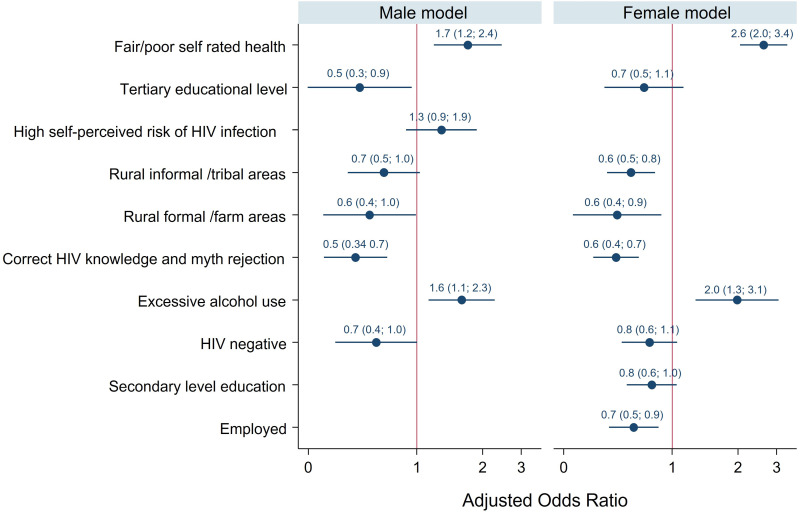 Figure 1
 Figure 2
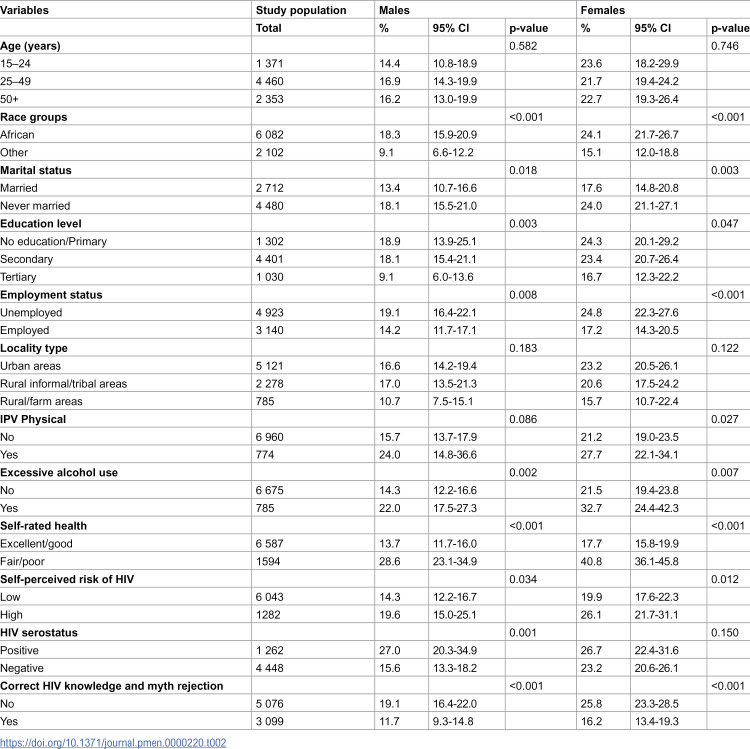 Figure 3
Peer Reviews
No public reviews on file for this paper yet. If you reviewed it on a platform where reviews are public (OpenReview, ICLR, NeurIPS, ICML), you can paste yours below so the community can read it here.
Videos
No videos yet. Explain this paper in a talk, walkthrough, or lecture? Add one.
Taxonomy
TopicsEmployment and Welfare Studies · Health disparities and outcomes · Health, psychology, and well-being