The mediating effects of perceived social support and shame on psychological distress and its dimensions among Liberian refugees in Nigeria
Dogbahgen Alphonso Yarseah, Ololade Omolayo Ogunsanmi, Joyce Olufunke Ogunsanmi, Olu Francis Ibimiluyi, Elijah Olawale Olaoye, Esu Stanley Ezeani, Viola H. Cheeseman, David Onchonga, David Onchonga, David Onchonga, David Onchonga

TL;DR
This study explores how social support and shame affect psychological distress among Liberian refugees in Nigeria, finding that social support can help reduce distress.
Contribution
The study identifies the mediating effects of perceived social support and shame on psychological distress in Liberian refugees, revealing domain-specific interactions.
Findings
Perceived social support partially mediates the relationship between shame and psychological distress.
Family and friend support are negatively associated with distress, while bodily and characterological shame are positively linked to distress.
Abstract
Liberian refugees in Nigeria have faced prolonged displacement since the 1990s, experiencing significant psychological distress and shame. Perceived social support (PSS) is a crucial factor in mitigating these effects, yet limited research has explored its mediating role alongside shame in this population. This study examines how PSS and shame mediate psychological distress and explores their domain-specific interactions. A cross-sectional survey was conducted among 520 Liberian refugees (334 males, 186 females) in Oru, using structured questionnaires. Data were analyzed using SPSS and AMOS. Findings indicate that PSS partially mediates the relationship between shame and psychological distress (β = -0.32, p < 0.001), highlighting its protective role. Domain-specific interactions emerged, revealing that different dimensions of PSS and shame uniquely influence psychological distress.…
Genes, proteins, chemicals, diseases, species, mutations and cell lines named across the full text — each resolved to its canonical identifier and authoritative record.
Click any figure to enlarge with its caption.
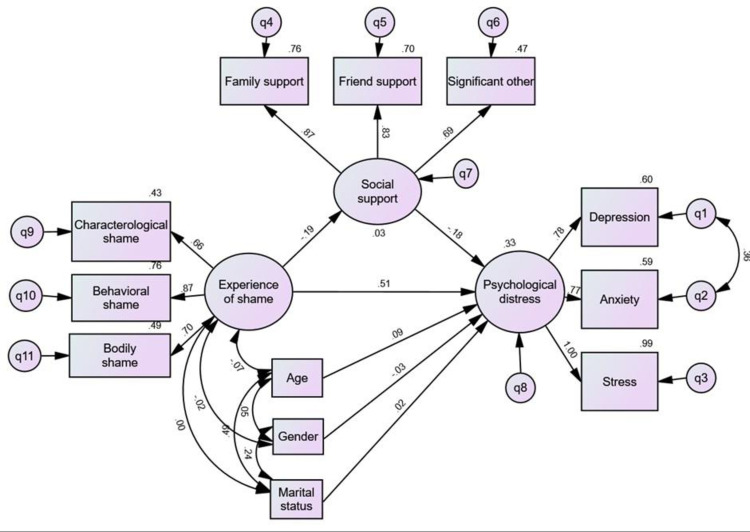 Figure 1
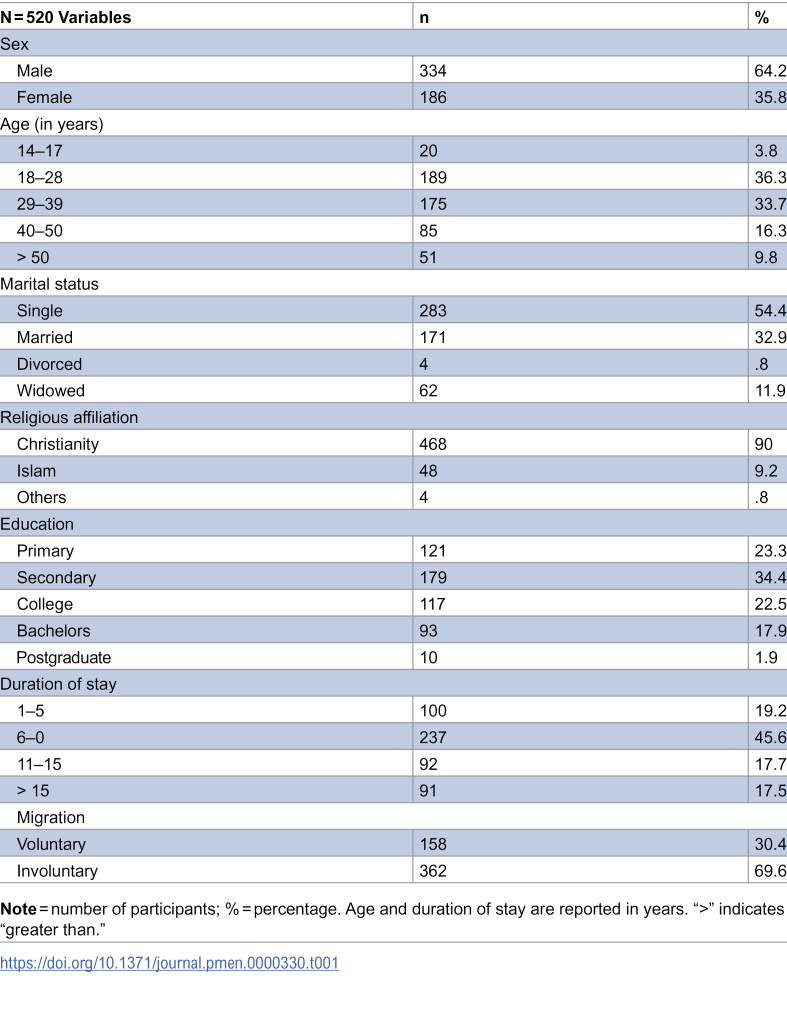 Figure 2
 Figure 3
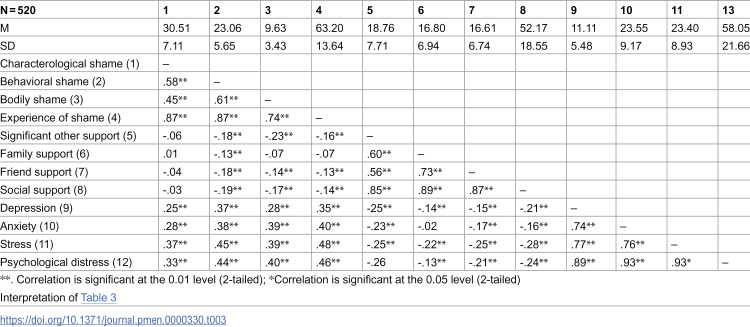 Figure 4
 Figure 5
Peer Reviews
No public reviews on file for this paper yet. If you reviewed it on a platform where reviews are public (OpenReview, ICLR, NeurIPS, ICML), you can paste yours below so the community can read it here.
Videos
No videos yet. Explain this paper in a talk, walkthrough, or lecture? Add one.
Taxonomy
TopicsEmotions and Moral Behavior · Mental Health Treatment and Access · COVID-19 and Mental Health